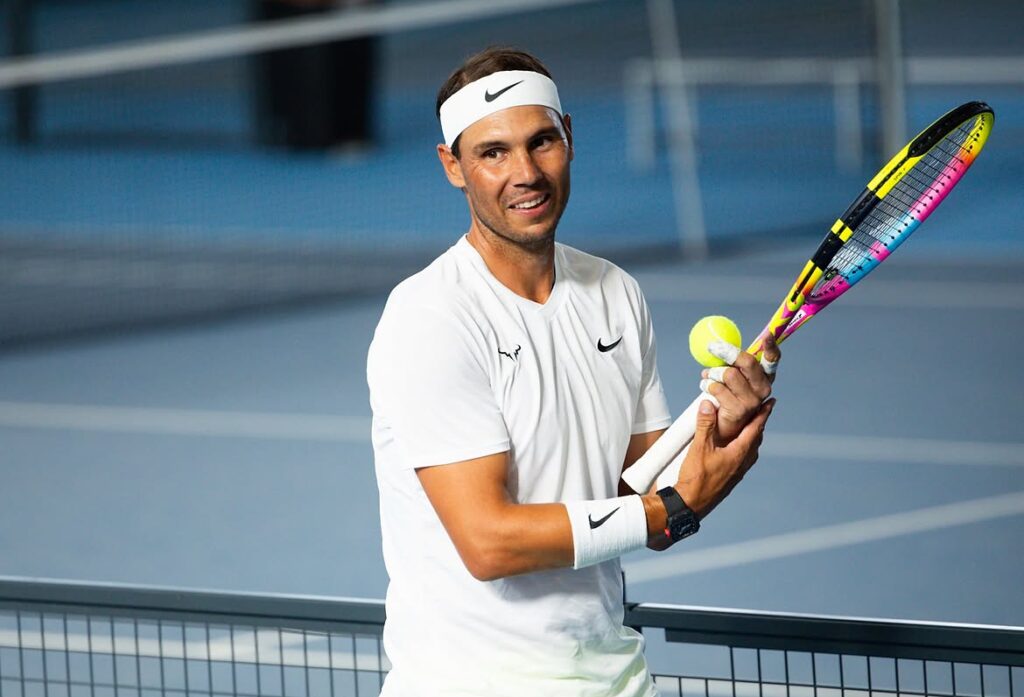



PARIS — A foot split in half, holes in tendons and intestines, a shattered knee, anti-inflammatory injections, sleepless nights, and visits to doctors halfway across the world: RAFA, the new Netflix docuseries, dives deep into Rafael Nadal’s injury history to reveal previously untold details of the Spaniard’s battle against his own body. These statements and stories break the barrier of what was previously known about the Spanish tennis player’s suffering.
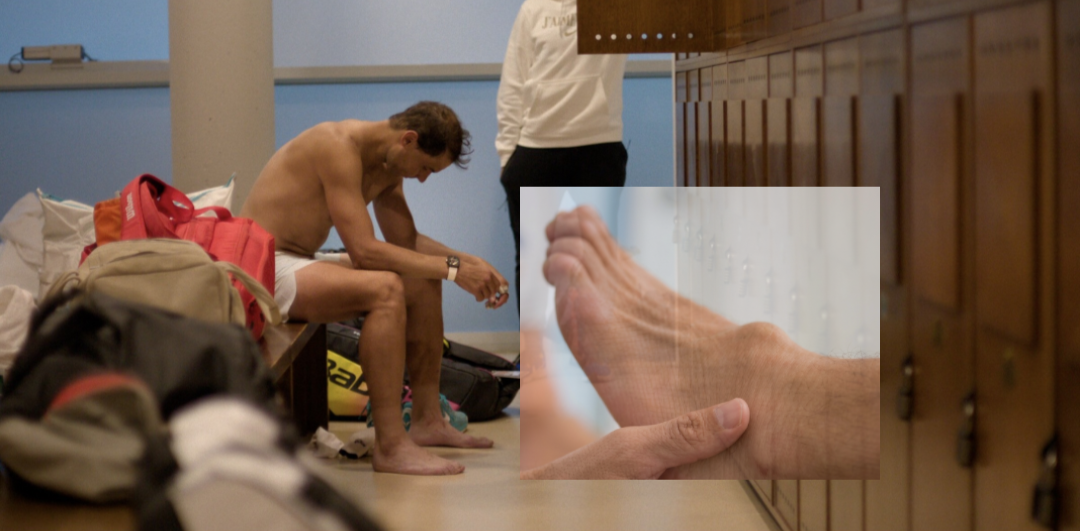
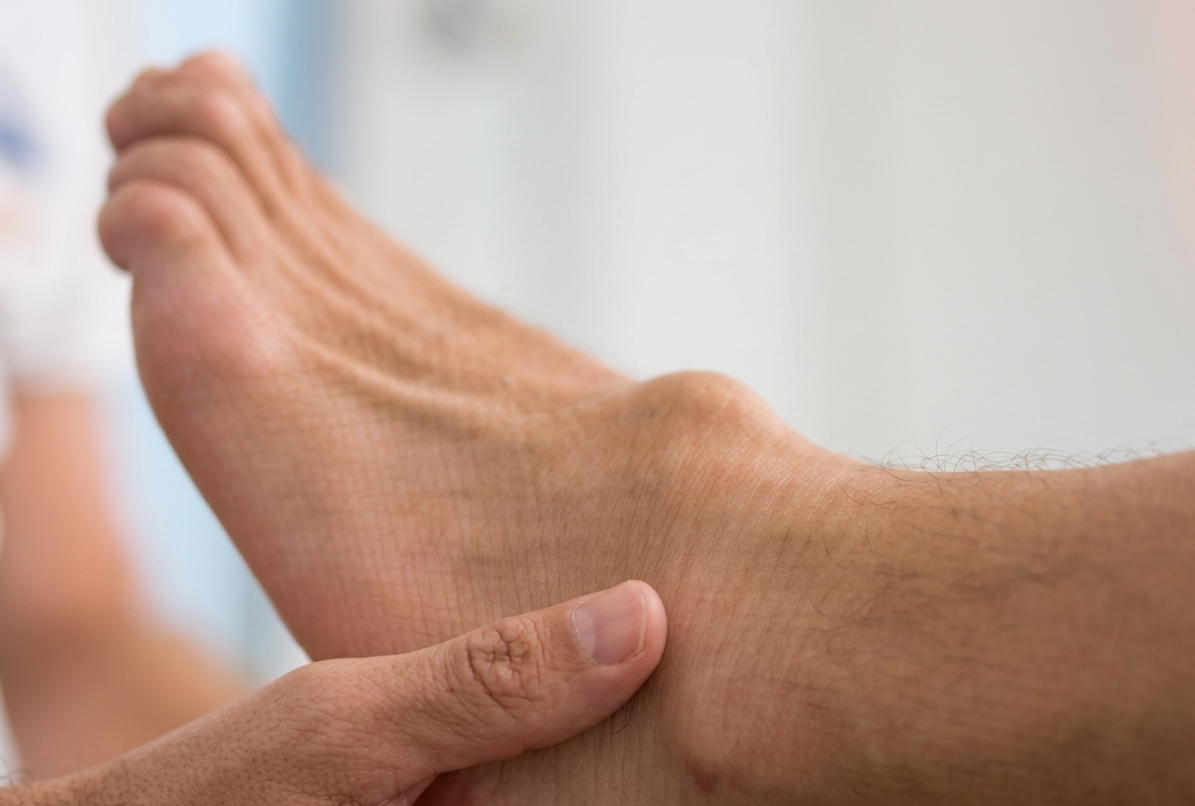
“Do you have an alien?” asks his coach, Carlos Moyá, during a moment in the 2024 season while Nadal takes off his shoes for his physiotherapist, Rafael Maymò, to massage him. In that instant, Nadal takes off his sock to reveal a massive lump on the instep of his left foot. Maymó touches it, “it’s soft,” he says, and the team jokes about such a growth.
That “alien” is one of the most shocking images of the docuseries, the perfect example of a body torn to shreds. Because nothing has battered Nadal more than that left foot—the very same one that split in October 2005 and came close to forcing his retirement at just 19 years old.
Netflix travels back to that autumn of 2005 when Nadal won the Madrid Masters 1000 with an incredible comeback against Ivan Ljubicic (3-6, 2-6, 6-3, 6-4, and 7-6). During that match, however, the Spaniard noticed something strange in his left foot. “I didn’t think much of it and thought maybe it would go away in a few days,” Nadal recalls. “But we went to the hospital in Shanghai, they gave me an MRI, and they told me, ‘You have a broken scaphoid.’”
Nadal returned from that Masters Cup unable to play, but convinced that within a few weeks his foot would respond just as before. Not at all: there had been something wrong with that foot for many years. The “crack” in Madrid was merely the consequence. “We realized there was a chronic disease in the scaphoid. It’s an extremely rare disease. We gathered all the world’s literature on it, and across all case studies, there wasn’t a single case of an elite athlete,” recalls Ángel Ruiz-Cotorro, the doctor who has accompanied Nadal throughout his entire life, in the docuseries.
The Nadals then contacted Dr. Ernesto Maceira, an expert in the condition the player suffered from, known as Müller-Weiss syndrome. He told them that the wisest thing to do was to operate. “Bones had to be cut and the position of the foot shifted. The doctor told me, ‘You might never play professional tennis at a high level again,’” Nadal says. “My world at that moment was collapsing. I was devastated, but my father is a very positive person, and when I was crying, he would often come to comfort me.”
His father, Sebastià Nadal, took his son to several doctors until they concluded that the best option was to try custom insoles to alter his foot support. “My foot still hurt, but it was a pain I could handle. The pain has never disappeared, but I could tolerate it,” Nadal recalls.
That injury sparked a revolution for Nadal. The tennis player, who at the time had only won one Roland Garros, faced the natural doubt of what would become of him with a chronic problem that caused him so much pain. “For me, tennis became a race against the clock. Always having that doubt in the back of my mind about how long I could last with this foot. I always thought, ‘Maybe this is the last year, so there’s no time to stop. I have to go to the absolute limit until the end,’” Nadal says in the docuseries.
This idea floats constantly throughout the series’ nearly four-hour runtime. And there is a phrase uttered by the 22-time Grand Slam champion that perfectly encapsulates the fight against his body and the pursuit of his limits: “In my career, I’ve had to make decisions about my health where you are right on the edge of what is right and wrong. The line is thin, but if I hadn’t explored it, maybe I would have 10 fewer Grand Slams. I’m not saying one or two, I’m saying maybe 12.”
Coming 🔜…
📺 @netflix pic.twitter.com/NprQy47TQD— Rafa Nadal (@RafaelNadal) May 19, 2026
“My knee was left shattered.”
“The tendon had a hole in it.”
“The fact that I played with an insole my entire career structurally disrupted my whole body.”
These are all quotes from Nadal in the docuseries, which reveals a disagreement between the tennis player and his team when, in 2013, the 14-time Roland Garros champion decided to pump himself full of anti-inflammatories to cope with the pain in his knees.
“It becomes hard to live with the pain he suffers daily and to see him take so many anti-inflammatories that could be harmful to his health. There came a point where Rafa brought his own anti-inflammatories. He even started using them not because he was in pain, but to prevent the pain from appearing,” says Maymó, his physiotherapist.
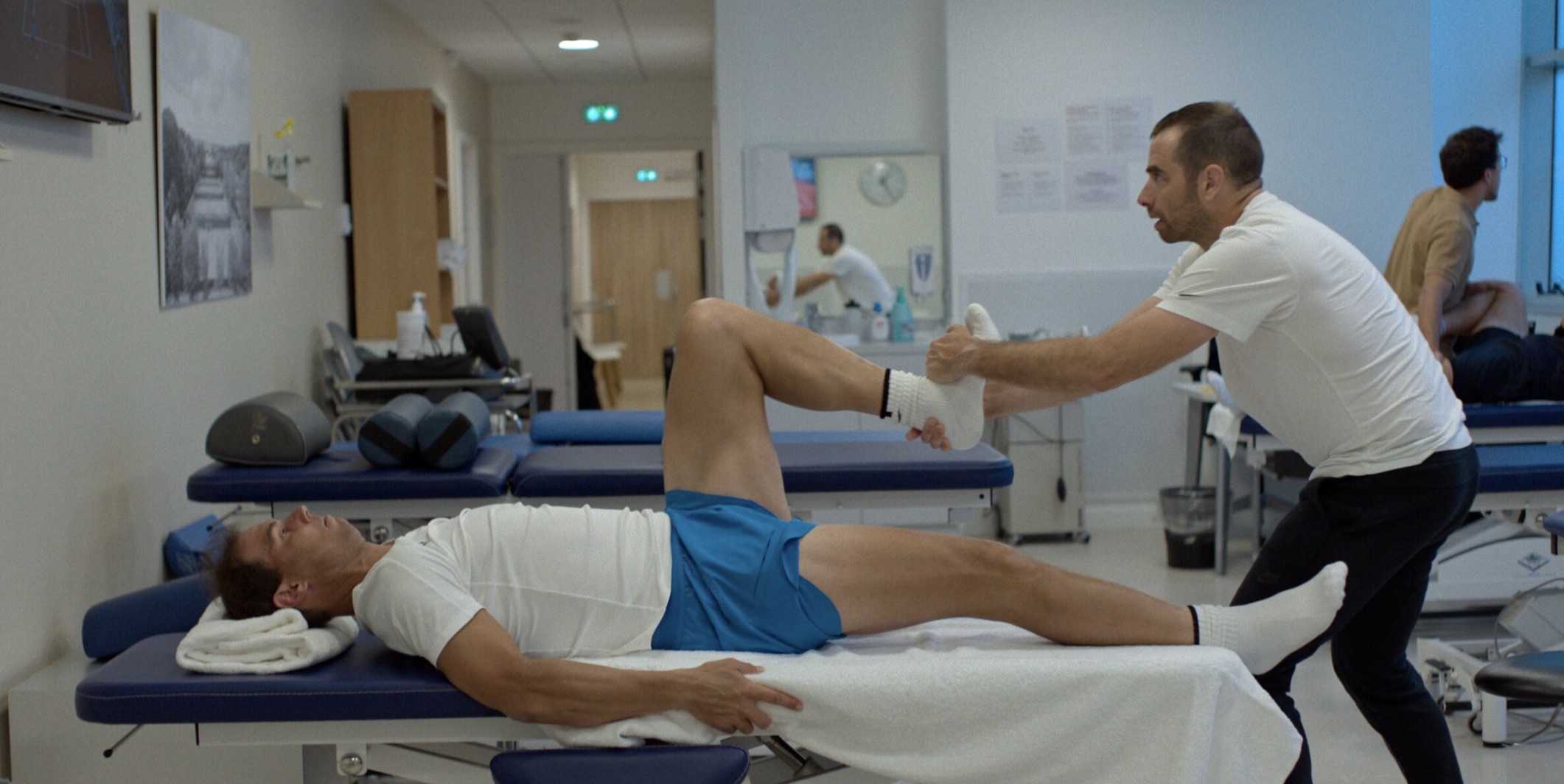
“I am playing using a lot of anti-inflammatories. Voltarén at night and an intramuscular Voltarén injection before every match,” Nadal recalls of that era. “I have the medicines and I take them when I think I need to take them. In fact, I have two small perforations in my intestines—small perforations created by taking so many anti-inflammatories.”
But if there is a moment where he went to the ultimate limit, it was Roland Garros 2022. After barely scraping through his first match, Nadal could hardly move from the pain in his cursed left foot. The scene he describes on Netflix is surreal.
“I finish my first match and my father has to carry me on his shoulders to my room. I am in so much pain and I don’t sleep a single minute all night. Thinking, thinking, thinking. In the morning I called Cotorro (his doctor) and asked him, ‘Is there any way to numb the sensory nerve without affecting the motor nerve?’ He told me, ‘Yes, we can try.’”
“But from a medical standpoint, for me, this is as far as we go because you could rupture the tendon,” Cotorro himself recounts regarding that conversation.
Nadal did not rupture the tendon. He went to the limit for the umpteenth time and, once again, he won. He ended up capturing his fourteenth Roland Garros, playing six matches with a numbed foot. The foot that split in 2005, the foot with the “alien,” the foot that almost prevented him from writing a story on the edge—always on the edge.
Do you love CLAY? Support us on Ko-fi and follow us on Instagram, X (Twitter) and Facebook.