

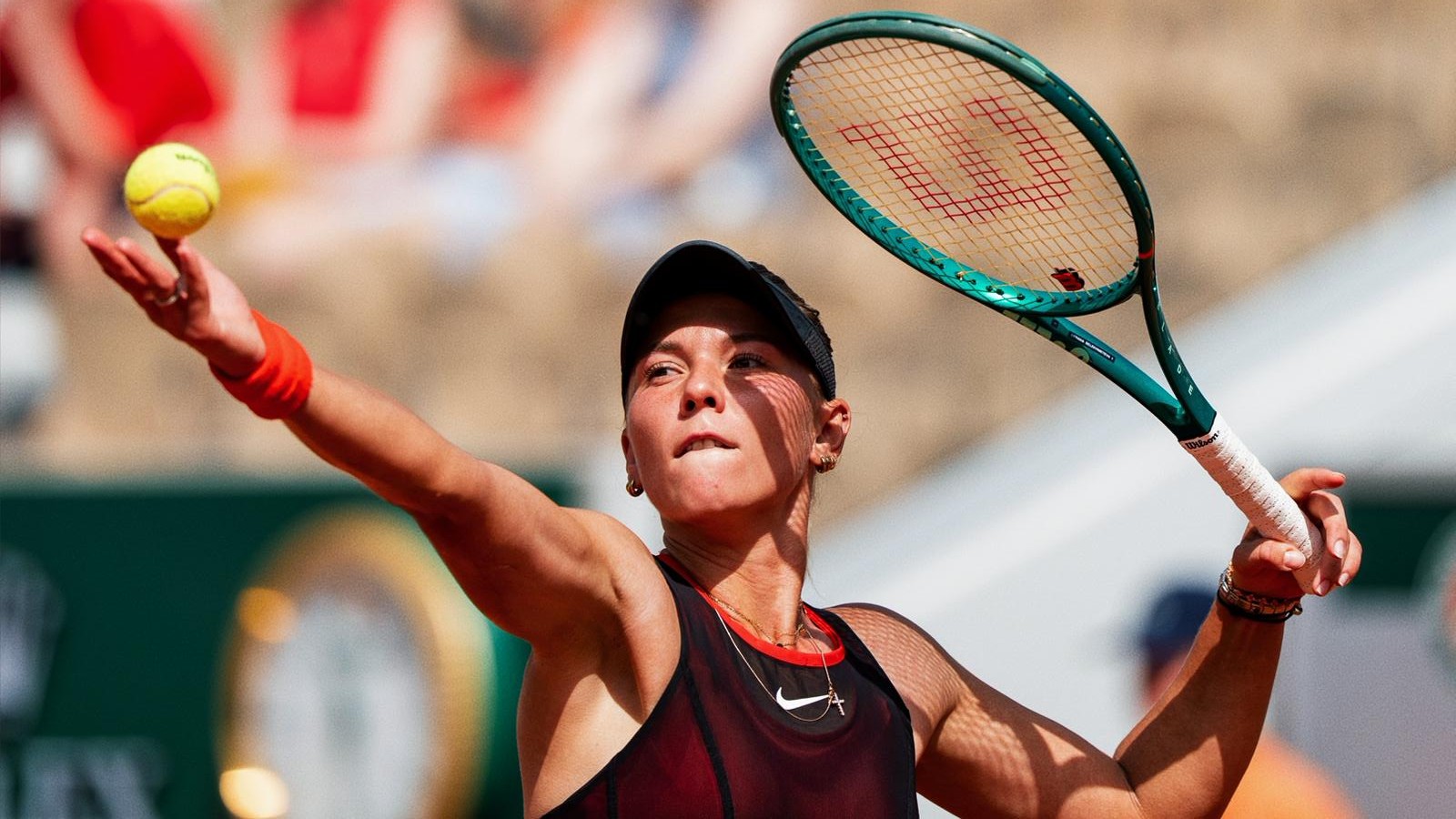

PARIS — When the Roland Garros draw was made on Thursday, Oksana Selekhmeteva’s name had no flag next to it due to the sanctions imposed on Russian athletes following the war in Ukraine. This Sunday, Selekhmeteva made her debut in Paris, and there was indeed a flag next to her name: the Spanish one.
Selekhmeteva is the latest player to join a list that has kept growing since the invasion of Ukraine in 2022—that of tennis players who choose to stop competing for Russia to embrace a new nationality. Anastasia Potapova (Austria), Kamilla Rakhimova (Uzbekistan), Daria Kasatkina (Australia), Maria Timofeeva (Uzbekistan), and Polina Kudermetova (Uzbekistan) have all found new adopted countries over the last four years.
Selekhmeteva, currently ranked world No. 88 at 23 years old, stated during her meeting with the media in Paris that her change of allegiance is not a response to the political situation in Vladimir Putin’s Russia. However, listening to her answers, one can deduce that it has certainly played a part.
“The world is in a difficult place right now, and I think people in Russia need to understand that in the end, this is tennis, this is my life, and a career is long, but not that long. I have to do what is best for me, and I hope they understand,” Selekhmeteva noted after losing 6-2, 6-3 to Ukraine’s Marta Kostyuk in the first round of the French Grand Slam.
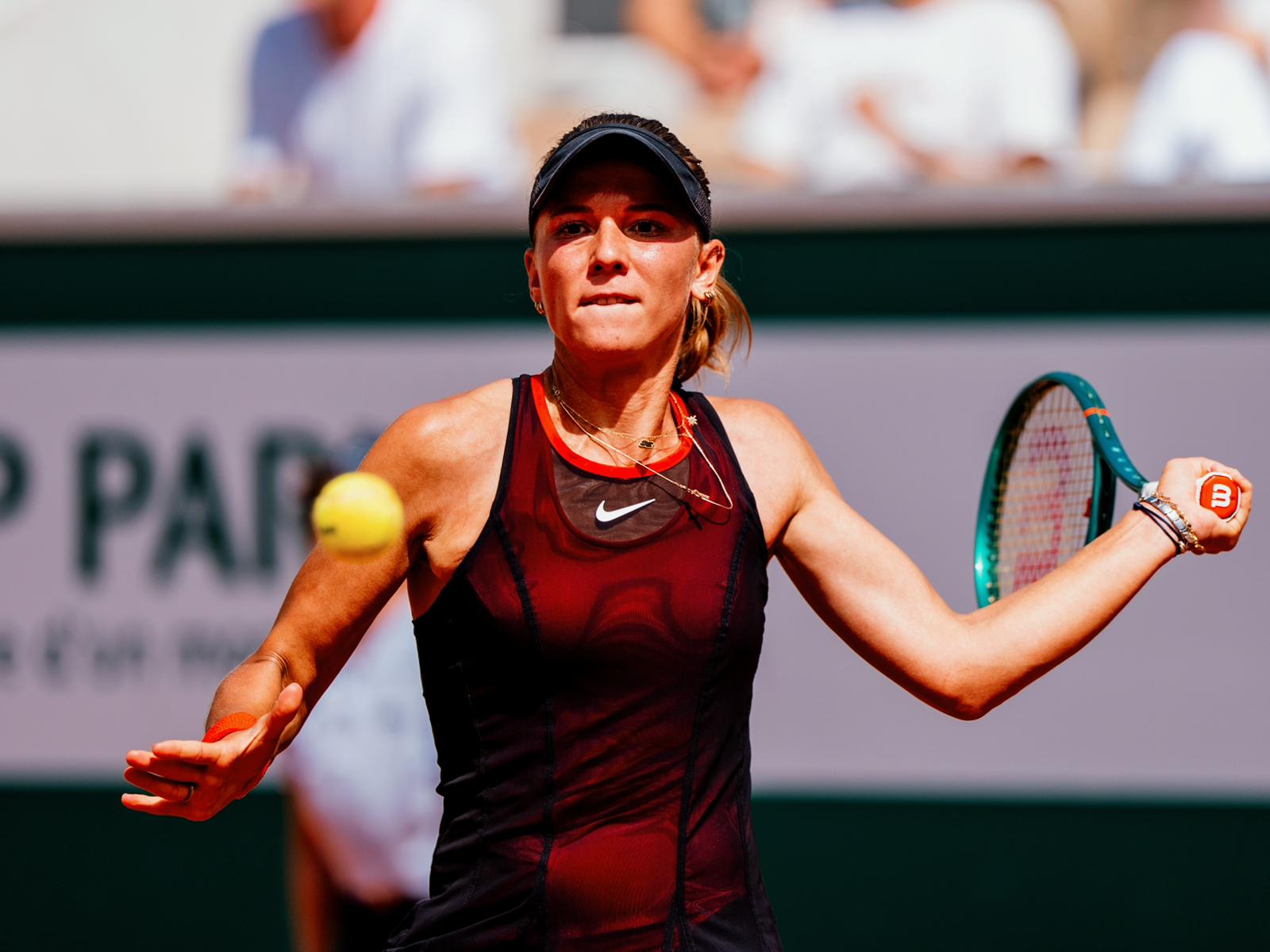
Born in the town of Kamenka in January 2003, Selekhmeteva moved to Moscow with her parents as a child. When she was 14, she visited Barcelona for the first time for a two-month stint at an academy. After returning to Russia for a year, she permanently settled in Barcelona at age 15 alongside her parents. However, part of her family, including her sister, still lives in Moscow.
“It’s not about politics. It is simply very difficult to train in Russia. I’m telling you straight because it’s cold and it’s very tough. And it’s not just the cold: traveling from where I trained to where I did my physical conditioning meant sitting in traffic for two hours. That’s why I needed a proper structure, and I believe Spain is the best country to have that and be a tennis player,” explained the player in perfect Spanish, wearing the Spanish national football team jersey.
“I was born in Russia, and part of my family is there; my sister is there. It’s a difficult question,” she replied when asked about her current feelings toward Russia. “Right now, in the world we live in, with everything that is happening, it’s complicated. I don’t want to say it will always be my home because I now feel that Barcelona has been my home for a very long time,” she added, visibly uncomfortable and preferring not to delve too deeply.
Selekhmeteva received offers from other countries to compete, but in 2023, she chose Spain and has been processing her citizenship ever since. The journey has been anything but smooth. “I have to thank the Spanish Federation because they have helped me so much throughout this time.”
The news reached her on Thursday via social media. “I saw it on an Instagram story, saying I was the number three player in Spain, but it was an account I didn’t know, so I didn’t know if it was true or not. But then I received a message from Javier Soler (the Federation’s sports director) telling me it was true. Honestly, I felt… I was crying because I felt so happy, as it has been a long and far from easy process. Over the last year, there have been so many issues with documents, visas…” the player recounted. “I don’t have the passport yet, but when I get back to Barcelona, I’m going to complete the whole process.”
Ver esta publicación en Instagram
“Spaniards know how to enjoy life”
Selekhmeteva, who has a dog named Leo after Messi, also spoke about everything she loves about Spanish culture. “I love it, I love the people, the mentality you have. You know how to enjoy life, and that is very important in tennis because we are traveling all the time,” she explained.
“For me, it’s very hard to think only about work, because in Russia we have this mentality that we have to be working 24 hours a day and that there is no time to rest. Here, there is time for family, there is time for everything. That’s why I love it, I think I’m a bit more Spanish in that regard, even though it’s still hard for me.”
A left-hander, the player is clear on who her two role models are. “Rafa, because of his lefty playing style, and then Maria Sharapova is also an example of how to compete. I think I’m aggressive, but I also try to change the rhythm when I’m playing because tennis is so fast right now and I have to adapt a bit more.”
Do you love CLAY? Support us on Ko-fi and follow us on Instagram, X (Twitter) and Facebook.