

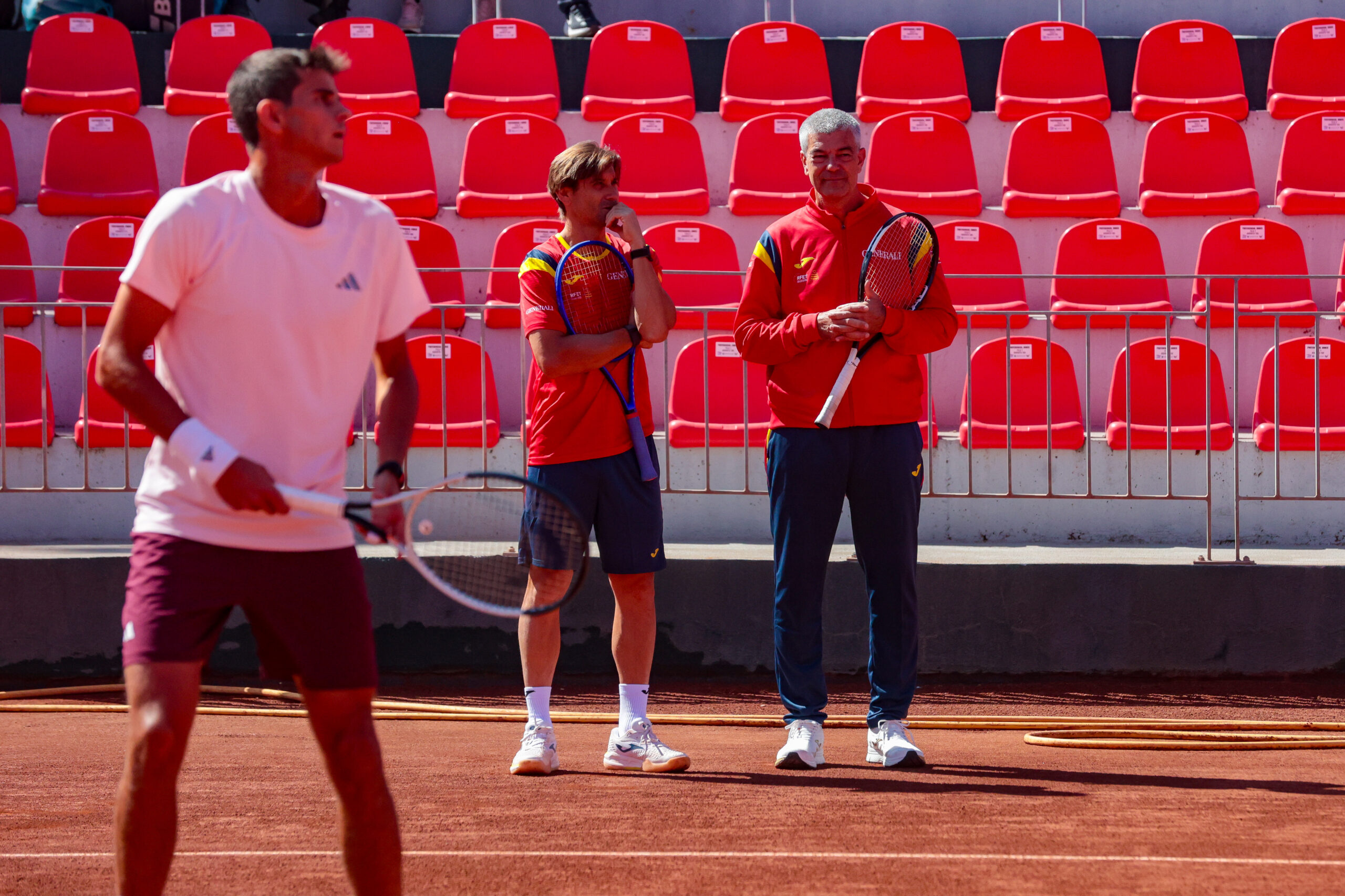

Rafael Jódar’s father is doing an “exceptional and flawless job” as coach and fitness trainer to the biggest sensation in tennis in 2026, David Ferrer said in defence of a partnership that has not stopped making headlines in recent months.
“We are talking about someone who has gone from having no ranking to being inside the top 10 of the Race. So straight away you say: ‘Not just anyone does that.’ Obviously you have a son who plays very good tennis, but the father has done an impeccable job since he was young — and managing the roles of father, coach and fitness trainer is not easy. He has done an exceptional job,” said the former world No. 3 and current Spanish Davis Cup captain in an interview with CLAY.
Jódar has been one of the defining figures of the tennis season and his relationship with his father, who also serves as his coach and fitness trainer, has generated considerable debate. Can — or should — a player competing for the biggest titles in the world operate without a full team?
The answer is not straightforward, but Ferrer believes it is not holding Jódar back, at least for now. “No, I don’t think so,” said the 27-time ATP title winner in an interview in which he also spoke about Novak Djokovic’s retirement, Alexander Zverev’s successes, the Davis Cup tie against Chile and the future of tennis in Latin America.
Interview with David Ferrer
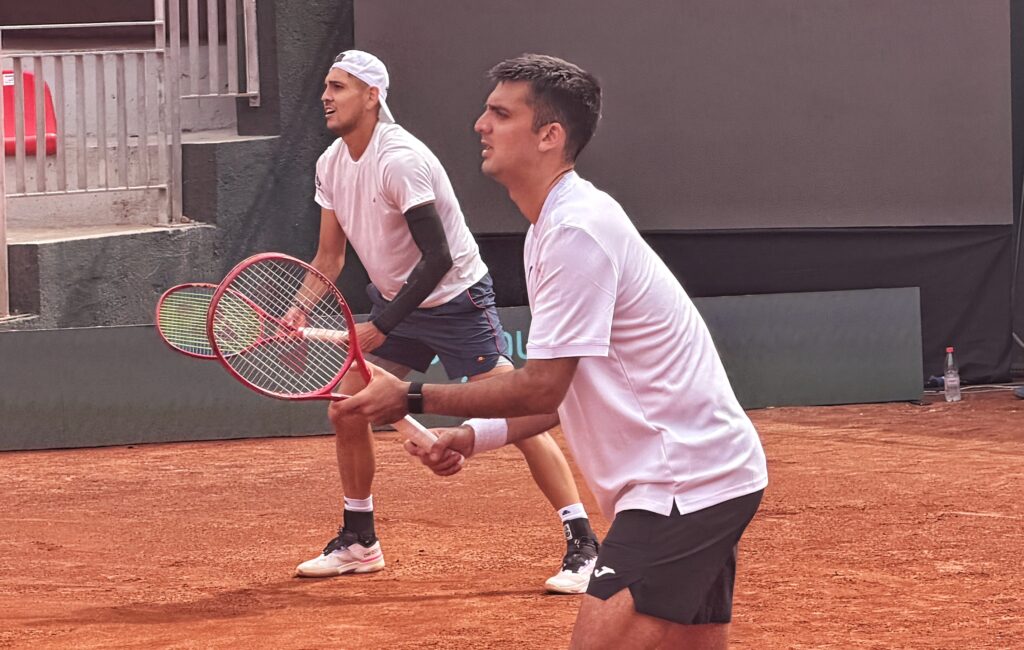
— You have gone from leading a team with Nadal, Alcaraz and Granollers to one with Jódar, Mérida and Landaluce — from established names to players who are just breaking through. Does your role as captain change much?
— It changes somewhat, but not that much. As captain, what you have to do is get to know each player and understand what they really need. As a player, I was both young and experienced, and I know what each stage requires. I am very comfortable with my team. It is true that it is a young team, but it is also true that they have already played important tournaments — they know very well what it means to handle pressure. That gives you more confidence than if you had a young team without the significant results that Dani, Martín and of course Rafa have already achieved.
— You said at the press conference that your players are prepared for the pressure of a crowd like the one in Chile. You have played in very hostile atmospheres — like the final against Argentina in Mar del Plata. What advice do you give your players to make sure they come out mentally ready?
— I tell them they have to go in accepting that it is going to be like that — that it will not be a match like any other. That they focus solely and exclusively on their tactics, their work, their mentality, and that there will be difficult moments when they have to withstand that pressure. From there, they need to find the motivation to win in a different and hostile environment. And I think that can be a good thing — I think you can actually use a situation like that to be even more focused, or to channel that extra edge.
— It is always said that Davis Cup is a different competition. What does a player need to shine in it?
— First and foremost, they have to be very good tennis players. That comes first. They need the talent to be a strong player, but they also have to be team players — in a team, everyone has to accept their role. When the team atmosphere is good it is always much easier to win in Davis Cup. Obviously, if you have very good players but the atmosphere is not great, you still have a chance, because in the end it comes down to two individual matches. But a good team atmosphere is fundamental, and in that sense I am lucky to have good people around me — people who support each other.
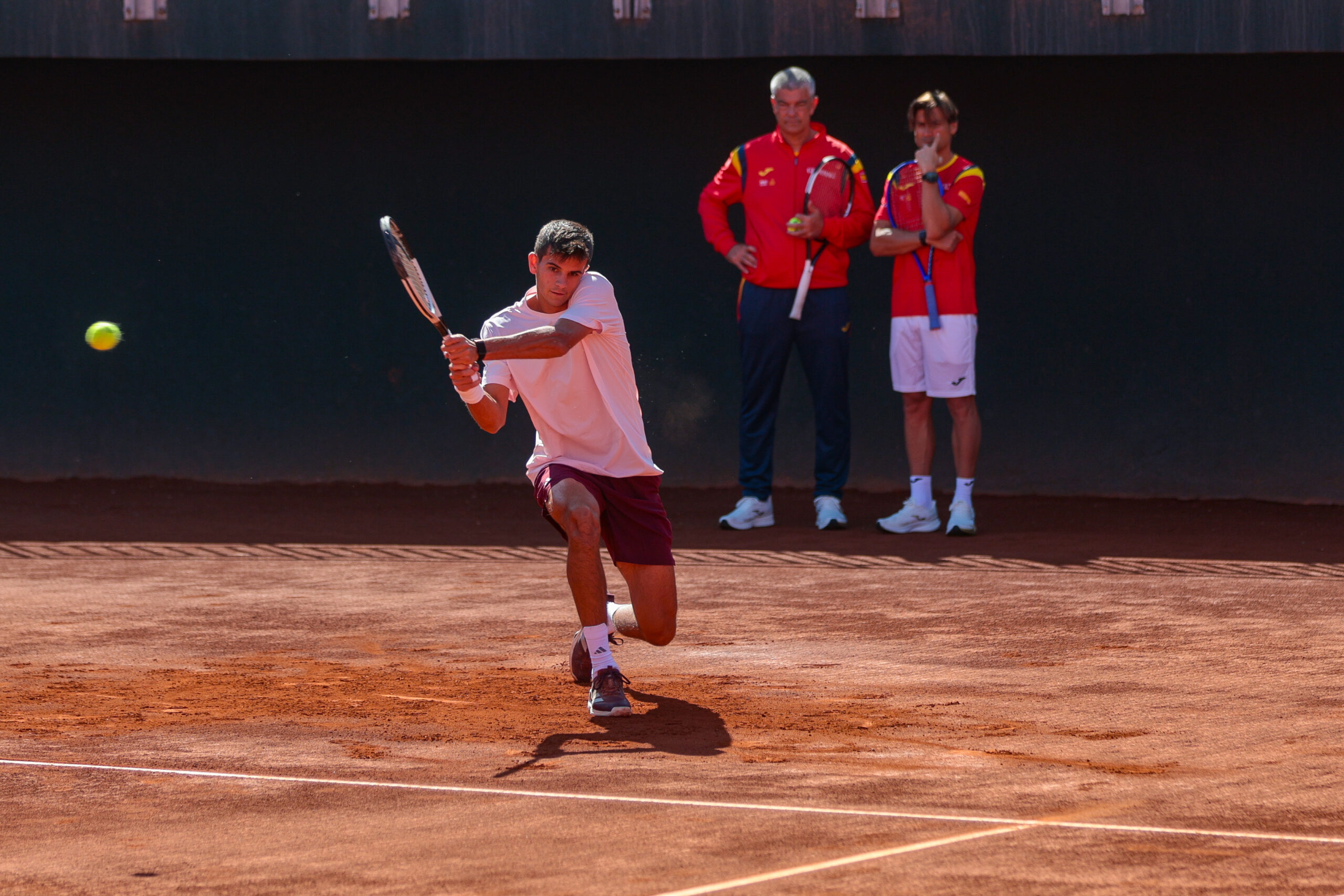
— You have followed Rafael Jódar’s progress very closely this year. Did you see something like this coming?
— We were aware that he was a different kind of player, a very good player. Obviously he has had a truly impressive year and I did not expect that at this stage of the season he would be inside the top 10 of the Race with a chance of qualifying for the Tour Finals. But it is true that from the time we had him as a sparring partner in Davis Cup a few years ago, we saw his potential — without a doubt.
— It is unusual to still see him with only his father and no team around him. Do you think that could be holding him back?
— No, no, I don’t think so. Look, first let’s start from the fact that his father has done an incredible job in every respect — as a fitness trainer and on the tennis side. We are talking about someone who has gone from having no ranking to being inside the top 10 of the Race. So straight away you say: ‘Not just anyone does that.’ Obviously you have a son who plays very good tennis, but the father has done a flawless job since he was young — and managing the roles of father, coach and fitness trainer is not easy. He has done an exceptional job. Beyond that, I am not there day to day to say what he needs. What I do know is that Rafa Jódar senior has done and continues to do an incredible job.
Ver esta publicación en Instagram
— I wanted to ask you about the future of tennis in South America. It seems Buenos Aires will stop being played on clay in the near future and will switch to hard courts. Do you think that is a decision that will help Latin American tennis or, on the contrary, hurt it?
— It is hard to say. Obviously it is a shame that tournaments with so much history, in countries where tennis is followed so passionately, lose that history. But it is also the evolution of the tour. It is complicated for me to think about and it makes me very sad, because I am someone who truly loves this sport.
— And it was a fixture on the Latin American swing.
— Yes, I am passionate about these tournaments that are part of the history of the game, where people genuinely value the athlete, the tennis player. So seeing this kind of tournament slowly disappear makes me very sad on a personal level.
— There has been a lot of talk recently about whether tennis should eliminate the fifth set. You were one of the most tenacious fighters the sport has seen — someone who thrived in those wars. Do you think the fifth set should be untouchable in tennis?
— It is true that perhaps alternatives could be explored at the Grand Slams too — something like a Final Four format where the semis and final are best of five, different combinations are possible. The ratings generated by the new generations should also be studied carefully to see whether audiences will still follow a four or five-hour match. In the end, tennis is a business. But having said that, and understanding the commercial side of it, I love five sets — because the better player always has more options, there is always the possibility of coming back, of an impossible comeback. And a fifth set carries that extra pressure, that epic quality you simply do not find in a three-set match. In best-of-three everything goes by too fast. I love five-set matches at the Grand Slams.
Ver esta publicación en Instagram
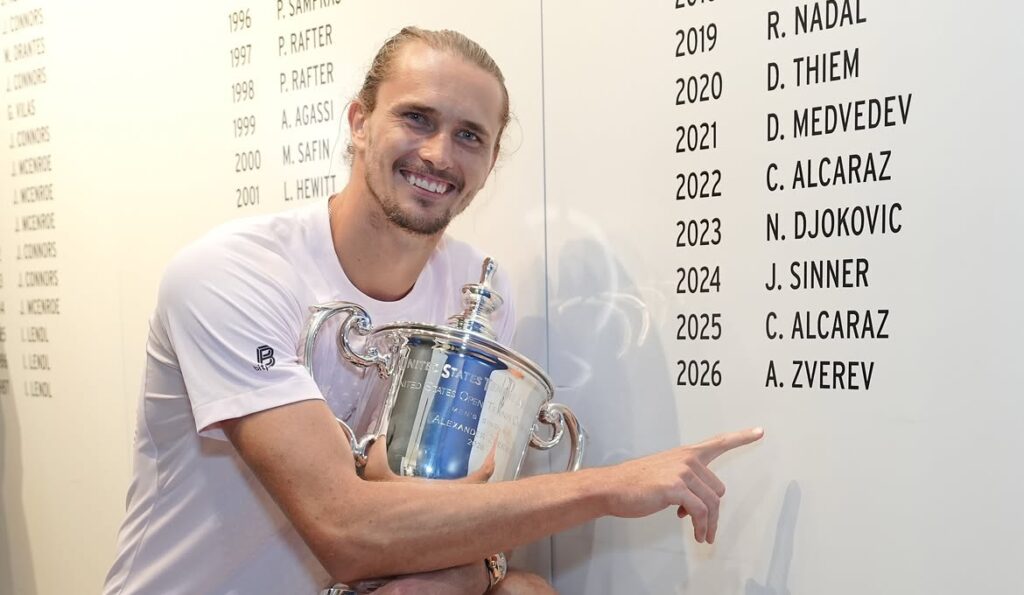
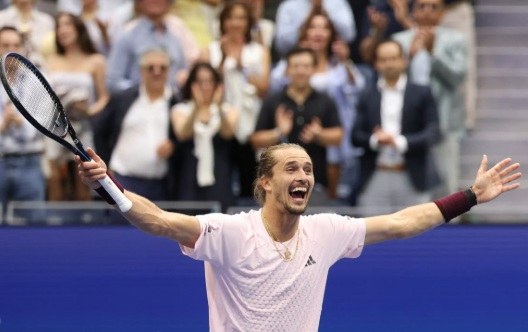
— You coached Zverev for six months in 2020 and know his mind and mentality very well. Why do you think he has clicked this year and ended up winning two Grand Slams?
— I think Sascha has always been there. The problem was that he had two players — Carlos Alcaraz and Jannik Sinner — who would not let him win Grand Slams. Now he has managed it, but he has always been right there. He is a very competitive, winning player and he has taken his opportunity. Sascha had already won very important tournaments — Masters 1000s, the Tour Finals — and had reached Grand Slam finals. I think his time had come, he was ready and he made the most of it. I have never had any doubts, because he is a player who rises to the big moments — he always has been.
— And as someone who squeezed everything out of his career until the very end, what goes through your mind when you see Novak Djokovic’s situation? What advice could you give him about the decision to retire?
— I would not give him advice — least of all Djokovic. Look, right now Novak has had results that are not normal for someone of his standing, especially towards the end of the year. Let’s see how this year ends and how he approaches next season. Obviously every year gets more complicated and more difficult. Every player handles retirement in their own way and it is very hard to advise or say when. Every athlete’s mind is a different world — each one has their own challenges. And in the end every athlete has an expiry date; nobody is exempt from that. I have the utmost respect for Novak Djokovic whatever he does or decides.