

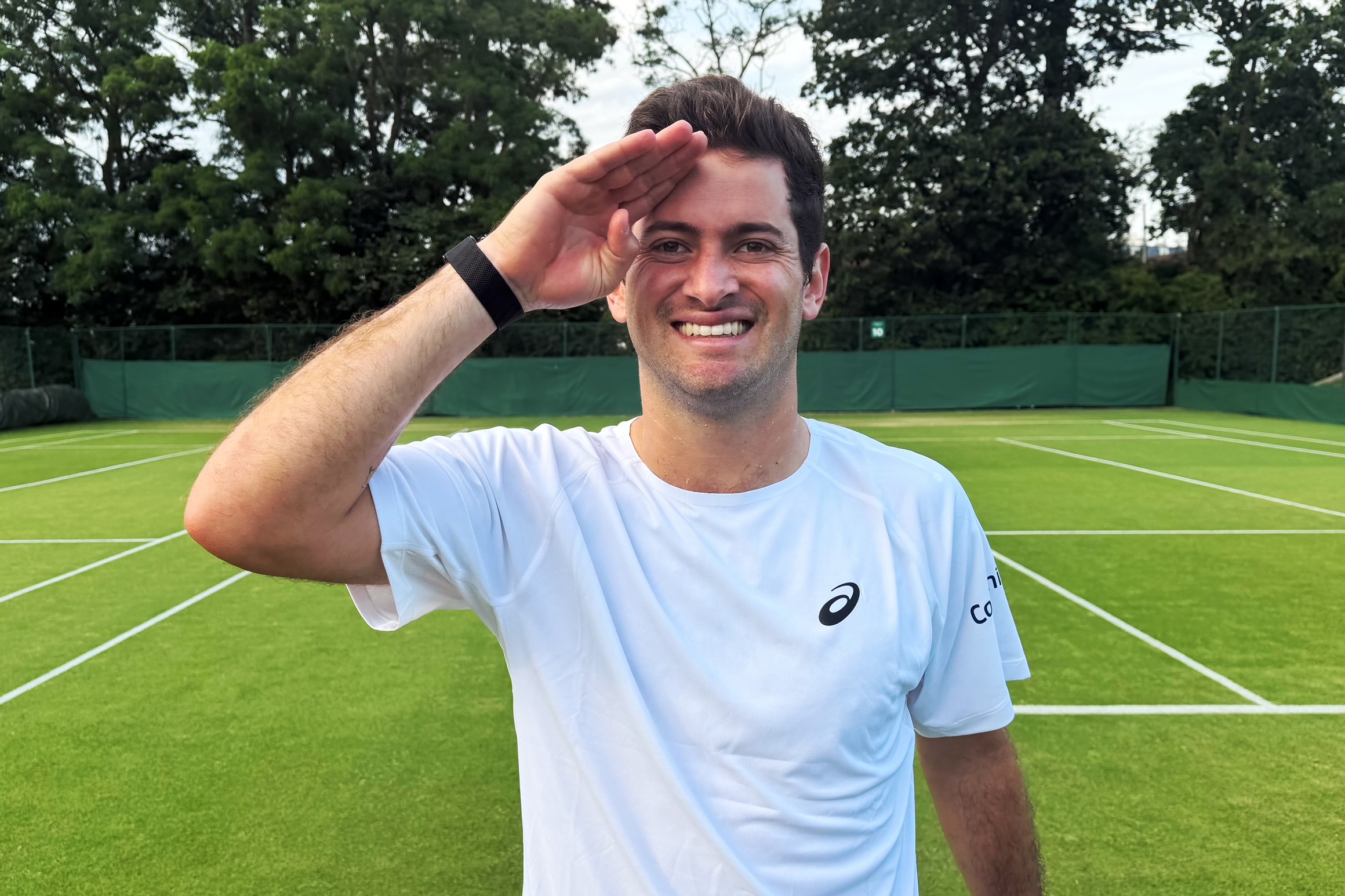

LONDON — It is unusual for a tennis player to talk politics. Even less so with the conviction of Colombia’s Nicolás Mejía.
“Colombia needs a firm hand. There is no respect for the law. When I go to the United States I am afraid to speak badly to a police officer, because the law comes first there and there has been a firm hand for a long time,” he said in an interview with CLAY in London.
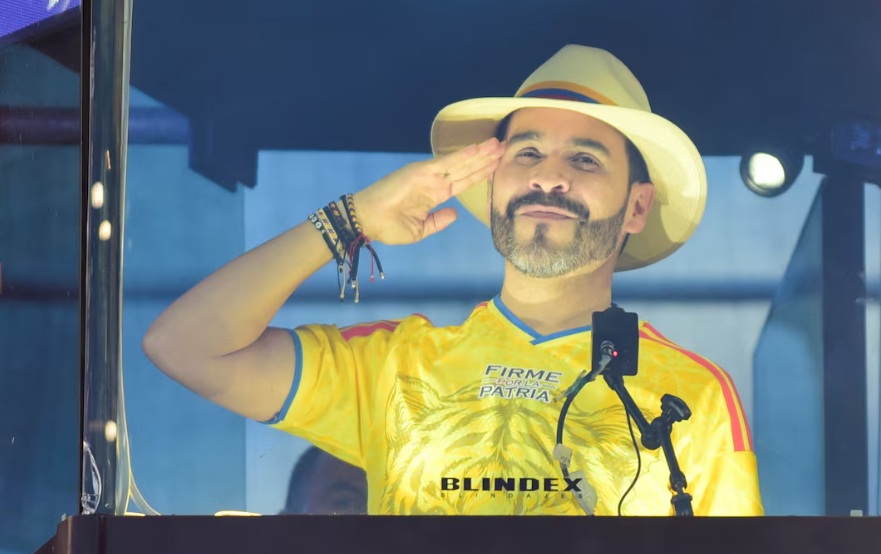
The 26-year-old is not only happy to have won his first match in Wimbledon qualifying. He is also celebrating with great enthusiasm the election victory of right-wing lawyer Abelardo De La Espriella — Colombia’s new president-elect — a man he has long admired.
“At the beginning, I’ll be honest, I felt a bit awkward saying it, because people looked at me like I was mad and told me no, that guy is anti-rights, this and that. From the moment I saw he was going to run, I said: this is the man, this is the guy,” he said.
Right-wing candidate Abelardo De La Espriella won by the narrowest of margins. He will become Colombia’s president from 7 August 2026.
Mejía, a former world No. 4 junior and current world No. 168, dreams of becoming the greatest tennis player in Colombian history and helping to change the narrative around his country: “Colombia has a very heavy history because of violence. And the truth is that all those Netflix series are complete bullshit, because all they do is stigmatise. I want us to be remembered more for what we athletes are achieving, and not for what a bunch of criminals did.”
Interview with Nicolás Mejía
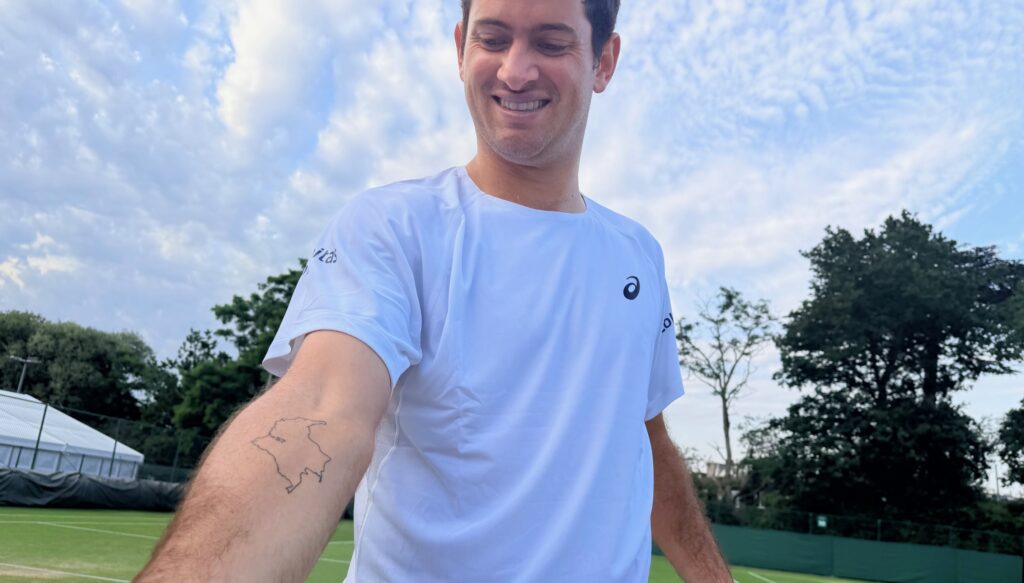
— You have a Colombia tattoo!
— Yes, of course (shows his right forearm). I only have two so far, plus this other one I got with friends (shows his left forearm). The obsession has kicked in. They say that once you get one, you start getting many more.
— That is absolutely true… And having the outline of your country tattooed on your skin must carry a deep meaning.
— I love my country, I try to be very patriotic. I want to explore much more of it — I honestly feel I still know almost nothing of it. I have not had the chance. I want to see every corner of it. I love representing Colombia. I have always dreamed of putting Colombia’s name up high, and I want to be the greatest tennis player in the history of my country.
— That is an ambitious goal.
— It is difficult, obviously, because we have had great players, both on the men’s and women’s side, but the truth is I want Colombia to have a Nicolás Mejía the way it has James Rodríguez, the way it has Luis Díaz. Hopefully I can reach that level, and that there are also many more Camila Osorios, Emiliana Arangos, Robert Farahs, Juan Sebastián Cabals… and that it is not only about football! That we can take tennis to a very high level, and that we can also, in some way, try to erase what people in the past have done so badly in our country. So yes, I want people in other parts of the world to talk more about our athletes, about our beauty as a country. About that, rather than our past.
— What hurts you most about that past?
— It is no secret that Colombia has a very heavy history because of violence, drug trafficking, armed groups outside the law. And the truth is that all those Netflix series are coplete bullshit, because all they do is… I understand they are important events, I understand that humanity deserves to know that part of history, but they stigmatise enormously. Up to a point, we are to blame, but the bad people are very few and the good people are far, far more in Colombia. Far more! So I would like us to be remembered more for what we athletes are achieving, and not for what a bunch of criminals did.
— Tennis is a very individual sport. Players usually compete for their own name, but given what you tell me, given that love for your country, do you feel that when you step onto the court you do it for your people?
— Honestly, yes. I have a very strong sense of self. Things have happened in my life that have toughened my character one way or another. I left home very young and left my parents early. My sister and brother-in-law took me in. The passing of my father (when I was 17) also shaped my character. And it is the character I like to have — competitive, on the court. Well, I am competing at Wimbledon for the first time. It is the tournament of my dreams. Yesterday I was at the club, at the All England, because a friend of ours — a member — took us there, and I said: there is no way I am losing in qualifying. I have to come back here next week. I had that extra motivation.
— Tell me a little more about your story.
— I am fighting for my dreams. I did well in the juniors, quite well. I would have liked my transition to the professional game to have happened a little faster and to have been at these stages or these events sooner in my career, but everyone has their own process. I am trying to do the best I can with what I have, making mistakes and correcting them constantly. I am a very family-oriented person, a great friend to those around me. That is how Colombians are. And I am very close friends with a Chilean player — Tomi Barrios. I thank God for putting people like him in my path.
Ver esta publicación en Instagram
— And off the court, what interests you?
— I love golf, I go mad for the Colombian national football team, and for some time now I have been deeply involved in politics because my country was going through a very difficult moment and thank God the “Tiger” (Abelardo De La Espriella, Colombia’s elected president) just won. People have had a go at me for talking politics, but that is who I am. I say things as they are, as I see them, and I believe that if today you cannot say what you think, if you do not feel free and if you do not respect those who think differently, we are in trouble as a society. That is why I say freely that I am overjoyed this man won. Politics has taken over my mind.
— How long have you been interested in politics?
— Since I was very young. The politics of my country, and international politics. I see politics as a way of understanding the cultures of the different countries I visit. I am passionate about understanding different systems of government. I feel that the previous generation instilled in us that you cannot talk about it, and I feel that today that is doing real damage to humanity. Because if you think one way and I think another, we have to try to talk, to see different perspectives, and we can get along perfectly well. Today there is so much polarisation because from a very young age we were not taught that others can think differently.
— Tennis players tend to avoid talking about politics. Most prefer to only talk about tennis.
— Yes, I agree, really. But everyone tries to separate athletes out because they see us as ignorant and think we cannot have opinions on things, when, with all due respect, many of us have been fortunate enough to travel and see much more of the world than many other people. I am not saying that travelling makes you an expert or gives you the right to criticise in any particular way, but to some extent we have seen the world from different angles. I think we can have an opinion, at least.
— Alexander Zverev said at Roland Garros that very few athletes have anything in their head. What did you make of that?
— The guy is a very important figure and anything he says is going to be in the spotlight. I want to think he did not say that completely seriously. Because if I have travelled, that man has travelled and seen everything. I think to be a tennis player you have to be a little crazy and out of the ordinary — that is absolutely true. But to say the words he said surprises me. I want to think he was not being entirely serious, honestly.
— Going back to the current political situation in Colombia… What do you think the country needs today?
— Man, we are more divided than ever. Yesterday the “Tiger” won by 250,000 votes. I think Colombia needs a firm hand. When I go to the United States I am afraid to speak badly to a police officer, because the law comes first there and there has been a firm hand for a long time. In Colombia there is no respect for the law. When there is no respect for the law, everything falls apart. Everyone ignores everything. Corruption, don’t even get me started — but corruption exists everywhere, because that is politics: you give me this, I give you that. I will be fascinated to see how Abelardo governs, with everything he has said and promised us. Because the man does not have much room to manoeuvre — he has no party backing.
— Would you call yourself a great admirer of De La Espriella?
— Honestly, even before he announced his candidacy, I have admired the man because he is an outstanding lawyer. From the moment I saw he was going to run, I said: this is the man, this is the guy. At the beginning, I’ll be honest, I felt a bit awkward saying it, because people looked at me like I was mad and told me no, that guy is anti-rights, this and that. I think he is going to be very good for the country. Álvaro Uribe (Colombia’s president from 2002 to 2010) was the man who arrived at the worst moment in Colombian history and rounded up all those criminals and gave them what they deserved. God willing, He gives Abelardo the wisdom and the clarity to also engage with the other half of the country, because like it or not, you have to listen — and the margin was very narrow. The reality is that the country is deeply divided, but I trust we are going to prosper.
If you enjoyed this interview with Nicolás Mejía, go check many more conversations with the great stars of the tour on this link to our site.