


Madness will be the word that defines the summer of tennis in 2028, for better or worse. Players and fans alike are in for a relentless, unprecedented stretch. From mid-May through the end of August, there will hardly be a week without a big tournament.
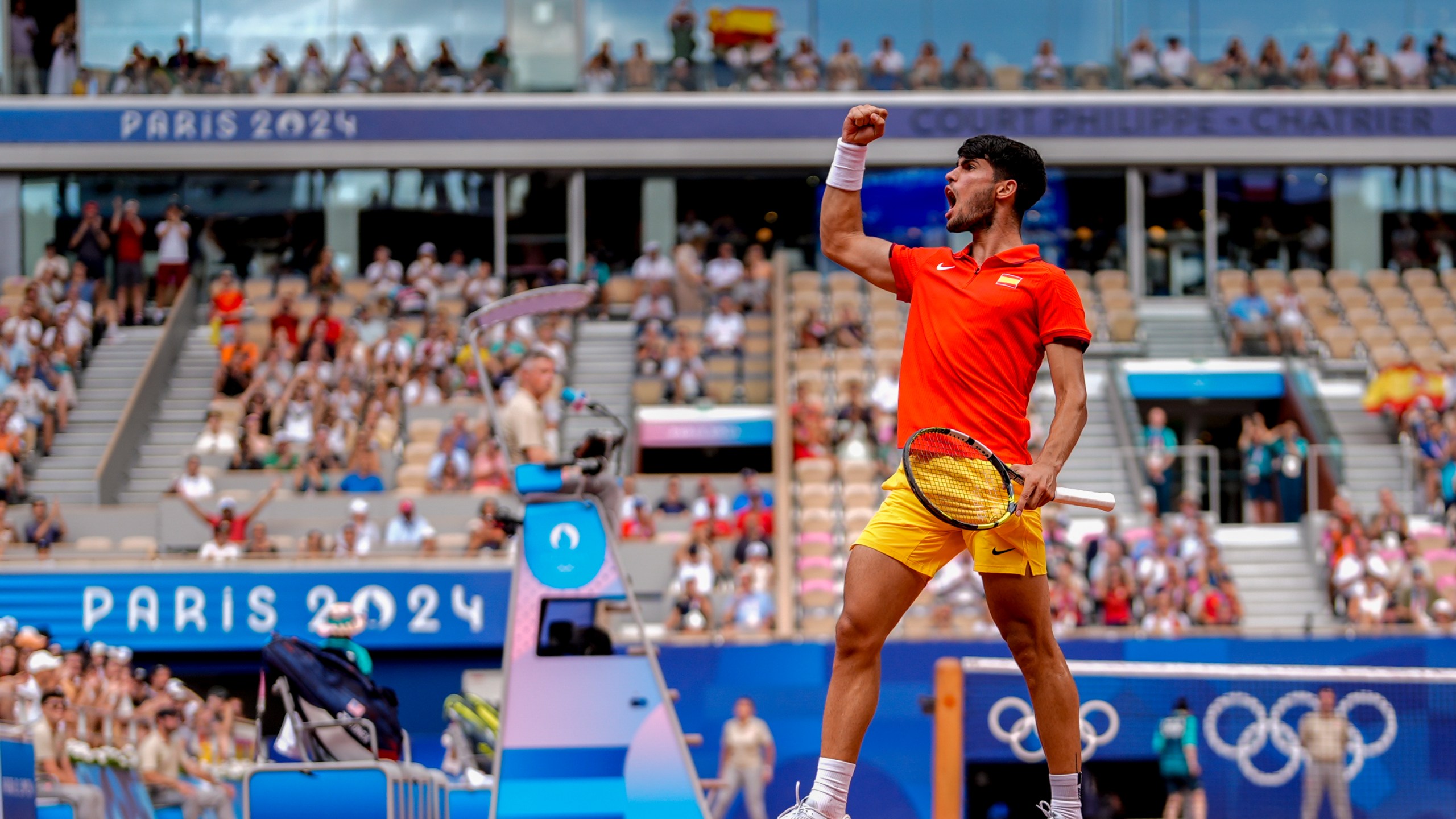
The game-changing factor will be the Los Angeles 2028 Olympic Games, scheduled to take place from 14 to 30 July. Their dates create an unprecedented overlap: the opening ceremony in California and the first days of the Olympic tennis event will coincide with the final stages of Wimbledon, whose men’s singles final is set for Sunday, 16 July.
The schedule is so tight that it borders on logistical absurdity. The Olympic tennis tournament will begin just 72 hours after the Wimbledon champion lifts the trophy on Centre Court. It is the shortest gap ever between a Grand Slam and the Olympic dream. One important detail, however: the Olympic tennis event will open with the mixed doubles competition, while the singles draws will not begin until a few days later.
“Dates for the Olympic Games are set by the host city (LA28) in conjunction with the IOC. Once notified of the dates, World Tennis opted for the schedule it felt provided players with the best opportunity to make the transition, giving them as much time as possible between the end of Wimbledon and the start of the Olympic Tennis Event.” a spokesperson for World Tennis, the sport’s international governing body, told CLAY.
It will be the first time that just three days separate a Grand Slam from the Olympic tennis tournament. The closest precedents were the seven-day gap between the US Open and the Beijing 2008 and Athens 2004 Olympic Games. The key difference was that, on those occasions, the Olympics came first and the New York major followed.
Los Angeles brings two additional challenges: the surface and the distance. Players will have to switch from Wimbledon’s grass courts to the hard courts at Carson Courts, the venue selected for the Olympic tennis event, while also racing against jet lag. Nearly 9,000 kilometres and an 11-hour flight separate London from Los Angeles. The challenge will be enormous, but so will the reward: what if someone manages to win Wimbledon and an Olympic gold medal in the space of just 15 days?
The packed 2028 schedule means there will be uninterrupted tennis from 3 to 28 July, a stretch that could become even longer once the dates for the Canadian Open, the Cincinnati Open and the US Open are confirmed.
As things stand in 2026, the North American summer swing begins on 1 August in Montreal and Toronto. If that schedule remains unchanged over the next two years, players will once again have only 72 hours between the Olympic Games in Los Angeles and the Canadian Open, just as they will between Wimbledon and the Olympics.
And the relentless stretch would not end there: in recent years, the day after the Canadian Open ends, play begins in Ohio, and just a couple of days after the Cincinnati final, US Open qualifying gets underway.
That is the new reality of professional tennis, one that players and fans see very differently. While fans look forward to a marathon summer of matches, players feel their concerns continue to fall on deaf ears at the ATP and Grand Slam level.
“So far, the approach has been to add more tennis rather than shorten the calendar. We have to face reality: the season is incredibly long and the tournaments are very long. The schedule is a bit of a mess, and it will be difficult for the younger generation to accept that they may have to sacrifice tournaments and some money for the sake of their health and long-term careers,” Stan Wawrinka told CLAY at the Australian Open when asked about the expansion of the tennis calendar.
One of the tournaments hit hardest by these changes has been the Canadian Open. Its proximity to the end of the grass-court season, combined with the Cincinnati Open the following week, has led Jannik Sinner and Carlos Alcaraz to skip the event every year since 2024 and 2023, respectively. Novak Djokovic, meanwhile, has not played it since 2018.
“The calendar needs to be restructured because right now it’s madness. Even people watching on television don’t know which tournament they’re watching or how many ranking points it’s worth,” former player Diego Schwartzman told CLAY.
That madness shows no sign of ending, and 2028 may become its clearest example. In addition to the marathon summer schedule, the new Saudi Arabia Masters 1000 is also set to debut that year. It will most likely be held in February, further disrupting the South American swing and squeezing the calendar even more for players who had hoped to rest after the Australian Open and before the Sunshine Double.
More travel, more events, more money and more exposure. Fans embrace it, but players — and some tournaments — bear the cost.