


ROME – Massimo turns his head slightly towards his passenger and utters a statement with the forcefulness and poise that perhaps only an Italian can muster.
‘Football is dead in Italy; there’s no football left. Tennis is the number one sport.’
One might think that Massimo, a taxi driver and sports fanatic, is trying to engage his passenger during the week of the Italian Open, but there is something very profound and true in what he says.
The Italian national football team has failed to qualify for the last three World Cups, and the Italian league “is less important than the Spanish and English leagues,” the taxi driver asserts. “Even if it hurts.”
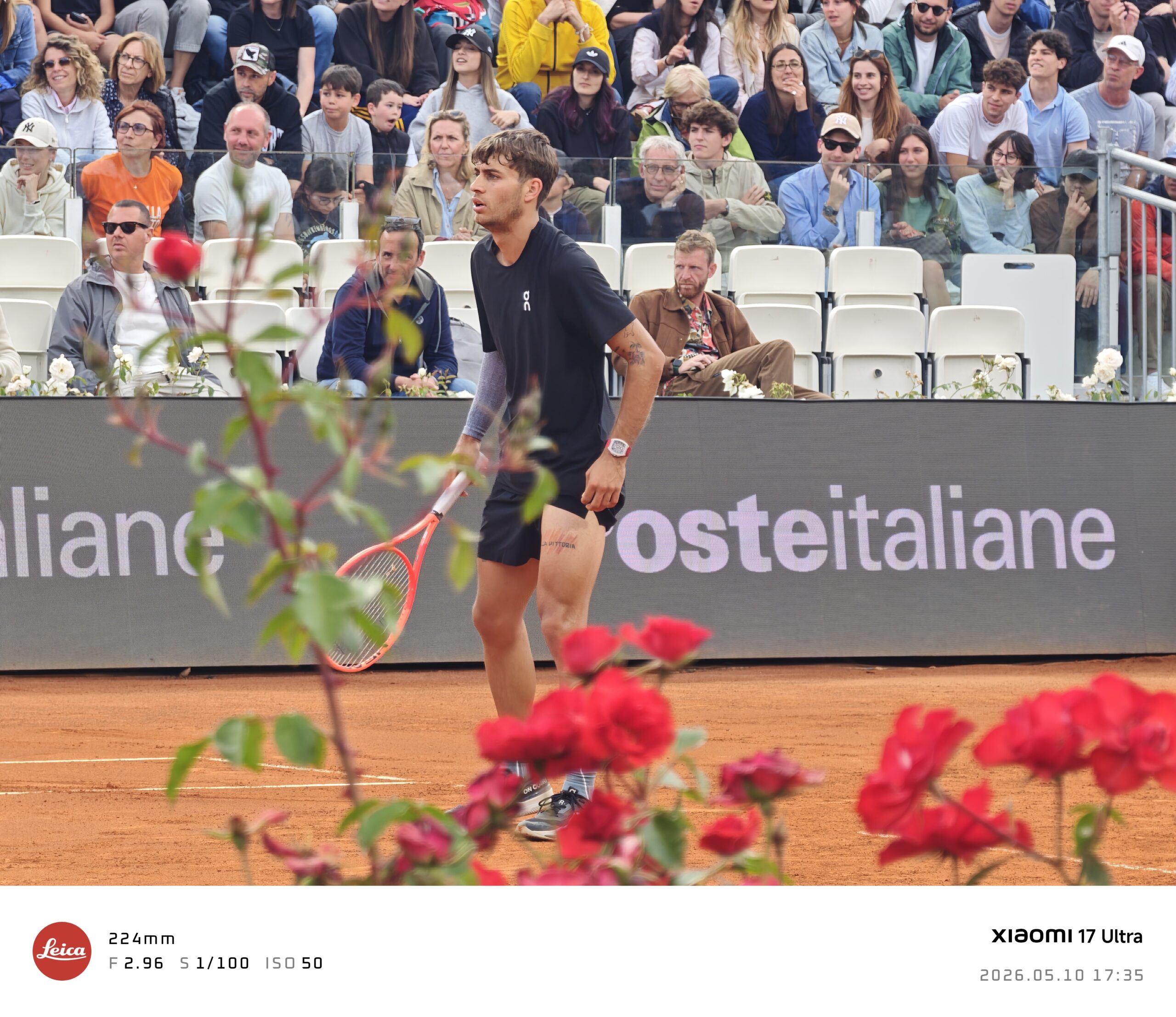
‘On the other hand, look at these lads, Sinner, Musetti, Cobolli, Paolini, so many lads and ladies who play and win,’ sighs Massimo, recalling the 1960s, when his family, having emigrated to Argentina, would bring a jar of dulce de leche as a gift for their relatives in Italy and he would sneakily eat it all: ‘When they asked me, I’d say I hadn’t seen the dulce de leche.’
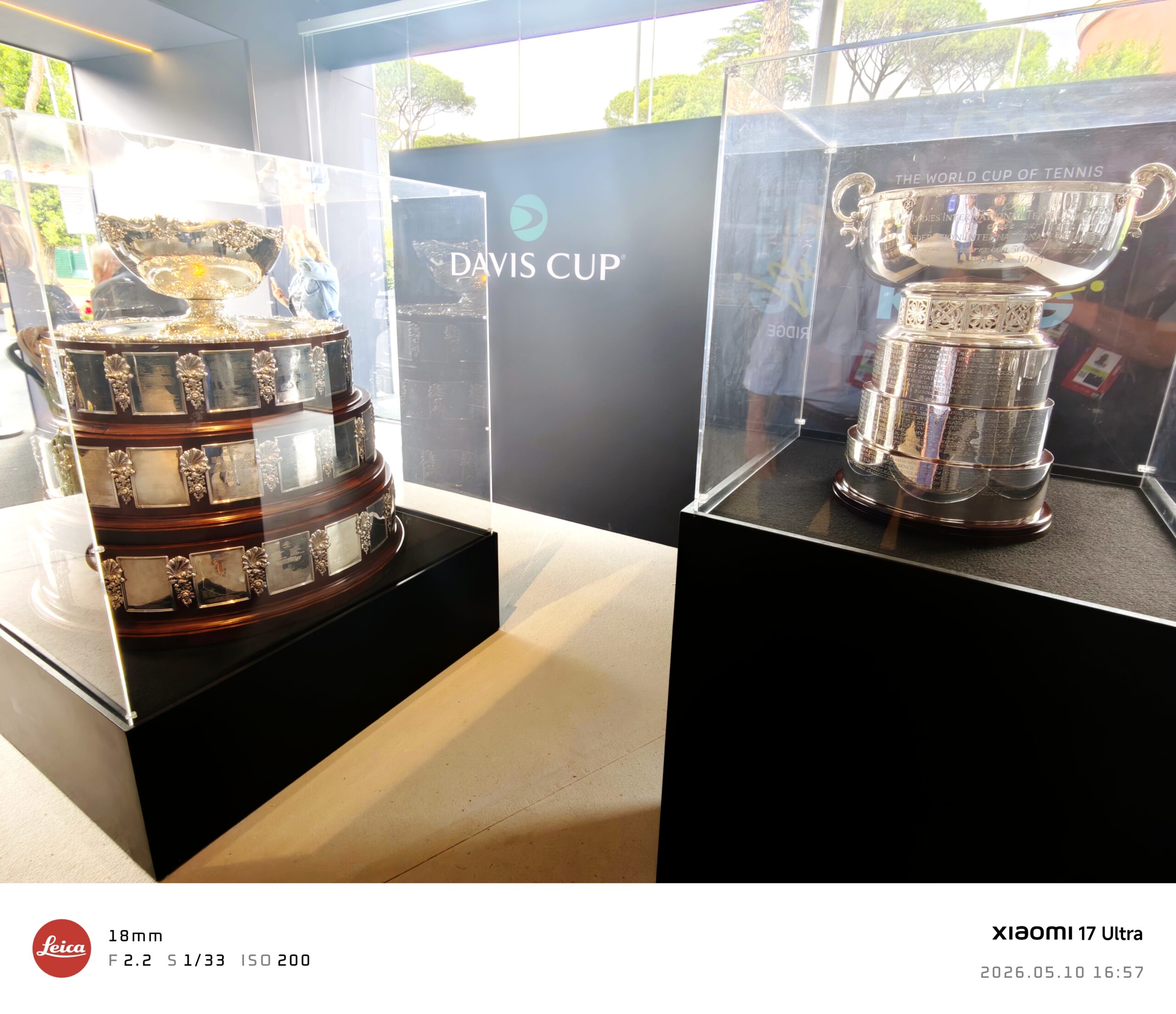
The one that eats it all up, too, is the ‘Federazione Italiana Tennis e Padel’ (FITP). Or at least that is the impression one gets from a tour of the Foro Italico, where the Davis Cup trophy, won by Italy in 2025, the Billie Jean King Cup trophy, won by Italy in 2025, and the 2025 season number one trophy won by Sinner are all on display. And the men’s and women’s trophies from the Italian Open, the second most important clay-court tournament and one of the most historic and significant events on the annual calendar.
What is the secret of “Sinnerlandia”? Why has Italy produced Jannik Sinner and so many other players who are now leading figures on the tour?
“There are two secrets: our agreement with the Ministry of Education and the decision not to have a National Tennis Centre,” a man who has lived at the heart of Italian tennis for decades tells CLAY. He is a key figure in the FITP but asks not to be identified, as he wishes to speak freely.
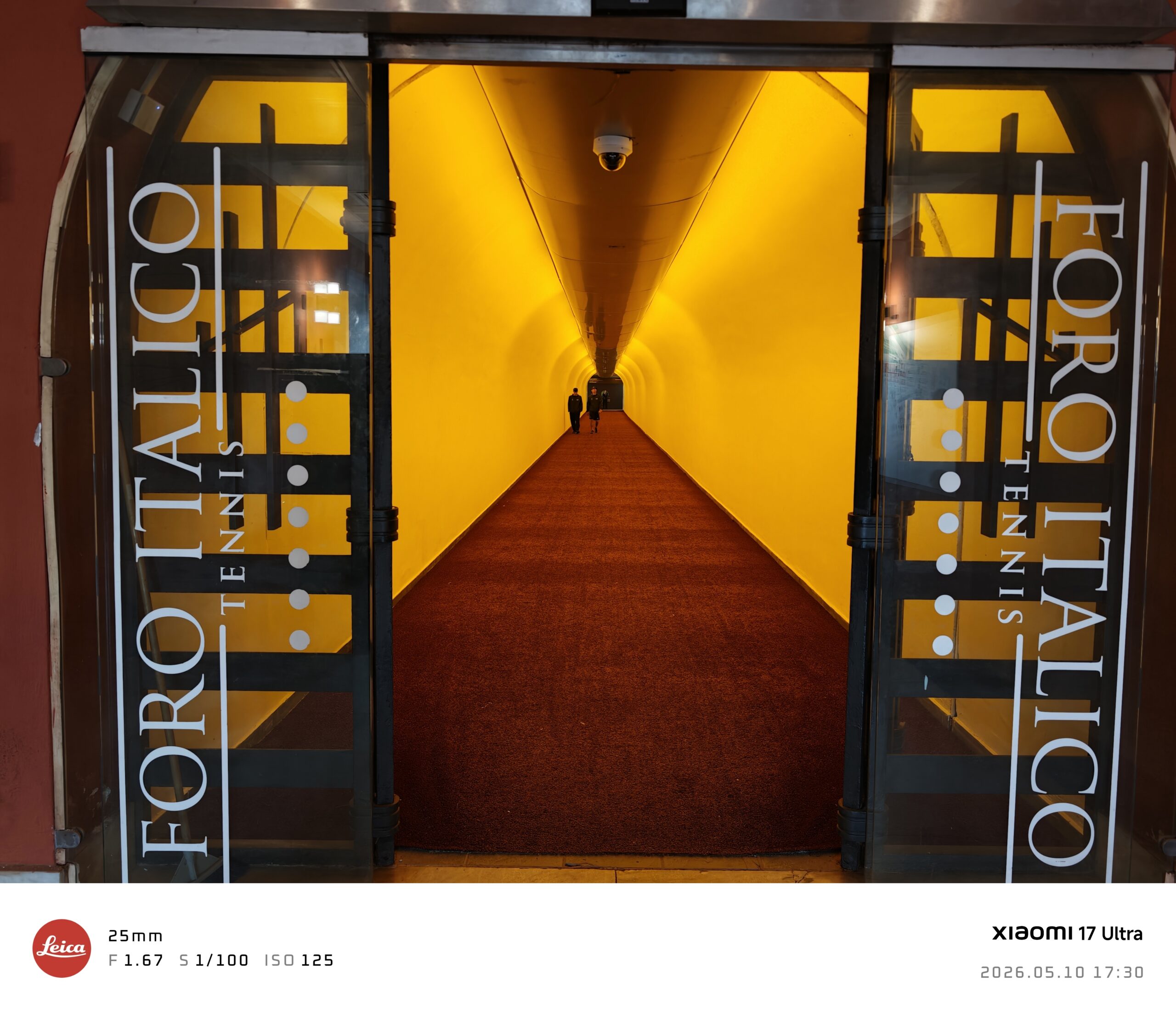
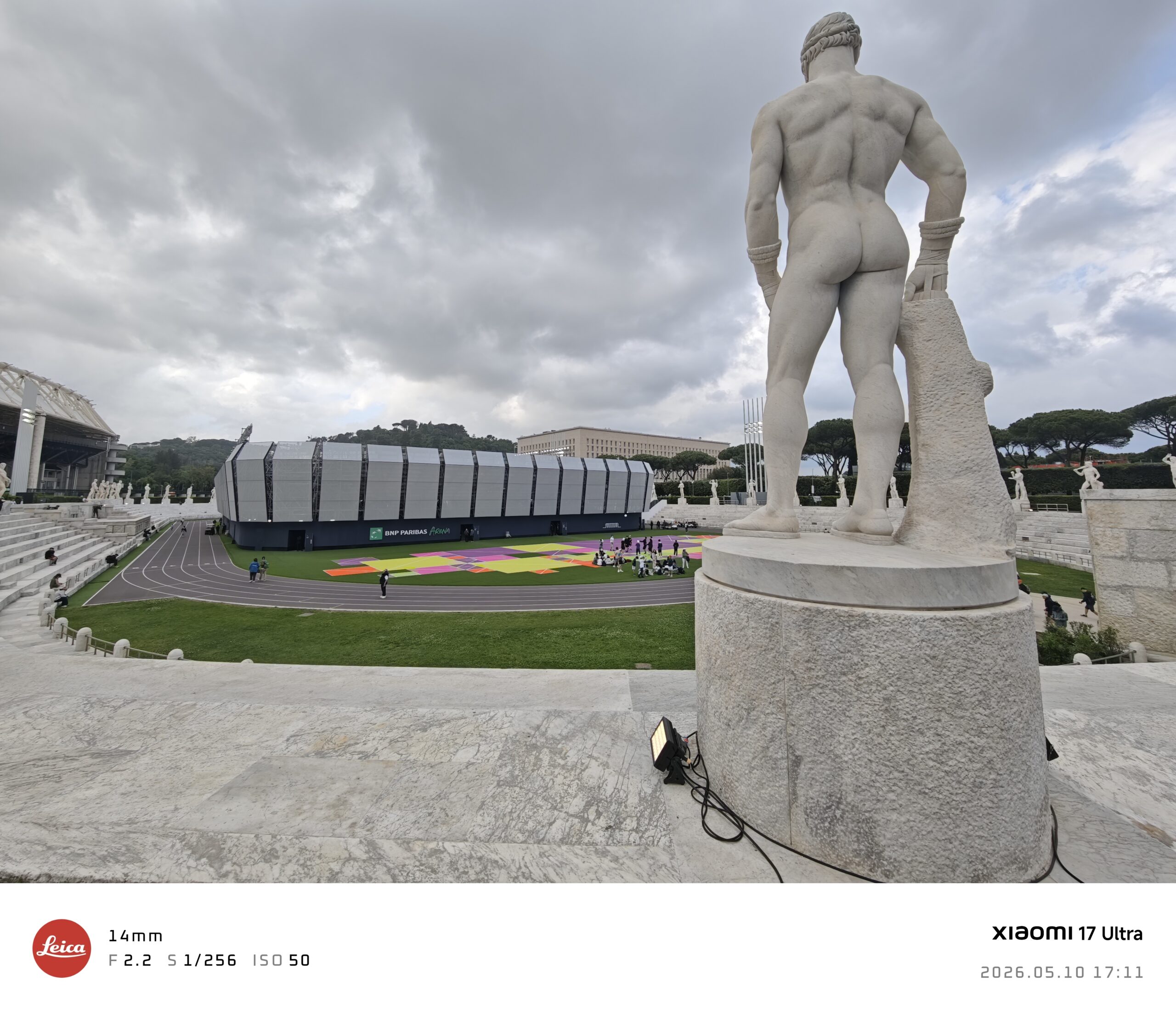
The tour takes CLAY through the stunning Foro Italico, an emblem of Italian Fascist architecture, inaugurated in 1932 under the name “Foro Mussolini”. The ‘Circolo del Tennis Foro Italico’ is based there, surrounded by Carrara marble statues depicting majestic Olympic athletes. There, too, inscriptions honouring the ‘Duce’, the dictator Benito Mussolini, abound.
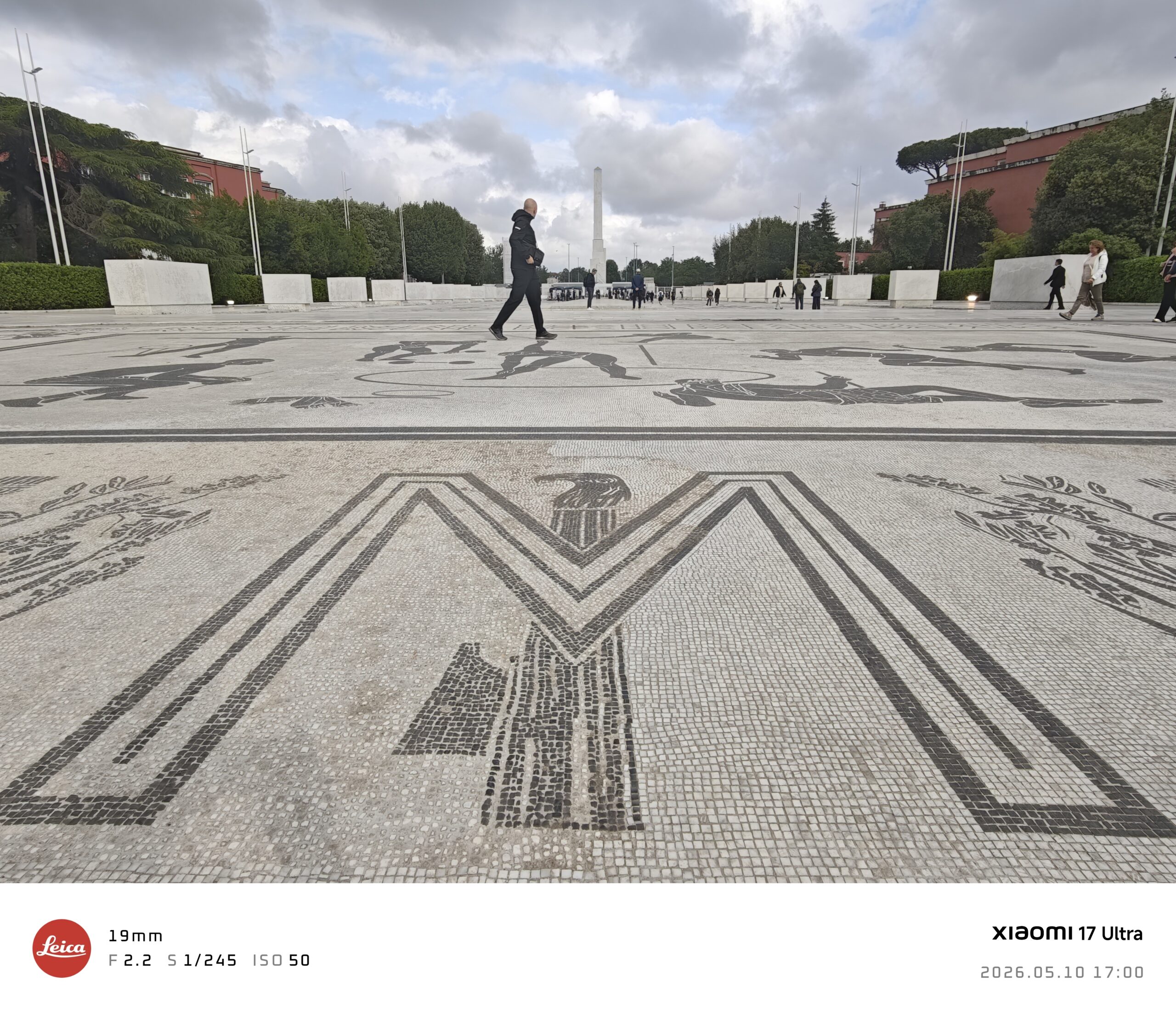
Mussolini’s ‘M’ on the marble floors of the Foro Italico / SEBASTIÁN FEST
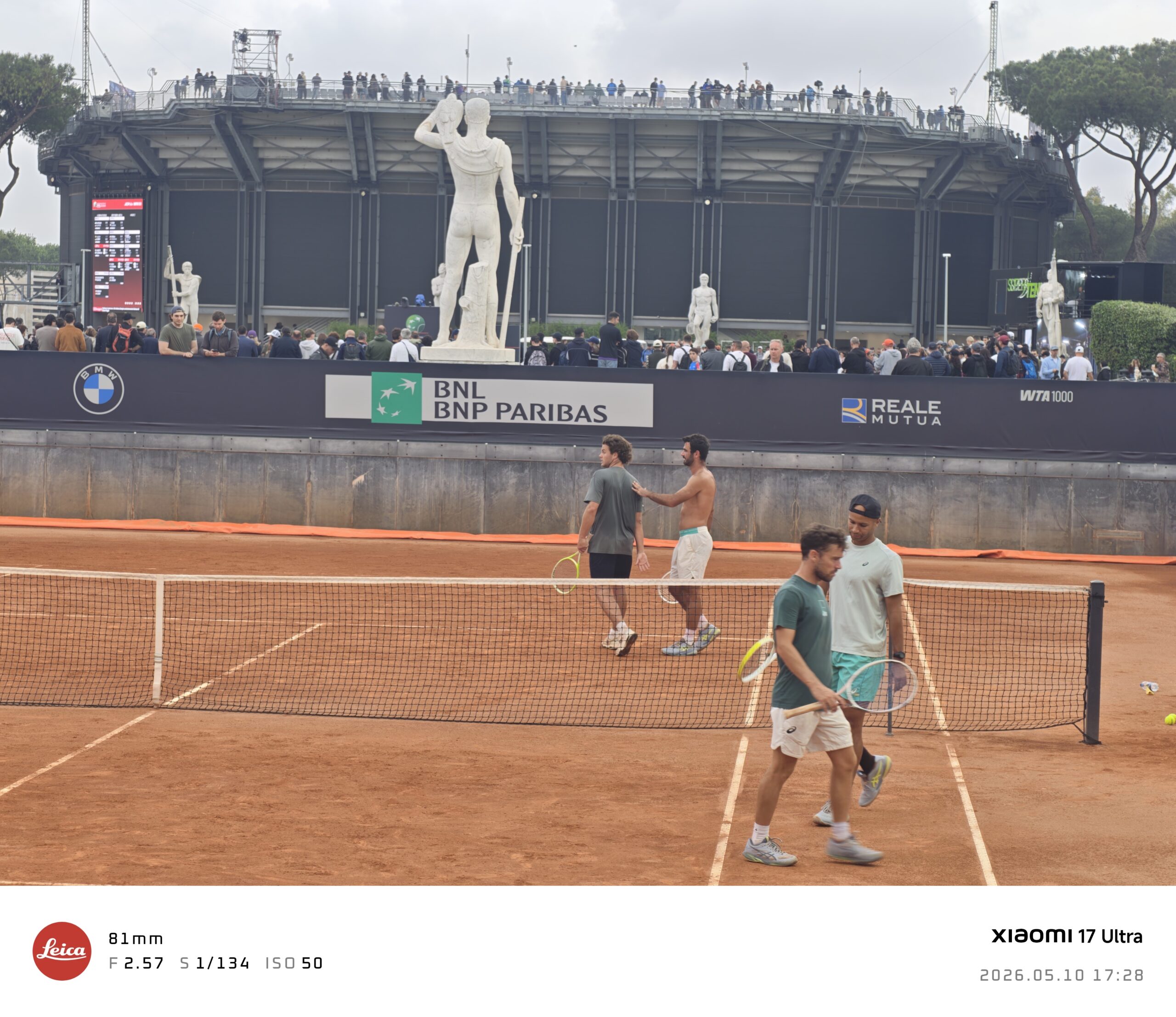
“Unlike what happens in other countries, we don’t erase our history. We show it as it was so that it is not forgotten and does not happen again,” explains the man who has seen it all in Italian tennis, before pausing to shout at the French tennis player Fabien Reboul, who is practising doubles in his semi-usual state, shirtless.
“Put your shirt on, you can’t play like that here!” he shouts at Reboul, who, taken aback, obeys and gets dressed.
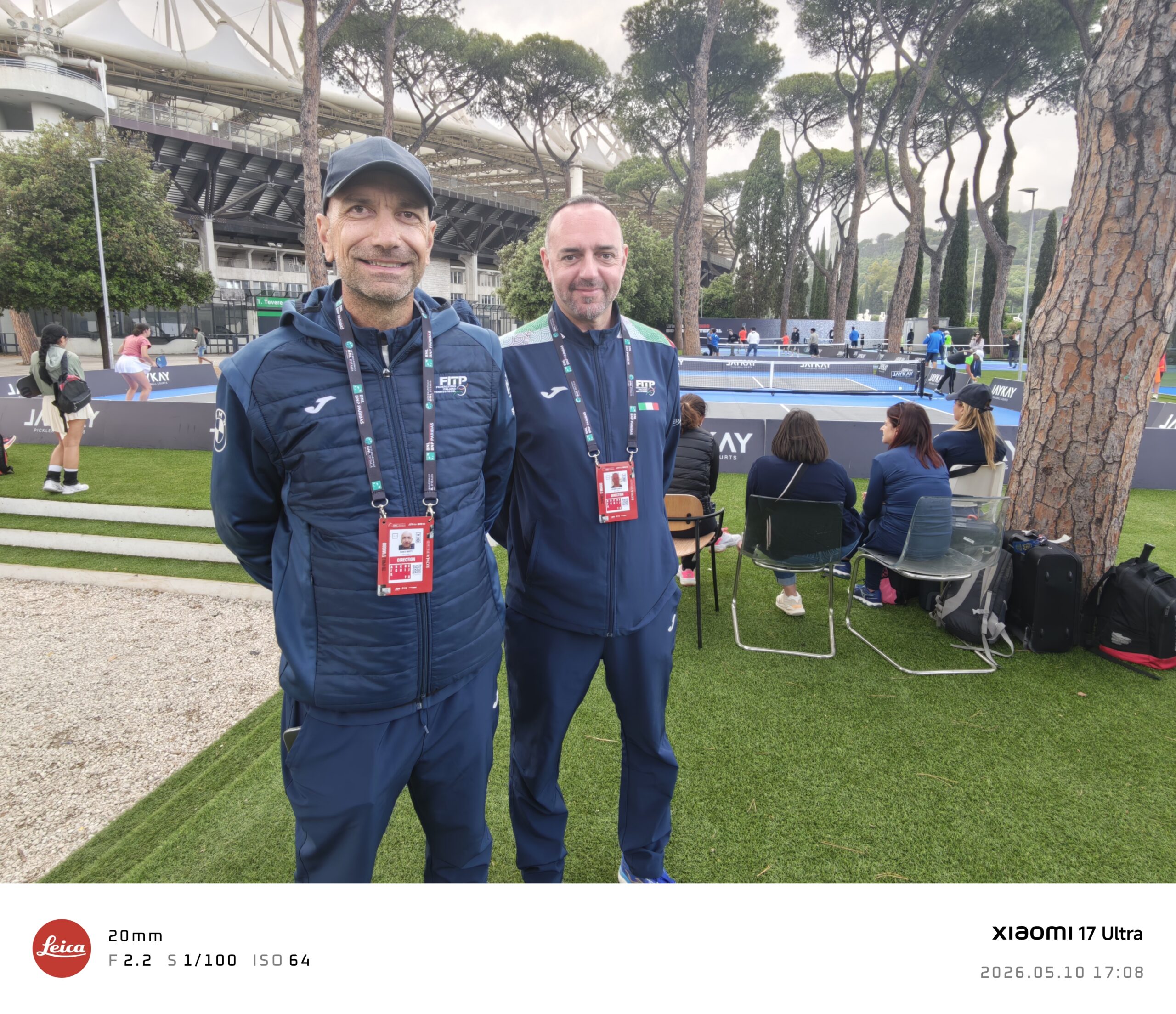
A hundred metres from Reboul, a group of young men and women are playing pickleball, the sport some believe will spell the end of tennis. The FITP sees things differently: it has incorporated both padel and pickleball into its fold, having observed that when these sports grow, tennis benefits too.
‘It boosts it; we’ve confirmed this,’ Marco Marte and Zelindo de Giulio tell CLAY, the federation’s two pickleball instructors, who, with the incorporation of padel, now oversee the main racket sports: 11,000 registered pickleball players, 110,000 in padel and 1.1 million in tennis. The annual budget? Around 250 million euros.
Sport e Salute (Sport and Health), the Italian state-owned company promoting physical activity, is responsible for managing the Foro Italico, where multiple sports are played, and for the state’s entire sporting heritage. The Italian Open, one of the most traditional tennis tournaments and one of the few major tournaments played at a club, is owned by the FITP.
‘The tournament is spread over 20 hectares, six more than Roland Garros, although they undoubtedly make better use of theirs.’
The key to ‘Sinnerlandia’, insists the FITP representative, lies in the agreement with the government and the decision taken back in 2005 not to centralise players at a National Tennis Centre, which is the dream and ambition of most countries.
“We are committed to regional centres. Because that gives players more opportunities. (Matteo) Berrettini wasn’t among Italy’s top 20 as a junior; he wouldn’t have made it to the national centre. But he stood out at the regional centre. And we’re talking about a country with 20 regions and 92 provinces!”
There are two other factors in favour of not sending the best players to a national centre in Rome.
‘On the one hand, the Italian character: this way the child doesn’t cry because he misses his mother. On the other, the coach stops worrying that the player will be ‘poached’ and can work calmly. Periodically, the FITP’s technical team reviews the work and the players from the different regions and gives the coach new instructions, but that provincial coach can work calmly and the children don’t leave their homes or their families.’
And there is something else that is unique to a federation of the Italian federation’s calibre: the Supertennis.tv channel, managed by the FITP, which allows tennis fans in Italy to watch all tournaments for free. This is how a passion for and love of tennis is fostered.
“We invest so that everyone can watch tennis for free: this doesn’t happen anywhere else in the world.”
The agreement with the Italian Ministry of Education is another key to the success of tennis in the country: children in all schools have access to a coach and can play tennis outside school hours. And for 20 euros a month, they become members of the federation. Every year, the Italian Open invites 70,000 children to watch the tournament.
It is no surprise, then, that players are springing up even in pizzerias. Nor that football is suffering.
Do you love CLAY? Support us on Ko-fi and follow us on Instagram, X (Twitter) and Facebook.