

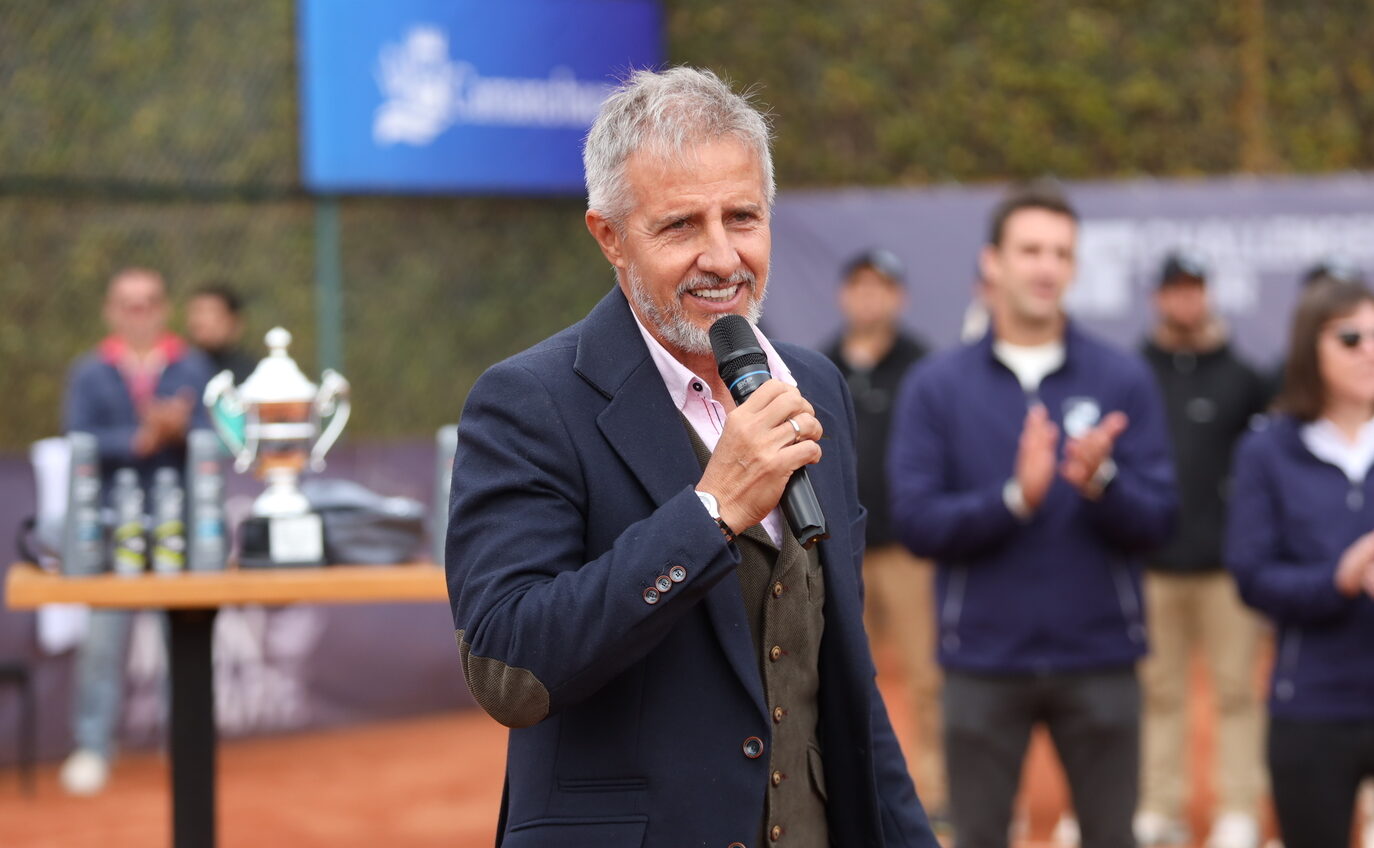

SANTIAGO, Chile — The world of betting places tennis in complicated territory, and low-ranked players in a vulnerable position. Former tennis player Horacio De La Peña steps into the shoes of those players who are tempted with large sums of money in exchange for losing on purpose.
“A player who sees he isn’t winning matches, then someone comes along and offers him a lot of money. It is very hard to control and very hard to judge,” said De La Peña, the mind and driving force behind several Challenger circuit tournaments in South America, during an interview with CLAY.
“The early years in tennis are very hard. Everything is expensive and it is very easy to tempt players who are struggling. It makes me very sad, I am completely against it, but I think about the reality of a kid who cannot travel to tournaments, cannot buy himself a racket. I would not wish it on anyone,” explained the former world No. 31 and four-time ATP title winner.
The Argentine-born naturalised Chilean highlights the intensity with which tennis is lived in the southern part of the world: “Whatever anyone says, we do successful things here. Whether it is the world No. 5 or No. 50, the stands are full.”
Interview with Horacio De La Peña
— This year at the Rosario Challenger 125 in Argentina, two players reported threats ahead of their matches. The incident shed light again on an increasingly common issue. How should security protocols be handled to prevent these situations?
— We are well aware that these things can happen. Within my team we are always moving around the club, and whenever we see something unusual we report it to the supervisor. Imagine — if a player comes to us and says “hey, something happened,” we let the relevant people know immediately.

— These threats and intimidation attempts often reach players directly on their mobile phones. There have even been direct threats at the hotel.
— Fortunately, we have not had any cases in our circuit. And the times we have noticed something unusual — “hey, look, this person is over there making calls” — we report it and it gets sorted out immediately. But these kinds of phone threats are very difficult to trace.
— How do you think the betting world impacts tennis?
— A lot, and very badly. It affects us directly because tennis is the second most bet-on sport in the world. There is a reality here: the early years in tennis are very hard. Everything is expensive, the horizon can look very bleak, and it is very easy to tempt players who are struggling. So a player who sees he is not winning — someone comes along and offers him a lot of money. It is very hard to control and very hard to judge. It makes me very sad, I am completely against it, but I think about the reality of a kid who cannot win matches, cannot get to tournaments, cannot travel, cannot buy himself a racket. It is tough. It is a reality you would not wish on anyone.
— There should also be some kind of professional support structure to help players through those situations.
— In our organisation we talk a lot with the players. If there is one thing that defines us, it is that we are like a family. Players come and feel supported. We take care of everything — making sure they are comfortable, that they are happy, that if they have a problem we can help them solve it.
— How much do you think the new Masters 1000 in Saudi Arabia will affect tennis in Latin America?
— The clay court season in South America runs opposite to Europe and the United States. That is just the reality, and there is no fighting it. However, we genuinely put on very successful tournaments in South America. Whatever anyone says. Look at the ATP events in Argentina, Rio and Santiago — they are all successes. That is the truth. Whether it is the world No. 5 or No. 30, every tournament is sold out. And they are spectacular events.
— And at the Challenger tournaments you organise — is it the same?
— Yes. At our last tournament, four out of seven days were sold out.
Ver esta publicación en Instagram
— Does that speak to how tennis is experienced in South America compared to other parts of the world?
— In the three countries that host ATP events in South America, tennis is very important. But it is not just that — I was telling you that at Challenger level we had full stands for several days, and that does not happen in Europe. In the United States, not a chance. For the United States, a Challenger tournament is a burden; for us in South America, it is a massive event. It is important to work on how you sell it, how you give it significance.
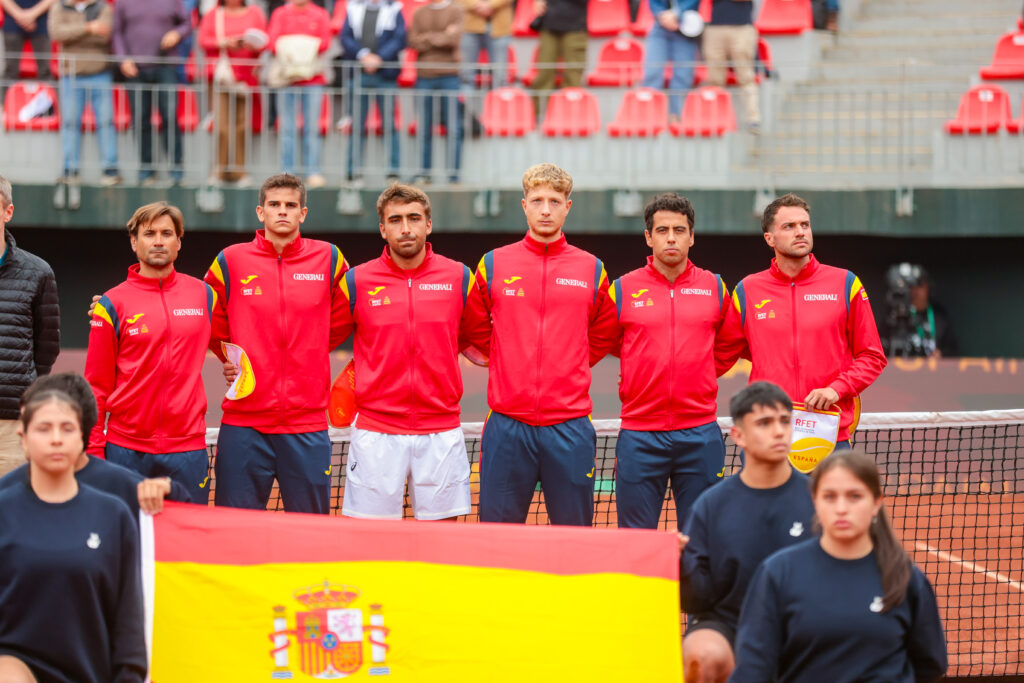
— What do you expect from the Chile vs Spain Davis Cup tie?
— I see it as a very interesting match-up. I think that, given the dates and his injury, Alcaraz will not be able to play. Davidovich Fokina will find it very difficult as the top player. Two young players with enormous potential have emerged — Rafael Jódar and Martín Landaluce — and the rest of the Spanish players are at a similar level to the Chileans. Chile will need to make the most of home advantage. It is genuinely very difficult for any team to come and compete in Chile expecting to take the win.
— Who is the favourite?
— Chile, because of home advantage. If I had to back someone, I would say Chile wins.
— Crossing over to the other side of the Andes, Argentina’s defeat in South Korea with an alternate squad stirred a lot of debate.
— This is the third year in a row that Argentina has had a bad draw. They are playing Davis Cup far from home, away, right in the middle of the only three ATP clay court tournaments in South America. That makes it very difficult for the top players to commit to the team. Last year they managed to win, and this year Argentina had the misfortune of losing.
— Several players choose to prioritise their individual careers over representing their country at any cost.
— No, it is not that they prioritise one over the other. The reality is that unfortunately they have had three consecutive years with a very poor draw, having to play indoors, on hard courts, away from home. That is simply what they have had to deal with. It is a shame. I can speak more closely about what happened to Tomás Etcheverry — last year, when I was coaching him, we went to Norway and he came back destroyed. By the time the clay court swing came around he was exhausted from the changes in climate, ball, and everything else. It takes a tremendous toll. Argentina has had very bad luck in recent draws.
— The Legión Sudamericana circuit is now six years into making a significant mark on the Challenger tour. How do you assess the journey? Were the goals set in 2021 achieved?
— We never dreamed of results like these. We have surpassed any dream or prediction we could have imagined. When we launched the Legión Sudamericana, we wanted to improve conditions and opportunities for South American tennis players. Today, almost every player from the region who is well ranked either started out or had their breakthrough when the Legión got going.
Ver esta publicación en Instagram
— Which players are an example of that impact?
— From Sebastián Báez to the Cerúndolo brothers, Alejandro Tabilo, Tomás Barrios, Facundo Díaz Acosta, Luciano Darderi himself — who today is a semifinalist in Rome and inside the top 20. When we started, he was ranked 300! All of them either began or improved their ranking through the circuit. Báez was 320, same as Francisco Cerúndolo. Those two played the first Challenger final in Concepción in 2021. Look at what has happened with players like Daniel Vallejo. From Paraguay, he would never have had the opportunity to break into the top 100. This kid has not stopped winning tournaments in South America. Without ever having to travel the world, he is already in the top 80 and is set to play Roland Garros.
— Without a circuit like this, how difficult is it for a South American player outside the top 200 to sustain a career financially?
— It is genuinely impossible to expect them to make long trips to Europe or the United States. Only federations with significant resources, like Brazil’s, or businessmen who back players financially can make that happen. And that is very rare.
— As someone with deep knowledge of emerging South American tennis, who should we be watching for the future?
— I think Vallejo, Juan Carlos Prado, João Fonseca and Ignacio Buse are all players who play at a very high level. More than prospects — despite their age — they are already the real deal. They will form a very strong group.
If you enjoyed this interview with Jasmine Paolini, don’t miss many other interviews with the protagonists of the tennis tour. Click here and read much more for free.
Do you love CLAY? Support us on Ko-fi and follow us on Instagram, X (Twitter) and Facebook.