

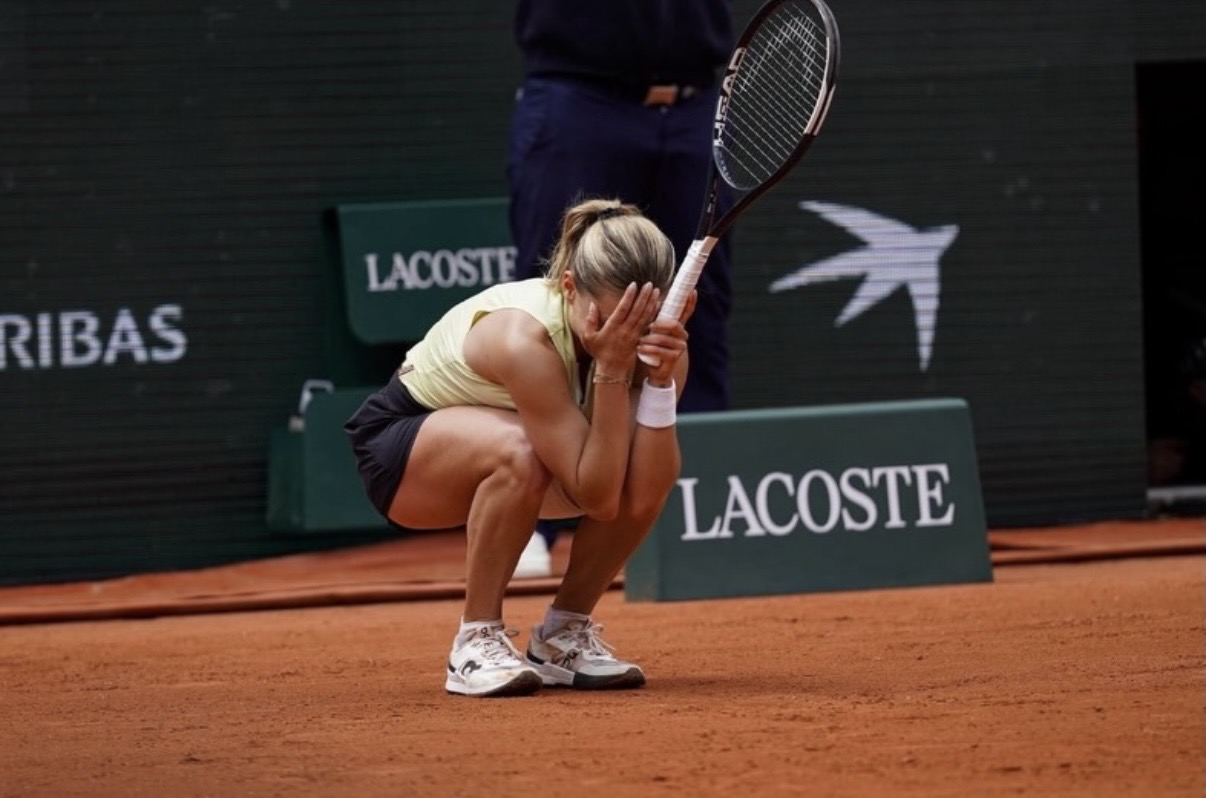

PARIS – Fairytales do exist in tennis: there is perhaps no better way to describe the story of Poland’s Maja Chwalinska, a player who is currently ranked 113th in the world and was deep in depression five years ago, but who will take to the court this Saturday to finally conquer Roland Garros.
“It’s hard to take in… I was outside the top 100 and on Saturday I’m playing in a Grand Slam final,” said Chwalinska, 24, after defeating Russia’s Diana Shnaider 7-6 (7-4), 6-4. Her opponent will be Russia’s Mirra Andreeva, who beat Ukraine’s Marta Kostyuk 6-1, 6-3 on Thursday.
It will be Chwalinska’s tenth match in three weeks, as the Polish player had to go through the qualifying rounds to reach the main draw of the tournament.
Everything about the story of the self-assured Polish player is extraordinary; in her dealings with the press from around the world, she comes across as confident and relishes being the centre of attention.
In her eight years as a professional, Chwalinska had earned $864,030. Now, having reached the final, she has secured $1.624 million.
A sum which, even after significant tax deductions, will change her life. She will never again find herself in a situation like the one at this year’s Roland Garros, where she struggled as the days of her stay piled up and she had no money to pay for her hotel. Accommodation is provided by the tournament, but on a reimbursement basis: players receive the money after having paid the bill.
Chwalinska, a tennis fan who adores Roger Federer, was unable to pay that amount, and that was when Oshee, the Polish isotonic drinks company that sponsors her, came to the rescue.
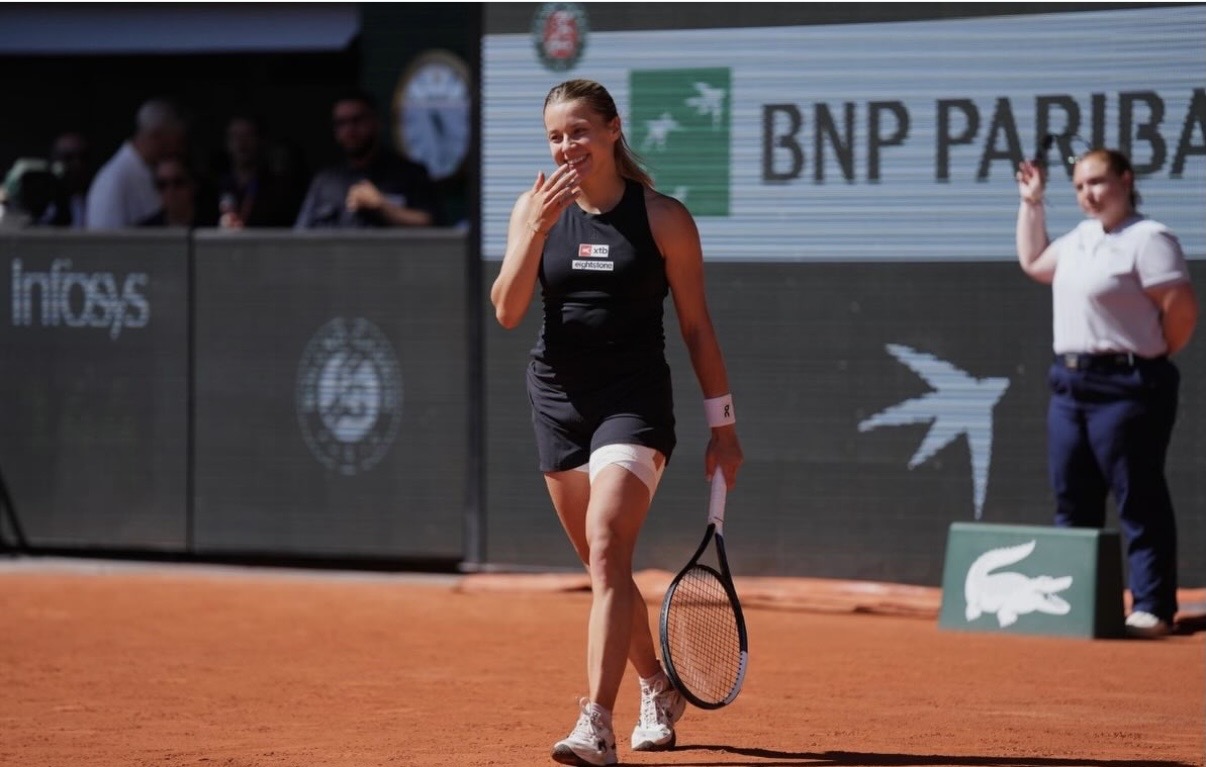
It is all very different from what she was going through in 2021, when she revealed she had been suffering from depression for a year and a half and was quitting tennis.
‘At first I pushed myself really hard. I thought I just had to be very strong, resilient, and keep training,’ she explained after reaching the semi-finals on Wednesday.
“But then I couldn’t get out of bed anymore. To be honest, I felt lifeless. I knew I needed to take a break, because otherwise I simply wouldn’t be able to go on. Honestly, I didn’t know if I was going to come back or not. After a few months, I decided to come back. I’d say I needed to sort a few things out in my head. And I came back. I’m glad I did.”
During her junior years, Chwalinska’s career ran parallel to that of her compatriot Iga Swiatek, with whom she reached the doubles final at the Australian Open in 2017. But soon the paths they were following diverged: Swiatek became world number one and a six-time Grand Slam champion, whilst Chwalinska struggled in the third tier of tennis.
A journalist asked Chwalinska about her different ‘outfits’ in each match; what is the story behind those changes of clothing?
The Polish player laughed: “Well, there’s no story, really. I don’t have any sponsors, so I suppose that’s the story.”
Not anymore. In three spring weeks in Paris, everything changed. On Monday, Chwalinska will be among the top 20 in the world rankings and her immediate concern will be deciding which sponsors, of the many who have approached her, to sign a contract with.