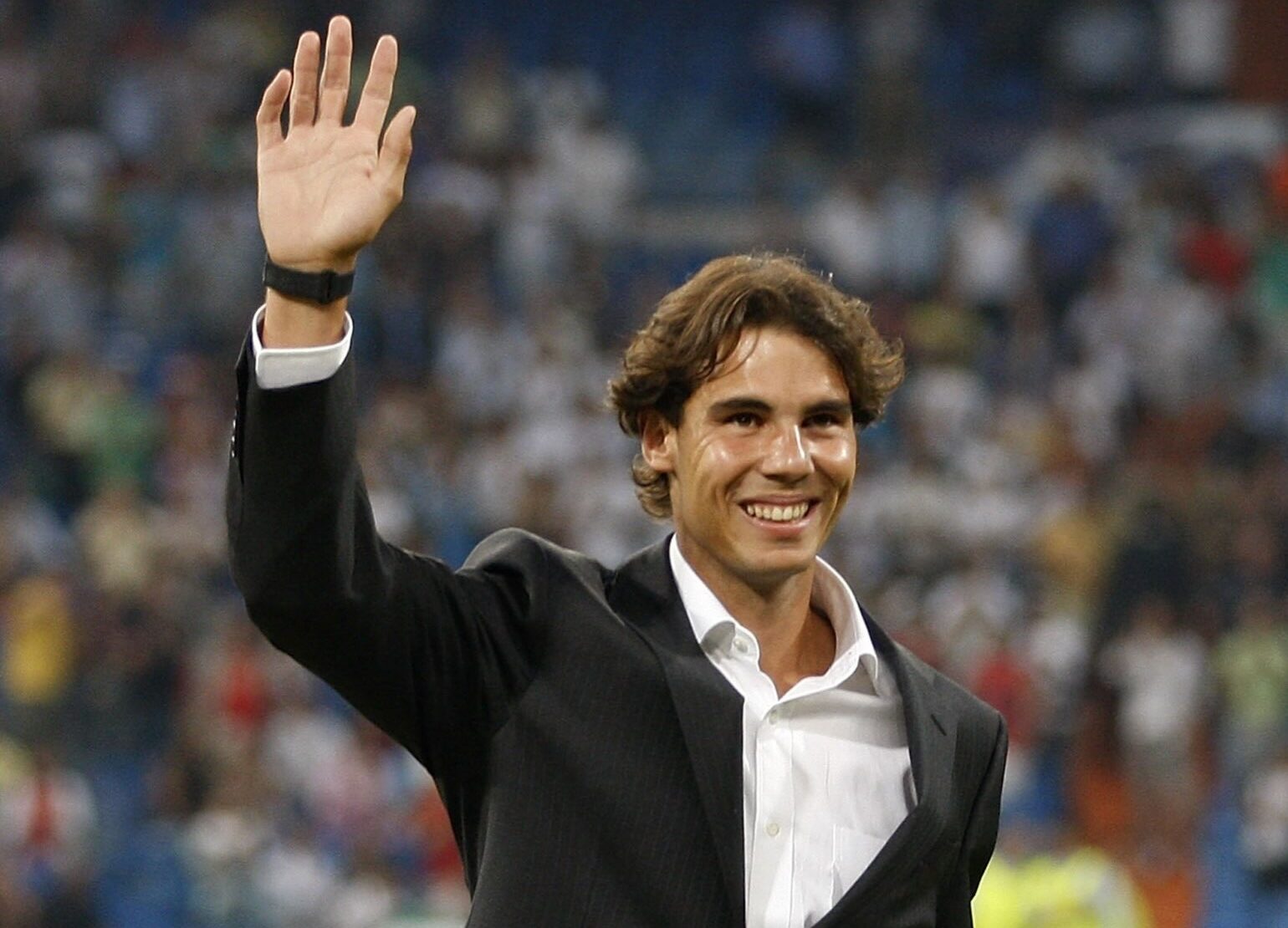

MADRID – Rafael Nadal has found a new way to keep competing. Two years after hanging up his racket, the 22-time Grand Slam champion will soon embark on an adventure that will take him to one of the biggest centres of power in world sport: Real Madrid.
The club announced on Wednesday that it had proposed Nadal’s appointment to its Board of Directors and, shortly afterwards, the former world No. 1 replied that he had accepted. The appointment still has to be ratified by Real Madrid’s Assembly of Delegate Members, which will meet on 21 November. It will be a mere formality: Nadal and Real Madrid have for years been travelling along two paths that were destined to meet.
“I want to thank President Florentino Pérez and the Board for proposing that I join the Board of Directors of Real Madrid. I have accepted this proposal with great enthusiasm and a desire to learn and contribute as much as I can,” Nadal wrote on Instagram. For years he has been followed by the persistent rumour that he will one day become president of Real Madrid, and this appointment is certainly another step in that direction.
Nadal’s arrival means much more than bringing in a sporting legend and a self-confessed Madridista. It means adding one of Spain’s figures with the greatest international reach, one of the most recognised and beloved athletes on the planet and a personality who transcends the boundaries of tennis. For more than two decades, the 22-time Grand Slam champion became one of Spain’s great images around the world. His name is a recognisable brand, associated with values such as effort, perseverance, humility, respect for opponents and resilience. Some of those very qualities were highlighted by Real Madrid itself in its statement: “His talent, his constant drive to improve, his capacity for sacrifice, his competitiveness, his humility and his respect for his opponents and his teammates.”
Nadal’s business experience
But Nadal also brings business and management experience that goes far beyond his career as an athlete. His main project is the Rafa Nadal Academy, which opened in Manacor in 2016 and has become an international operation combining sports training, education, accommodation and other services. In its busiest months, the complex employs around 700 people. Running and growing an organisation of that size in a town like his native Manacor is no small experience for someone now joining the leadership of an institution such as Real Madrid.
His business activity is not limited to tennis either. Through his holding company Aspemir, Nadal has taken part in various investments and projects. These include his partnership with businessman Abel Matutes in real estate, with luxury developments in Spain and other markets, as well as his involvement with the Tatel and Totó restaurants. He has also launched ZEL, the hotel brand developed with Meliá, and health and nutrition projects such as NDL Pro-Health. This diversification reflects his interest in building a professional life beyond his sporting success.
On top of all that, he has a network of contacts that is hard to match. For years, Nadal has moved in the same circles as leaders, businesspeople, athletes and personalities from very different fields.
His vision of sport, shaped by respect for the history of the great competitions, effort and a culture of hard work, fits with Real Madrid’s institutional message. He will now have the opportunity to take that way of understanding sport into a new dimension.
For Florentino Pérez, this signing can be seen as a show of strength in his ongoing tussle with Enrique Riquelme, the candidate he defeated in the last elections held in June. Pérez, 79, now has on his side Spain’s greatest athlete, someone loved by all Madridistas and who embodies the future.
Joining Real Madrid’s Board of Directors opens up a very different landscape for Nadal from the one he has known for much of his life. He will no longer have to measure himself against Federer or Djokovic, or recover from yet another injury. His experience, his work ethic and his knowledge of sport will now be at the service of an institution he knows perfectly from the stands. Nadal faces another challenge: learning to compete from the boardroom.