


NEW YORK – Teodor Davidov became an internet sensation before he had even played a professional match. That is a lot to carry when you are still a kid.
Yet Davidov is smiling. That is the first thing you notice about him. And he remains strikingly optimistic about his unique path through tennis.
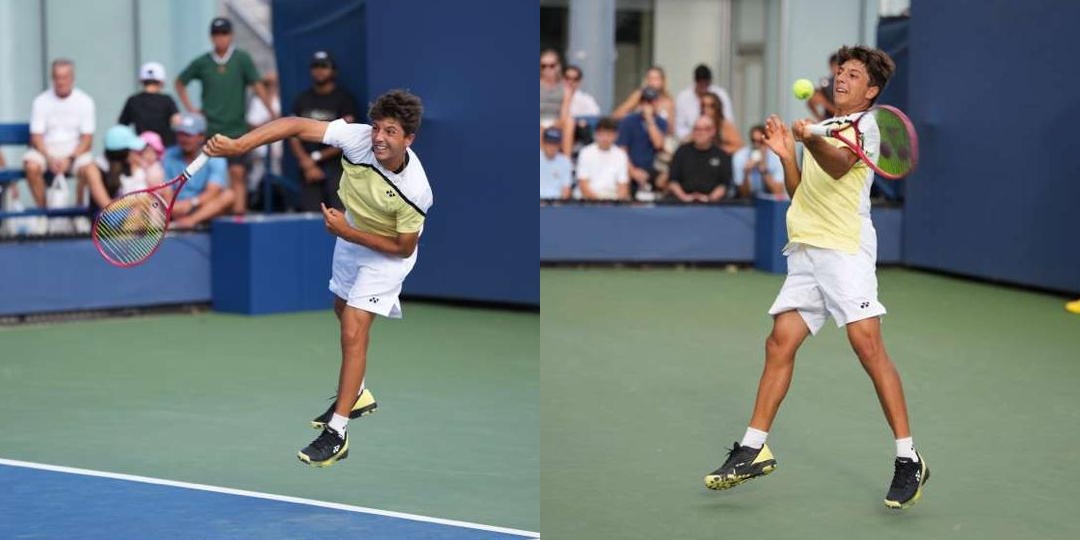
Tennis diehards have known his name for years. He is the teenager playing the sport in a way almost nobody else does.
A forehand off both wings. No backhand. And he can serve with either hand, too.
On Sunday afternoon, on Court 6 in Flushing Meadows, barely a hundred metres away from Arthur Ashe Stadium, 16-year-old Davidov made his junior Grand Slam debut.
Around his neck is a chain reminiscent of one of his role models, Nick Kyrgios.
“I don’t know how smart it is to say that right now,” he says afterwards with a smile.
Around 200 people were in the stands for his match against South Africa’s Connor Doig.
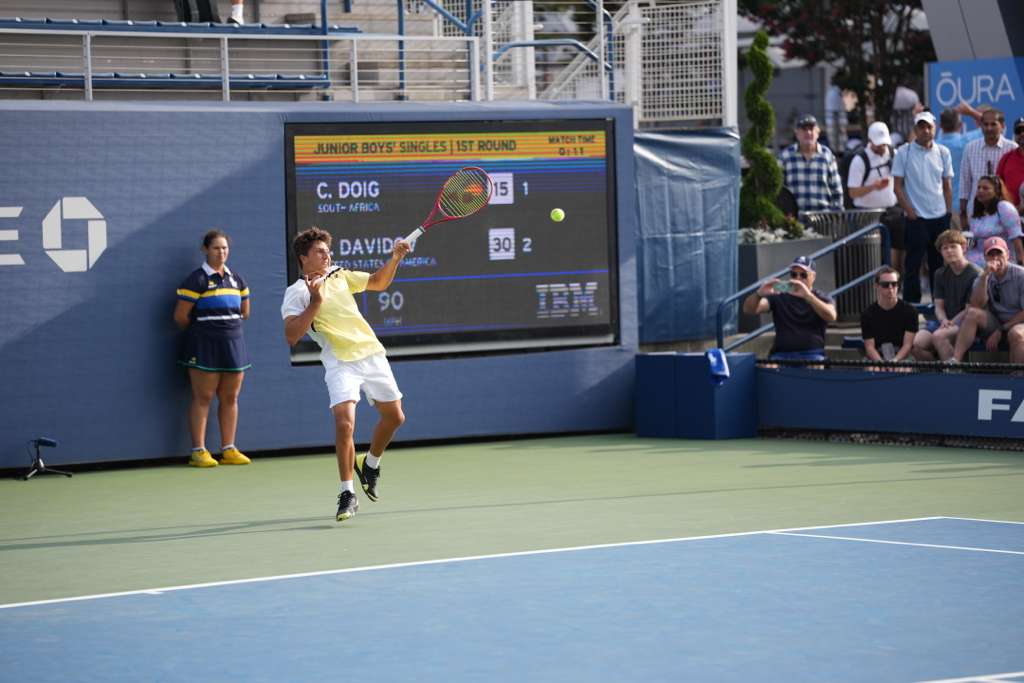
Davidov used to run hotter on court. These days, he controls his emotions better. He manages to keep his composure despite his first serve deserting him and despite letting three straight set points go begging in the opening set.
“At first, it was chaotic. It took me quite a while to get used to everything, but it was unique and fun. I’m disappointed with the match, but it’s OK – I played a Grand Slam after all,” Davidov tells CLAY.
“The first few days I was nervous even when I was practising on the main courts. This time I was prepared, but…”
Despite the defeat, the teenager representing the United States is still smiling and in good spirits.
Asked how much pressure comes with being a viral sensation, with training clips of his constantly making the rounds on social media, Davidov says: “I’ve managed to block it out and deal with it. It used to get to me, but now I’m more professional, more mature. It’s better. Of course, sometimes it still affects me, but not too much.”
Davidov’s unusual journey began with an idea from his father, Kalin, when Teo was eight years old.
So what exactly happened?
“At first, I was practising my left-handed forehand to improve my backhand – I used to hit a two-hander. Gradually, I started hitting more and more forehands with my left hand, and my dad realised that my coordination on that side was good too. That’s how we started.”
Davidov is naturally right-handed, but he can serve with either hand.
Tennis, however, was not the only motivation behind his father’s unorthodox approach, Teodor reveals with another mischievous smile.
“I was really crazy as a kid – wild, full of energy. He thought that if I trained the left side, it might help the right side of my brain, which is a little calmer and responsible for creativity. That was the idea. I don’t know if it worked, to be honest,” he says, laughing.
The grip change as he switches hands is no longer something he consciously thinks about. By now, the movement is completely natural and automatic.
As a player, Davidov knows every part of his game still needs work. But one area stands out.
“The serve. My first serve just wasn’t there today.”
Born in Sofia on August 26, 2010, Davidov moved to the United States with his family when he was a year and a half old. “We only speak Bulgarian at home,” Teo says with a smile.
“I go back every year. My whole extended family is there.”
Ambidextrous and making it look easy. pic.twitter.com/jdGozcTSZt
— US Open Tennis (@usopen) September 7, 2026
Kyrgios has been one of his role models, but Davidov says Novak Djokovic has always been No. 1 for him.
“I feel like we have a similar philosophy on life, in terms of nutrition” – Davidov is a vegetarian – “meditation, yoga, breathing and everything that goes into the mental side of the game.”
Davidov has already earned four ATP ranking points. Next year, he hopes to play all four junior Grand Slams and perhaps even the US Open qualifying event.
“I focus on the present. I’m the type of person who only sets short-term goals. I stay in the present. I don’t know if that’s good or bad, but I take it day by day and work on the details,” Davidov tells CLAY.
Viral curiosity or genuine tennis prospect? Time will tell.
If Davidov makes it, though, this might be more than a curiosity. It might be the start of a tennis revolution.