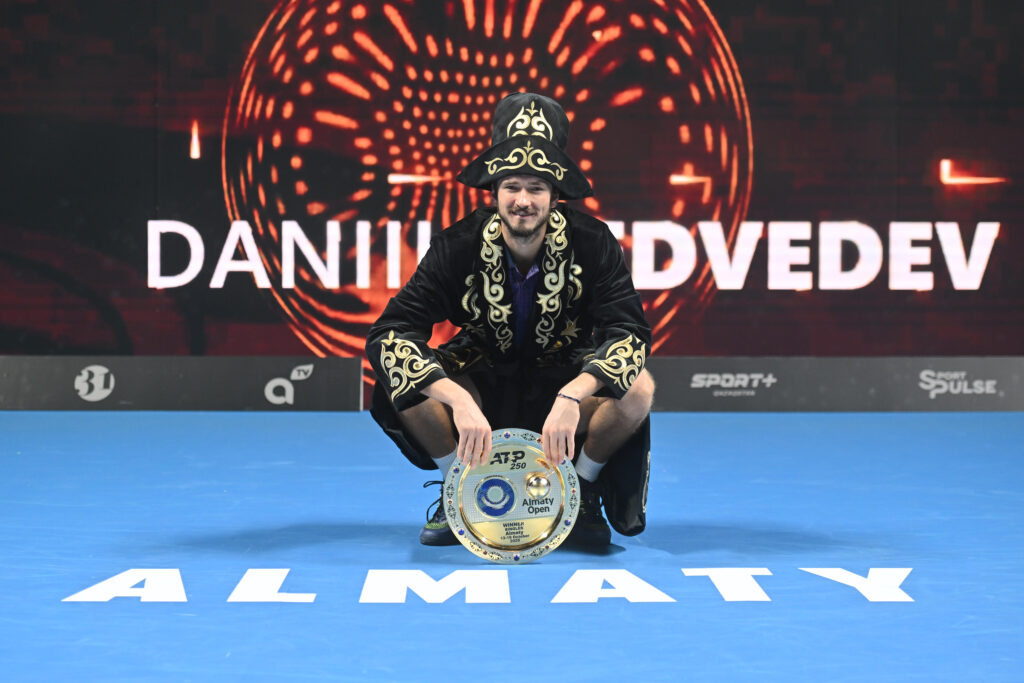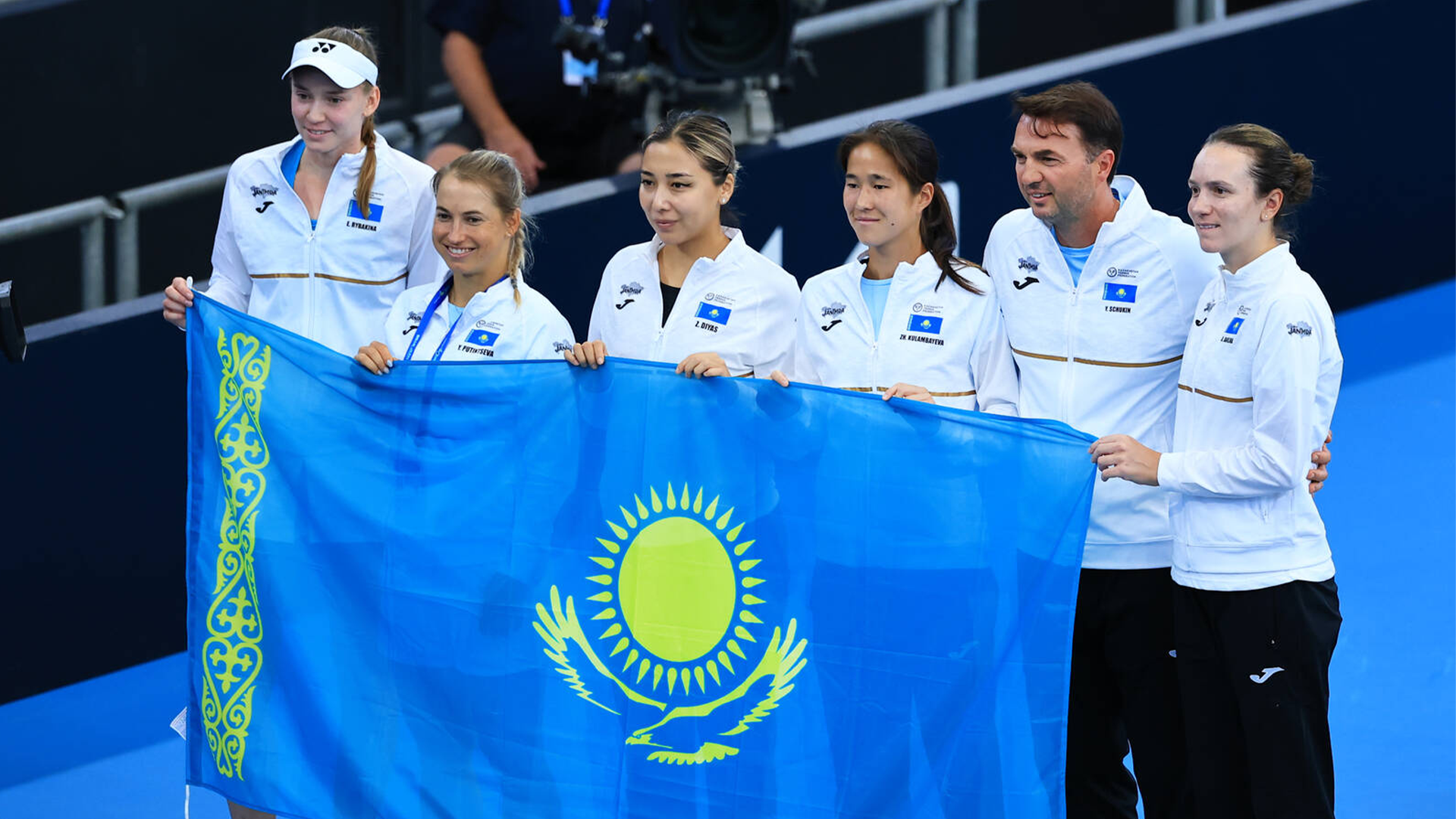

ALMATY – From having just 50 courts in the whole country and no players in the top 200 in 2007 to being one of the strongest federations in the world in 2026, with a world No. 1 and 39 tennis centres within its borders.
Kazakhstan’s journey to tennis’s elite has been full of quirks and is inevitably on course to overturn one of the sport’s long-held truths: in the post-Soviet space, no one was bigger than Russia.
“Why not? We just need time, because Russia has a huge history, generation after generation. We started from zero, and in 19 years we have done really well. With time we’ll get even better: more Grand Slam titles, more world No. 1s and, with a bit of luck, a Davis Cup or a Billie Jean King Cup. I think we’ll achieve it in the future, but we need more time,” former player Mikhail Kukushkin, one of the first Russian players to take Kazakh nationality, told CLAY.
Although Russia and Kazakhstan have been fully independent countries since the break-up of the Soviet Union, the tennis relationship between the two nations is particularly close. The Kazakh federation began to make its mark in professional tennis through a sustained plan to naturalise Russian players so that they would compete for the country.
Ver esta publicación en Instagram
On top of that, there is now an extremely complex geopolitical situation. The economic and sporting sanctions imposed on Russia after the invasion of Ukraine have removed the country (at least officially) from the tennis landscape. Its players compete under a neutral flag on tour and at the Olympic Games, while they are barred from Davis Cup, Billie Jean King Cup and United Cup ties.
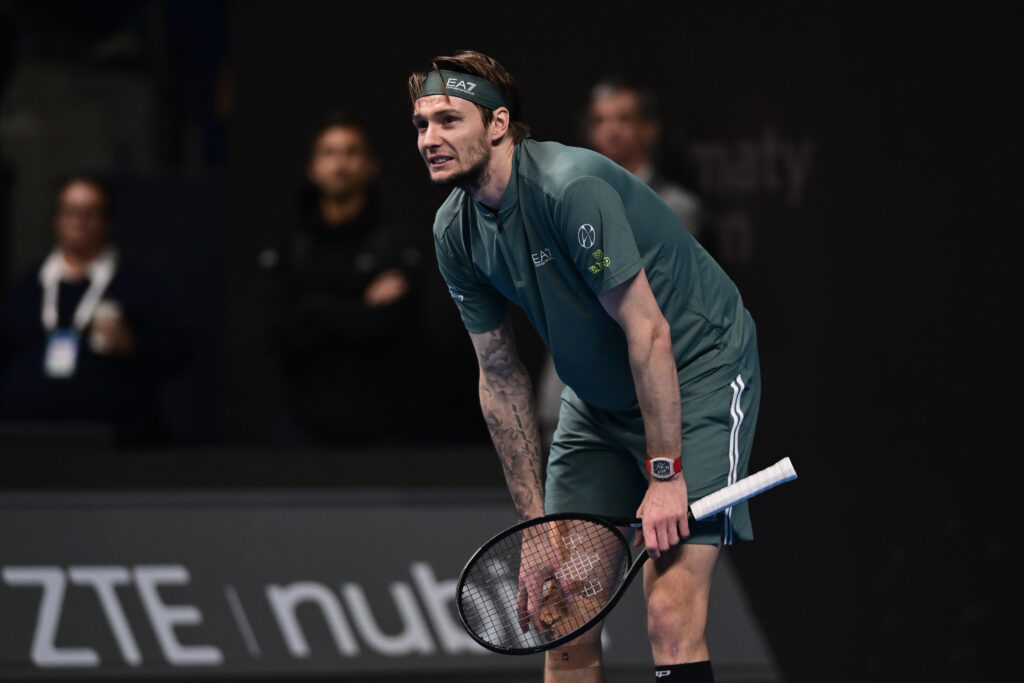
In addition, more than 15 Russian players, men and women, have officially changed their nationality since 2022. The best-known cases are Daria Kasatkina (Australia), Anastasia Potapova (Austria), Maria Timofeeva (Uzbekistan) and Alexander Shevchenko, who left Russia to represent Kazakhstan in 2024.
And while things grow more complicated for the Russians, the Kazakhs keep growing. Driven by a US$250 million investment from the president of the Federation, Bulat Utemuratov, the country has transformed its tennis infrastructure and culture.
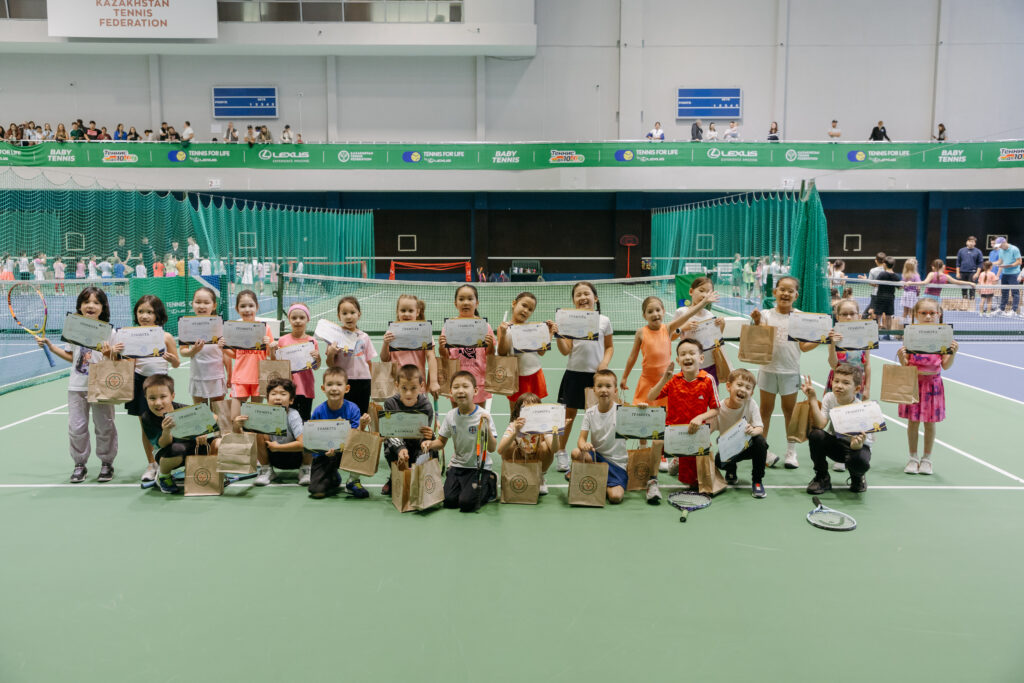
In 19 years they have built 39 tennis centres, educated 700 coaches and launched partnerships with academies around the world. In 2007 around 500 people were involved in tennis. Today there are 40,000, 10,000 of whom are children. Of those, 1,000 train for free and 200 are part of the federation’s programme.
“It’s an incredible achievement what they did, and it’s only going to expand, it’s only going to get bigger, it’s only going to get better with time. When I came in (2016), there were no Kazakh players at all (born in the country), but now we have two juniors who were in the top 10 and other hitting partners who play great. They all have a real chance to become top-100 players, and that’s success. In the future they will not need to buy players from other countries, because they’re going to grow their own and they’re going to be as strong as any other nation,” Alexander Bublik said during the Almaty Open, the only ATP event in Kazakhstan.
From adopting them to developing them
The first hallmark of the Kazakh revolution was the naturalisation of Russian players who lacked support from their own federation. Russia’s programme, one of the most competitive and selective in the world, leaves dozens of young players without funding every year.
That is why Mikhail Kukushkin, Yaroslava Shvedova, Andrey Golubev, Galina Voskoboeva and Yulia Putintseva came to Kazakhstan. All of them reached the top 100 at some point in their careers and, with Putintseva still playing, they have won 27 professional titles between them so far, across singles and doubles. They are the pioneers of the naturalisation policy Utemuratov introduced two decades ago.
The big impact would come years later, with the naturalisations of Alexander Bublik and Elena Rybakina. While Bublik has been in the top 10 and has won nine ATP titles, Rybakina has become one of the most important players of her generation.
The current world No. 1 won Wimbledon in 2022, and this year she has won the Australian Open and the US Open. She also lifted the 2025 WTA Finals trophy and the WTA 1000 titles in Rome and Indian Wells.
Adding her 250 and 500 trophies, she has 15 WTA titles, the most recent just a week ago in Ningbo.
“Elena was not receiving enough financial support in Russia, and her family was reaching the limit of its financial means to cover the rising costs of professional tennis. Looking back, we recognise that our decision to support Elena was an important milestone not only for her career but also for tennis in Kazakhstan,” Bulat Utemuratov told CLAY after her title in New York.
Utemuratov is not only president of the Kazakhstan Tennis Federation but also, since 2019, vice-president of the ITF (now World Tennis). According to Forbes, he ranks 780th among the world’s richest people.
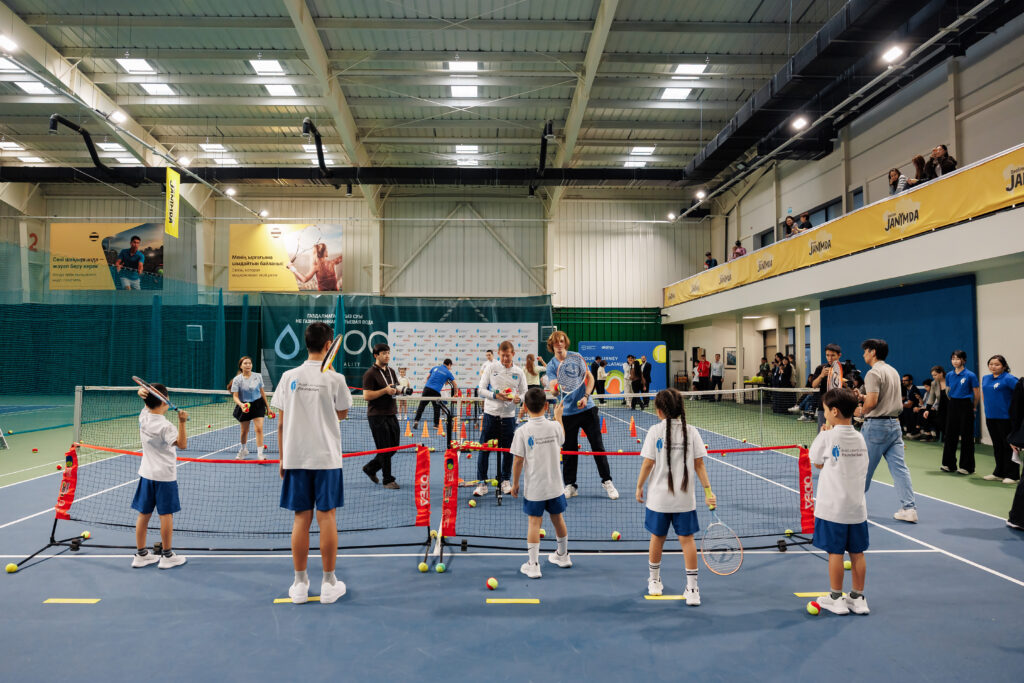
Thanks to sustained investment and a range of public projects, tennis is now widely played across the country. As many as 150 kindergartens in Kazakhstan are part of a project in which they receive free equipment and teachers paid by the Federation to popularise tennis from an early age.
Support is not lacking at federation level either. “We have more than 200 kids on the federation’s list, and each kid gets different funding, a different schedule. And of course, everybody gets attention. We host training camps for them four times a year with our best national coaches. That creates motivation for the kids and a good competitive environment. We are seeing the fruits now, but we don’t want to stop,” Dias Doskarayev, vice-president of the Kazakhstan Tennis Federation, told CLAY.
Amir Omarkhanov and Zangar Nurlanuly are the biggest success stories, having reached No. 4 and No. 7 in the junior rankings. Nurlanuly also reached the semi-finals at the 2025 US Open and the 2026 Australian Open.
These are the first results of 19 years of work and US$250 million of investment. Agreements with the best academies in the world and with universities in the United States are also part of the project.
Dias Doskarayev explained to CLAY another key factor behind Kazakhstan’s importance on the tour today. Because of the war and the sanctions imposed on Russia, Almaty is now a strategic stop on the calendar. Not only is it the only tournament in Central Asia, but it is also located right between China and Europe, serving as a key bridge in the end-of-season indoor swing.
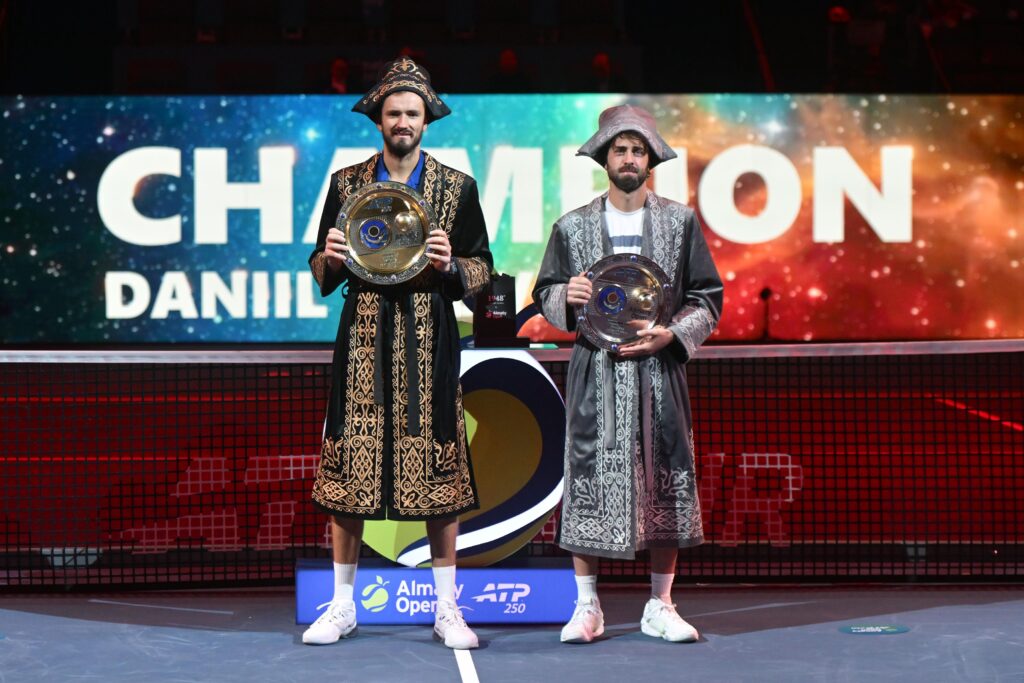
“Among the former Soviet republics, we are the only country hosting an ATP event, and that’s 15 countries. People are coming to see this tournament from all the countries we border or that are a short flight away. For them it’s a great opportunity. And I think for the players it’s also a good exotic experience to come to Kazakhstan. We are conveniently located on the way to Europe after the Asian swing. That’s a good opportunity for us to showcase our country,” he told CLAY.
The country has hosted an ATP 250 since 2020, first in Astana and since 2024 in Almaty, making it the only event of the end-of-season indoor swing not played on European soil. In 2022 it was upgraded to an ATP 500 for one year only, after the cancellation of the Chinese tournaments, and the federation now aims to win back that status, as well as bring back a WTA event after the one-off 2021 edition.
Rybakina as world No. 1, a billionaire leader, some of the most promising juniors on the planet and major influence within World Tennis. For all these reasons, Kazakhstan no longer looks to Russia for players. “We are focusing on our homegrown players,” Doskarayev told CLAY.
Time will tell whether they have not only stopped looking to Russia, but also left it behind.