

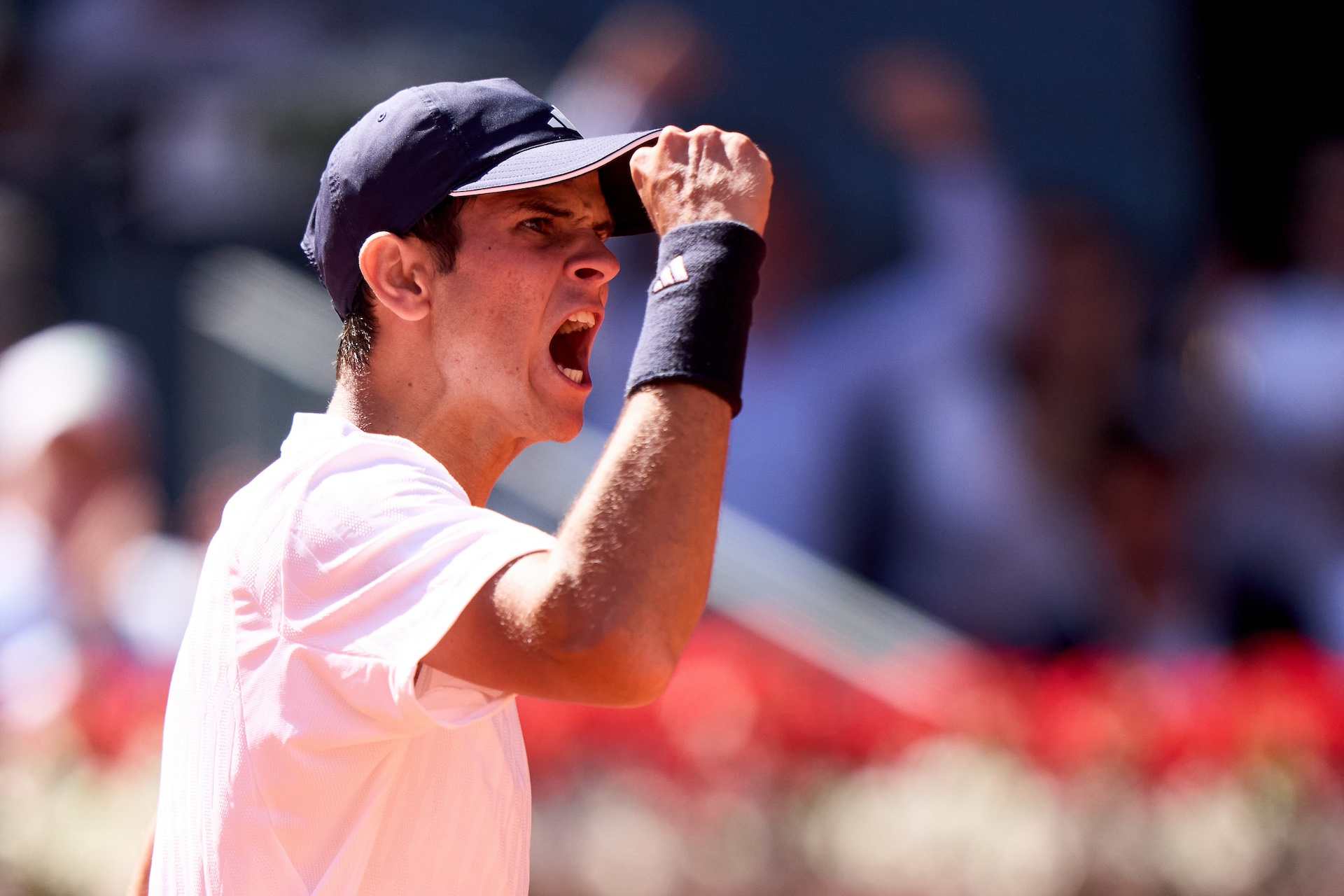

MADRID — There is little doubt that Rafael Jódar has been the breakout sensation of tennis in 2026. He started January ranked No. 168 in the ATP rankings and, in a few days, will play his first US Open as the world No. 13. In between came his first ATP title in Marrakech, a quarterfinal appearance at Roland Garros, a final in Washington and a semifinal run in Canada. That is an extraordinary résumé for a 19-year-old.
But Jódar has also become one of the players generating the most conversation. And not always because of what he does with a racket.
The New York Times wrote a few days ago about the “dark arts” of tennis in relation to Jódar and his now-famous shoelace problems. The label is certainly striking, as is the amount of noise surrounding a player who is still in his first full season as a professional.
There is, however, one particular feature of all that noise: when you go back through the record, many of the controversies begin to lose some of their force.
The most obvious example came at Roland Garros. A video that spread like wildfire on social media led thousands of people to believe that Jódar had pushed a ball girl. He immediately denied it. Another angle of the incident later emerged, showing that the girl had tripped over the tarp behind her and that Jódar had not even touched her.
🚨 Este video se está haciendo viral, pero NO ES LO QUE PARECE.
En ningún momento Rafael Jódar empuja a la ball girl.
La chica se tropieza sola con la lona.pic.twitter.com/q9Ci4I0XUi https://t.co/1mqAiVCzoJ
— Tiempo De Tenis (@Tiempodetenis1) May 29, 2026
Then came the shoelaces. In Cincinnati, Jódar had to stop his match against Denis Shapovalov twice after his shoelaces broke. One of the interruptions lasted around four minutes and came with the Spaniard trailing 5-3 in the third set. Shapovalov, who had squandered a 5-1 lead in the deciding set, was frustrated and suggested that the stoppages could have allowed Jódar to catch his breath and disrupt his rhythm. Jódar insisted there was nothing he could do: his shoelaces had broken.
“It’s a situation I can’t control, honestly. My shoelaces broke and I needed time to put new ones on. I’ll try to carry spare shoelaces for the next match, or even another pair of shoes, to reduce the amount of time I’m off court if it happens again,” the Spaniard said on Tennis TV.
😉 𝐏𝐫𝐞𝐩𝐚𝐫𝐚𝐝𝐨 𝐩𝐨𝐫 𝐬𝐢 𝐚𝐜𝐚𝐬𝐨.
👟 Rafa Jódar sacó de su mochila una bolsa con varios pares de zapatillas para su partido ante Tabilo en el #Cincytennis.#LaPistaDelTenis pic.twitter.com/irV4z59lTg
— Movistar Plus Deportes (@MPlusDeportes) August 18, 2026
Sure enough, two days later he walked onto court carrying a bag full of shoes. The image only added fuel to the narrative surrounding Jódar. Provocation? A sense of humour? Simple preparation? Whatever the answer, one thing is clear: Jódar is no longer being talked about solely because of his forehand or his tennis. There is a constant buzz around him. But that noise appears to be coming much more from outside the locker room than from within it.
Arthur Fils, who has faced the Spaniard three times in 2026, does not talk about his behaviour or his tricks. He talks about tennis. “His forehand is insane, his backhand is top, his return is very good. He’s a very good competitor,” he said before smiling: “We will have 10 very fun years.”
Ben Shelton, who experienced a similar breakout just three years ago, was almost lost for words when asked about Jódar in Canada. “He’s probably going to be top 10 and outdo me, or what I did in 2023. He’s got a great game, a complete game, good athlete,” he said.
Inside the locker room, the praise for Jódar is overwhelming. It is outside, particularly on social media, where he is beginning to attract detractors. Rennae Stubbs, the former world No. 1 in doubles and former coach of Serena Williams, compared Jódar’s temperament to that of Novak Djokovic.
“I think there are certain things that people latch onto to criticize him. For example, when Novak would do certain things, people thought his intentions were malicious,” the Australian said on the latest episode of her podcast. “One thing I don’t like is when players point at the towel, like, ‘Bring me the towel.’ I think those little things annoy people when they see Jódar doing them. Sometimes it gives the impression that he feels entitled to everything.”
Nevertheless, Stubbs believes Jódar “is a good kid.” “Having spent time with him off the court — and his father is a lovely person — I think he’s a great kid, although he can sometimes have a slightly irritable temperament on court. He’s young; you have to give him time. In terms of his talent, he’ll win a Grand Slam in the next three years.”
Jódar has a temper. He has shown it. He gets angry, protests, gestures and demands things. In Rome, he argued with his father, the umpire, the ball kids and even the physio during a match he eventually lost. At Wimbledon, Pablo Carreño questioned the umpiring over one of Jódar’s bathroom breaks, but was quick to clarify that he had nothing against the Spaniard.
When a 19-year-old tennis player suddenly emerges with enormous power, wins seemingly impossible matches and breaks into the upper reaches of the game within a matter of months, the media and fans inevitably need something more to talk about. The racket is no longer enough.