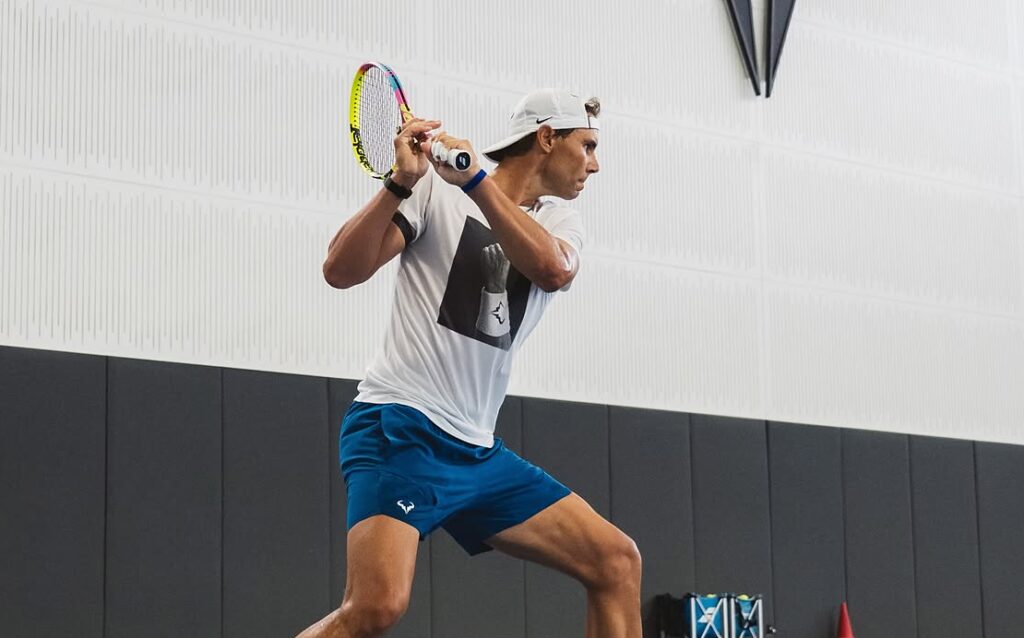



The figure skater lands an axel jump, the gymnast executes a somersault, the tennis player hits a one-handed backhand winner.
It happens in a split second, but these spellbinding moments in sport, when athleticism and elegance intertwine, create vivid memories for aspiring athletes.
Ask Remy Bertola, whose tennis journey began in 2006 at the age of eight after becoming mesmerised by YouTube videos of Roger Federer’s trademark stroke.
“I’m playing a one-handed backhand because of my idol, Roger,” the Swiss No. 182 told CLAY. “When I saw him playing with one hand, I said to my parents: ‘I don’t care about playing two-handed. I want to play one hand.’ Honestly, it’s difficult to play because it requires more coordination. You have to be a little bit skilful. For the aesthetic, it’s also better to watch as well. But now, there are not many of us around.”
Bertola is one of just 19 players within the Top 300 of the ATP Rankings to use a one-handed backhand, a stark decrease from the whopping 62 one-handers inside the Top 300 in April 2013. The decline is so severe that at the upcoming US Open, one of tennis’ longest-standing streaks could come to an end: unless someone intervenes, 2026 could become the first season in history—since the inaugural Wimbledon in 1877—in which no man with a one-handed backhand reaches the semifinals of a Grand Slam.
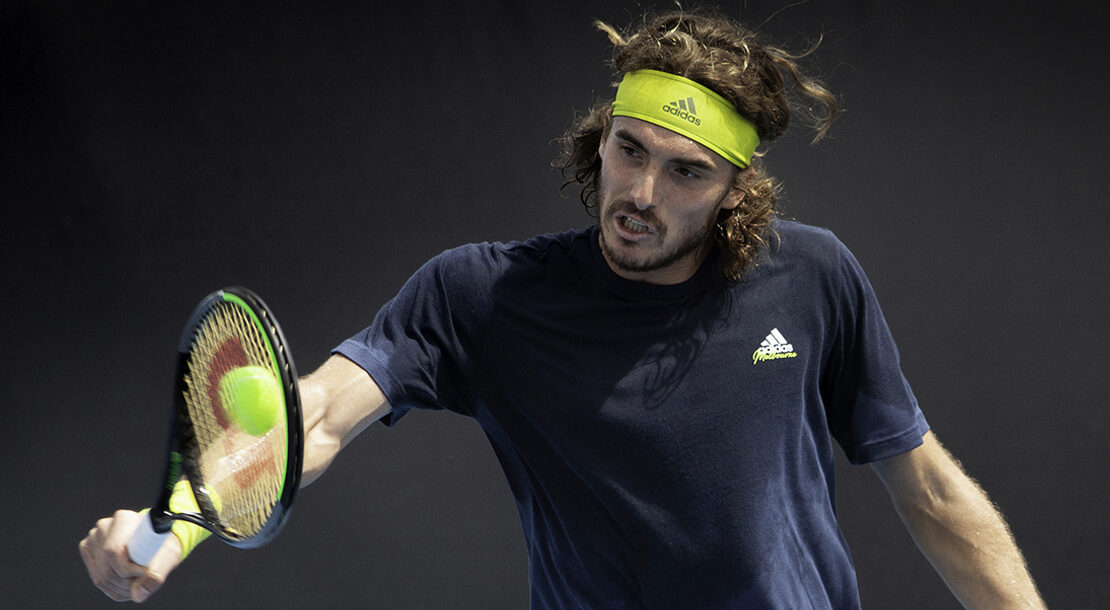
And candidates are scarce. Lorenzo Musetti (ATP No. 15), Denis Shapovalov (No. 48), Stefanos Tsitsipas (No. 49), Daniel Altmaier (No. 65), Giovanni Mpetshi Perricard (No. 92), and Aleksandar Kovacevic (No. 96) are currently the only one-handers left inside the Top 100.
“We have no chance”
The visually pleasing technique, practiced by some of the greatest players in history—figures like Boris Becker, Stefan Edberg, Ivan Lendl, and Pete Sampras who carried it through the late 20th century—is gradually becoming a dying art.
“Before, it was easier one-handed,” Bertola said. “The courts, the balls were faster. It’s more difficult now. For us, we cannot play straight balls against the guy that plays two-handed. We have no chance. Our weapon is when we can change the rhythm and angles more than the other guys. The game changes every day. You have to study and build up something around your one-handed backhand and stay with the game.”
Veteran Dusan Lajovic, 35, was instructed by his coach to adopt the one-hander when he started playing tennis in 1997. He gladly obliged, after watching his role model Sampras lift his fourth Wimbledon title that year, and never looked back.
“This shot is one of my favourite shots in my game,” the No. 146 said to CLAY. “I was in Madrid, and someone walking around saw my match and said I was so vintage, like a dying breed. I think the fans today appreciate players who have one-handed backhands. I love when you play the perfect down the line winner. I think it’s one of the most beautiful shots in tennis and I’m happy it helped me make out of my career what I did.”
Nearly three decades later though, the Serbian baseliner, who reached a career high of No. 23, agrees with Bertola that the modern game does not suit one-handers.
Lajovic said: “With the technology in the rackets, the difference in the balls now and just the firepower today, it’s definitely limiting people with one-handed backhands which I would say is like a classic shot. Players today have powerful serves, powerful first shot returns. Once you get into the rally it’s a game of chess and there are advantages where we can make more variety with the shot. But still, there’s a lot of disadvantages in just the firepower of today’s tennis compared to what it was maybe 15, 20 years ago.”
Unsurprisingly, there are no players inside the present Top 10 with a one-handed backhand.
It is not all doom and gloom though, as the six one-handers inside the Top 100—Musetti, Shapovalov, Altmaier, Tsitsipas, Mpetshi Perricard, and Kovacevic—are all aged 27 or younger.
Once the boy who idolised Federer, Bertola is now carrying the torch as one of his country’s last exponents of the craft given Stanislas Wawrinka’s impending retirement.
He said: “In Switzerland, we have a good young player Henry Bernet playing one-handed. He asked me about it. For me, I said it’s more beautiful to see a guy play one-handed.”
Lajovic’s game was built upon the variety in game styles of the one-handers he came across. He sparred with the 2.01m-tall Serbian Nikola Ciric, a lefty with a killer disguised drop shot, adapted Sampras’ serve-and-volley style on grass and learnt the finesse of Argentinian Gaston Gaudio on clay; his favourite surface.
Now, Lajovic is paving the way for tomorrow’s stars.
The 35-year-old said: “As long as we have one-handers back in the Top 10, I think there will always be kids who will want to play one-handed. When they see their idol playing in the big stages, reaching the ends of tournaments, I think that helps the shot. We will make a return and there will be 80% of people with one-hander and 20% with a two-hander. I think it’s gonna happen in the near future.”