

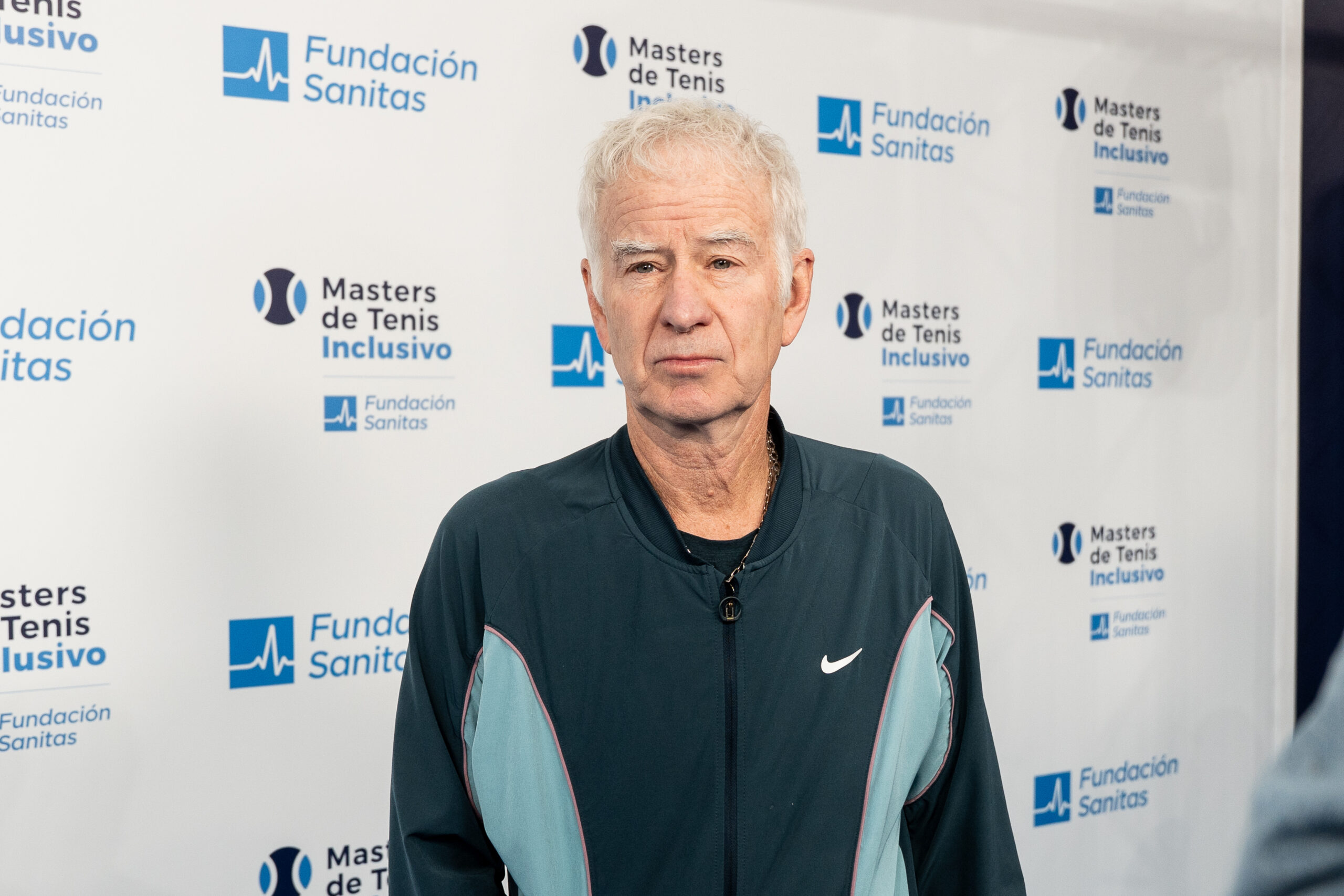

MADRID — John McEnroe raised an eyebrow when David Broncano, the host of La Revuelta, one of the most-watched talk shows in Spain, threw a comment his way. “Look John, Spain’s population is ten times smaller than the United States, but we’ve won 30 more Grand Slams in recent years.”
The audience at the theater where the show was taped burst into laughter, and McEnroe took it as best he could—“We’re improving,” “we’re getting closer,” “on the women’s side we have won”…—but that underlying noise followed the legendary American tennis player throughout his brief stay in Madrid, where he served as an ambassador for the Inclusive Tennis Masters organized by Fundación Sanitas.
Ver esta publicación en Instagram
The United States has been waiting since 2003 for one of its male players to capture a Grand Slam title. The last to do so was Andy Roddick. That long wait—the longest in history—contrasts sharply with the success Spanish tennis has enjoyed over recent decades. Sergi Bruguera, Juan Carlos Ferrero, Albert Costa, and Carlos Moyà were followed by Rafael Nadal. His 22 Grand Slam titles, including 14 at Roland Garros, seemed like an impossible act to follow, but then Carlos Alcaraz broke through. And in 2026, Rafael Jódar emerged. Spain is operating like a diamond factory for tennis.
“In America, we need to study what’s happening in Spain a little more closely. First we had Rafa Nadal, and now Alcaraz. We need more players at that level,” McEnroe reflected this Thursday at the Caja Mágica, home to the Madrid Masters 1000 and the Fundación Sanitas Inclusive Tennis Masters. “We all hope Carlos stays healthy for the next ten years. That would be incredible. And Rafa Jódar has a lot ahead of him. They have to try to follow in Nadal’s footsteps. It’s an incredible time for Spanish tennis,” added the former world No. 1 and seven-time Grand Slam champion.
“If you’ve heard me speak before, you know what I think of Carlos Alcaraz. He’s my favorite player to watch. Rafa Jódar is doing great; he just needs a bit of rest. He has progressed very quickly at a very young age, and we’ll see what happens in the coming years,” added the 67-year-old former player.
The American also expressed his amazement at a Nadal statistic he can’t quite comprehend: the Spaniard finished his career without ever breaking a single racket. “It’s something I don’t understand. He never broke a racket. What’s wrong with him? Maybe he’s a robot and not human,” joked McEnroe, who still carries a bit of a ‘bad boy’ reputation, during an interview with Cadena Ser.
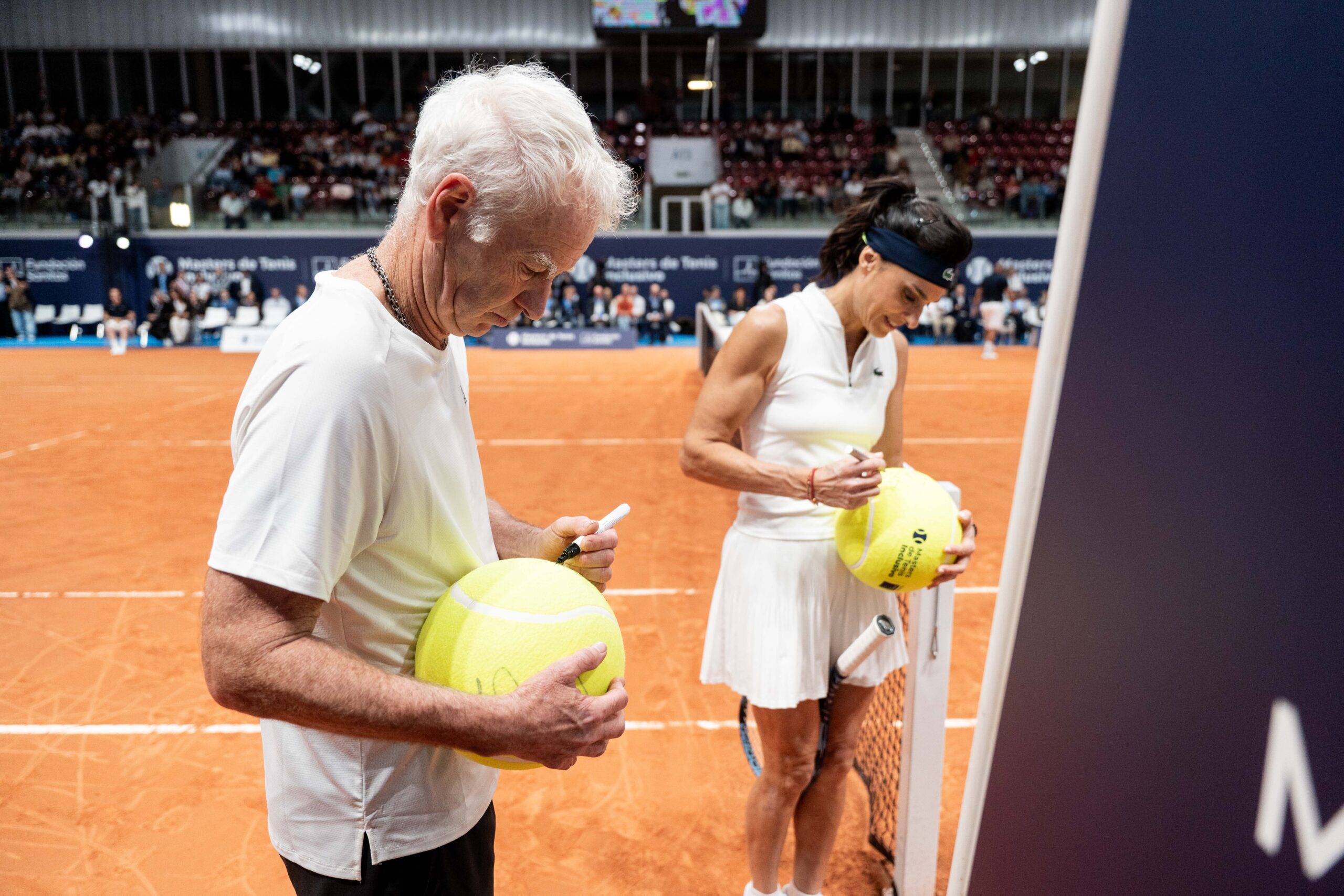
During his stay in Madrid, McEnroe ate jamón and tortilla, visited one of Spain’s most popular television shows, gave interviews to several media outlets, and delighted all the fans gathered at Stadium 3 in the Caja Mágica on Thursday afternoon. It was an itinerary very similar to that of Gabriela Sabatini, the other tennis attraction in Madrid this week. The Argentine former player, also an ambassador for the inclusive tournament, traded television for a visit to the turf at the Santiago Bernabéu.
McEnroe and Sabatini served as captains for the two teams participating in the Inclusive Tennis Masters, where players with and without disabilities played alongside each other. Martín de la Puente, world No. 3 in wheelchair tennis, was another star of a day dedicated to promoting inclusive sport.
“The feeling of playing tennis in a chair is very strange. I’ve tried it. But playing tennis normally is hard enough… I’m too old to try it now. Though maybe, when I’m even older, I’ll give it another shot,” McEnroe remarked to wrap up his visit to the land of Nadal and Alcaraz.