

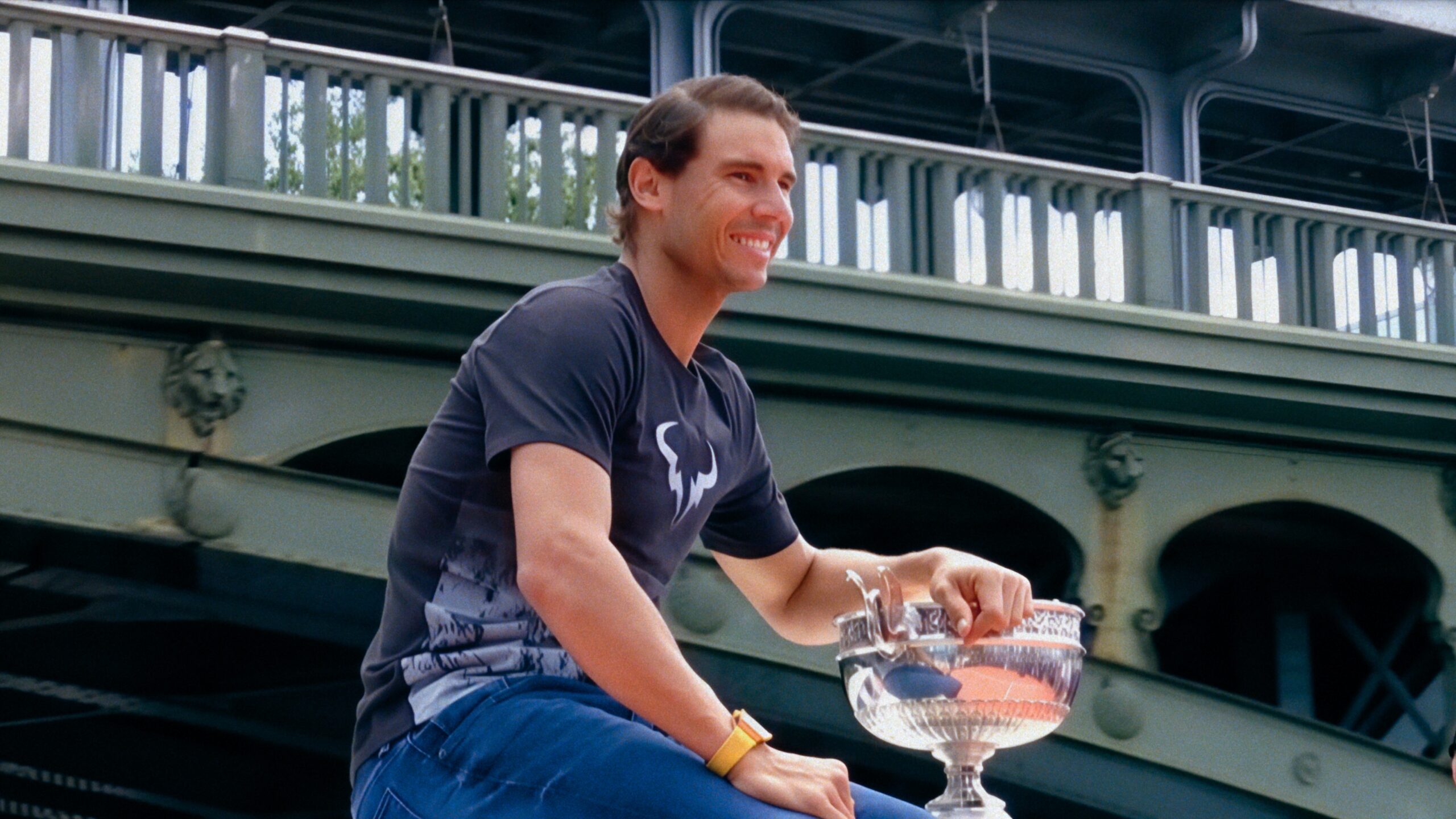

LONDON – Rafael Nadal does not have many fans in the United States because he does not promote himself the way Federer or Djokovic do. That is the opinion of Zach Heinzerling, director of ‘Rafa’, the Netflix docuseries that delves into the inner world of the 14-time Roland Garros champion.
His personality—that spirit of fighting against adversity while avoiding arrogance—clashes directly with the traditional American sports hero archetype. “There’s something about that mentality that’s like the anti-Jordan — the inverse of the common American way — that I found really interesting,” Heinzerling noted in an interview with CLAY at Wimbledon, just hours after learning that ‘Rafa’ had been nominated for an Emmy Award for Outstanding Documentary or Nonfiction Series.
“A lot of Americans will say that Michael Jordan is the greatest athlete of all time. Well, Michael Jordan lived with this form of confidence — he always thought, ‘I’m gonna win,’ and that confidence led him to being better. Nadal has kind of the opposite approach: ‘I don’t think I’m gonna win. I actually think I might lose, and I’m going to give a lot of respect to my opponent and assume that he’s gonna play well so that I raise my game,'” Heinzerling said.
“In the US, no one really knows Rafa. They know him because he won a lot of tournaments, the US Open four times… but there aren’t many Rafa fans because it’s hard to get to know him — he doesn’t really speak English that well,” he added during the conversation.
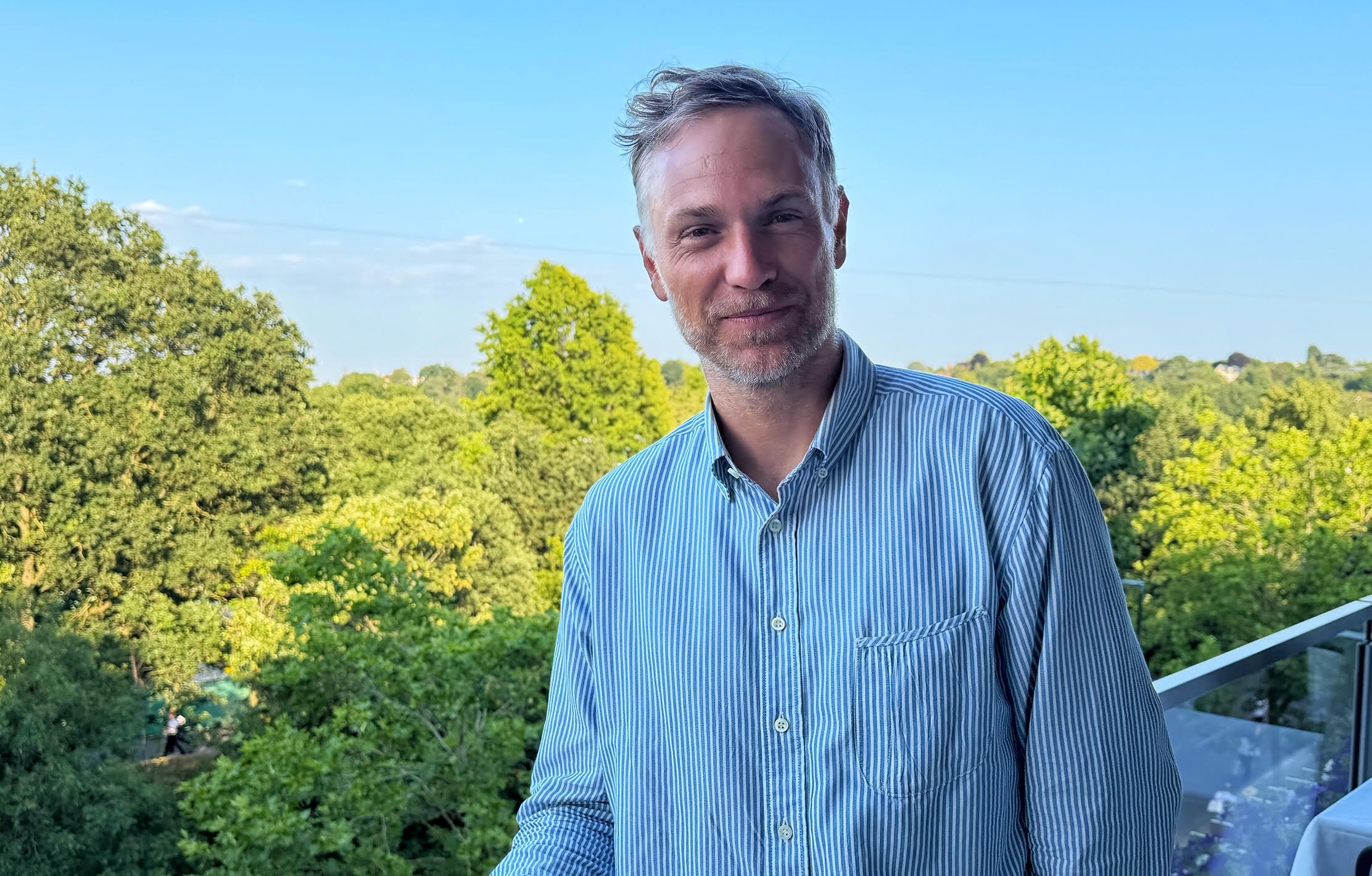
Interview with Zach Heinzerling, director of Netflix’s Nadal documentary
— Lionel Messi said he was watching the documentary and suddenly everyone in Argentina got super interested on it.
— RAFA immediately went into the top 10 of Argentina’s top watched shows on Netflix. I think that nowadays, the best promotion you can get for anything is a famous person posting or talking about it, because the documentary on Netflix is all word-of-mouth. It’s all people talking about it. And so when Messi referred to the documentary during the World Cup, he said that him and his team had been watching it, and they were inspired by it, it made huge effect. That little clip went viral, and every news outlet was talking about how Messi was watching RAFA and how Messi feels like he’s similar to Rafa in a lot of ways. And the impact of that was way bigger than any advertisement or trailer or marketing that Netflix could have done. Honestly, I thought that because Europe is so big in Argentina anyway, it would naturally already be in the top 10. But there’s a lot of good shows out there, there’s a lot of competition. The fact that Messi watched it is a big indicator of the cultural impact the series has — not only on critics and the mass public, but also on other important athletes and celebrities who are paying attention. It was probably the biggest publicity that we got releasing the series.
— Have you got any other comments from other top athletes saying something similar?
— Sinner said that he was inspired by watching it. Sabalenka, at Wimbledon, said that she had been inspired by watching how much effort, consistency, passion and fight Rafa has — it’s very infectious for other athletes. Other famous people in the United States have posted about it: Amy Schumer, John Krasinski, Jerry Seinfeld. In the US, because the series is in Spanish, it’s very rare that a non-English language series would do well there. Rafa did actually very well in the US. The series was nominated for an Emmy Award for best documentary series, which is the first time in history that a non-English primary language series has ever been nominated for an Emmy. People don’t want to watch with subtitles — they turn on whatever English-speaking series is available. The fact that a Spanish-language series has done well in the US is very rare, and exciting news.
— Rafa was fighting for Grand Slams titles and now he’s chasing an Emmy.
— He’ll be proud and excited, but Rafa doesn’t care that much about… He wanted to make sure that the series was a level of quality he could stand by and that it represented him honestly. And he was happy with the way it came out. I think he wanted to be seen globally, because people in Spain know Rafa, but he’s not as worldly or global of a celebrity. Unlike Federer and Novak, who are constantly travelling and promoting themselves, Rafa’s more private and humble. So I don’t think he cares as much about awards as maybe other celebrity athletes would. But I’m sure he’s happy.
— Why he wanted to do this documentary?
— Because Rafa shows himself most honestly through his actions more than his words. You can watch an interview with Rafa and he can talk and tell you stories, but you have to see the way he interacts with his family, with fans, the way he plays the game. If you watch that — which you can only do in a documentary — it’s so much more powerful and meaningful than a book or an article. He understood that if people were going to understand who he was and what he represents, he needed to do the documentary.
— Was it easy to convice him?
— He really didn’t want to do it. He said no forever and ever and ever. Thanks a lot to his team for convincing him that, because you’re still playing, it’s better to do the documentary while you’re in action — people can see the struggle, the ups and downs of the season. If it had all been told about the past, it would be a lot of talking heads telling you stories. But I think the most impactful parts are where you see him in everyday life — with his kid, with his wife, his parents, joking around with his team. That’s the Rafa people don’t get to see. And that’s more important for his legacy than the awards, than the trophies. Obviously, the numbers say what they say, but what makes Rafa different is his ethos, his personality, what he stands for, his integrity — and that kind of thing you can only get from watching.
— What did he learn through all this process of sharing the most intimate part of his life? What did you learn?
— Let me tell you a story. I asked him this question in a Q&A in front of an audience, and he couldn’t answer it — he has a really hard time watching himself on screen. He doesn’t know how to react or how to engage with the story of himself. He never really said he learned anything necessarily about himself. But the thing that he and his family did learn is something revealed about his foot, the Müller-Weiss syndrome: they always thought it was just genetic, that he was born with it. But actually, the combination of that genetic disorder with consistent trauma from playing tennis and football as a very young kid caused him to develop that disease. If he had not played for hours and hours as a young child, he may not have developed it. That’s a new piece of information.
— How was for you to work with Nadal at such a deep and intimate level?