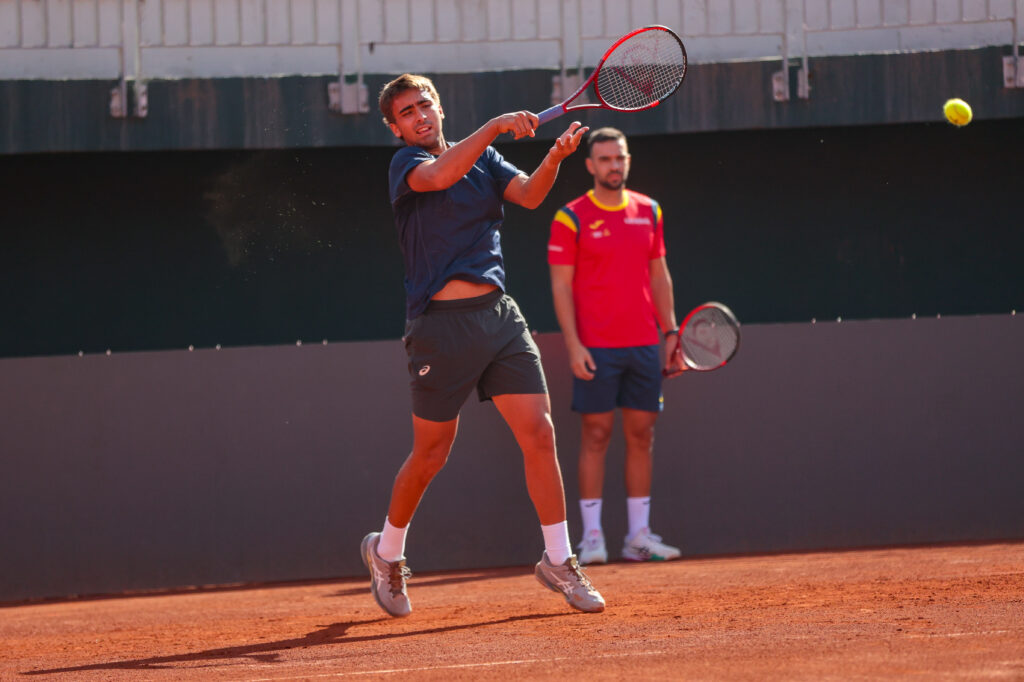


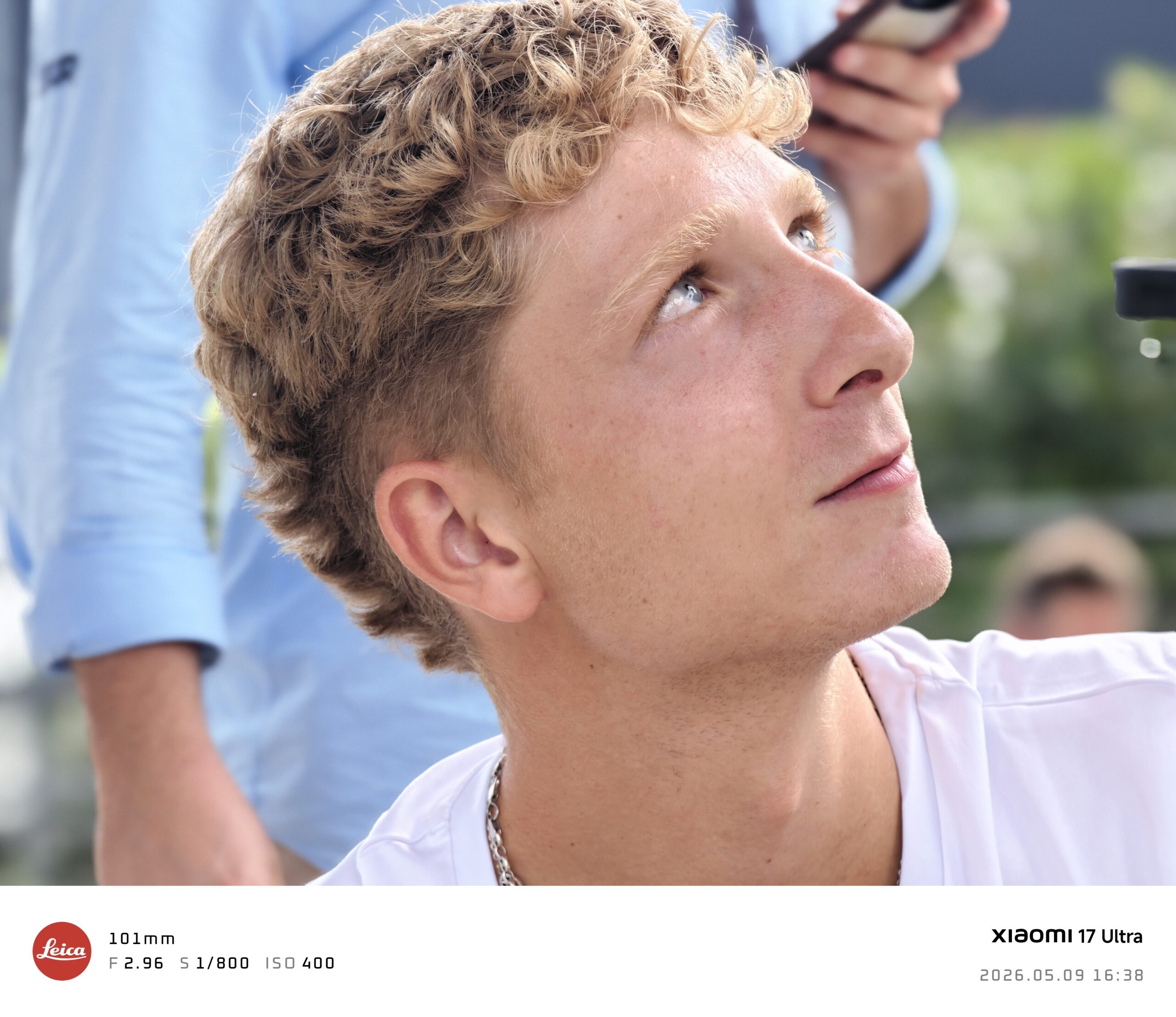

ROME – Martín Landaluce doesn’t bat an eyelid when explaining how he spends the little free time afforded by his dual life as a rising professional tennis player and a dedicated university student.
‘I’m reading “The Art of Dying” by Seneca,’ says the 20-year-old Spaniard during an interview with CLAY at the Italian Open in Rome.
Landaluce is thus reminiscent of the Argentine Guillermo Vilas, who in the 1970s and 1980s was a ‘weirdo’ on the tour who devoted hours and hours to reading and writing poetry. The Spaniard could have lived very well in those days, because social media has captured neither his time nor his soul.
In ‘The Art of Dying’, Seneca argues that death should be seen as liberation, because life is a journey towards death. Paradoxically, Landaluce is emerging onto the tennis scene: this year he reached the quarter-finals in Miami and established himself among the world’s top 100. And on the European clay-court tour he continues to grow as a player. He feels, he says, “like a warrior”.
Coming from a Spaniard, that is saying a lot.
– You’re in the big leagues of tennis; do you feel that way?
– Yes, I think I’m becoming more and more established on the circuit; I think I’m playing some great matches. In this case [Rome], I’ve been very lucky with the Lucky Loser spot and getting through early. I’ve made the most of it; I was really keen to play on that beautiful court [the Nicola Pietrangeli, surrounded by statues of classical Olympic athletes, sculpted in Carrara marble] against a great player like Marin Cilic.
– You’re doing better and better as a tennis player, so how are things going in your role as a university student studying Business Administration and Management? Isn’t your degree course suffering as a result of your growing success as a tennis player?
– Yes, it’s quite difficult when you’re playing well, because there are so many matches and you have to submit assignments and sit exams remotely, and that takes up quite a lot of time. And getting in touch with other classmates for group work too, so it takes quite a lot of time. And at times it’s proving a bit of a struggle, but there are days when I’m free or I try to set aside three or four hours to catch up a bit on what I’ve fallen behind on. But it’s true that you’re always a bit behind with the coursework and you have to catch up. I’m going to try to keep taking it in my stride, and if it ever takes longer than I need or can manage, well, I’ll have to take action.
– Where do you study?
– It’s a university in Spain [the International University of La Rioja] that offers certain grants for players, for athletes. In my case, I can manage both.
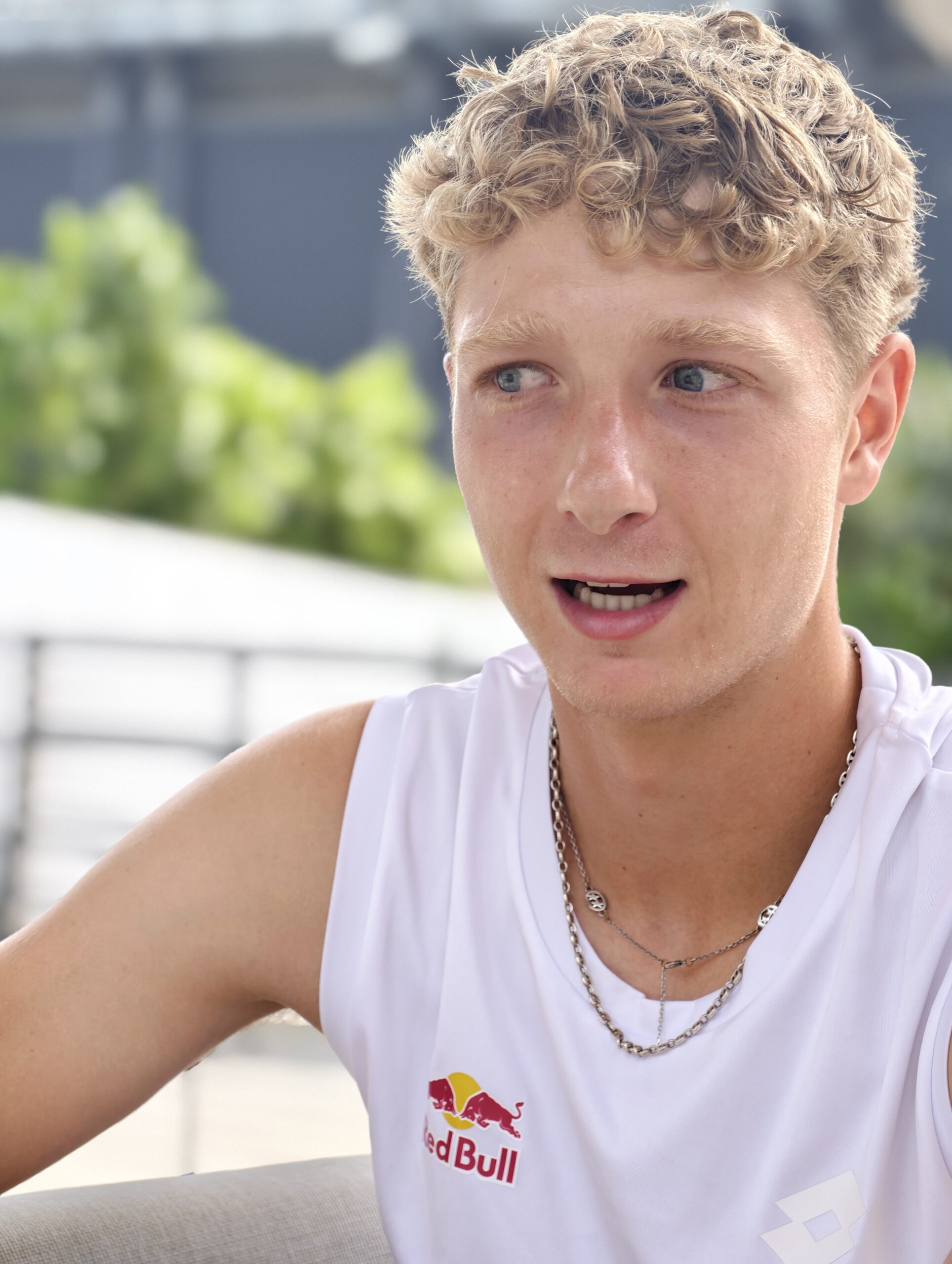
– How many years do you have left, or how long is the course?
– Well, this degree is a four-year course and I’m taking half the modules; instead of ten, I’m doing five, so in theory I’ll try to finish it in eight years – it’s a long-term project that I’m taking at a steady pace. If I can manage it with five modules a year, I’ll take it easy; if I can fit in more, I’ll do more. And if not, I’ll try to find the time.
– Do you know anyone on the tour doing something similar?
– Yes, I think there are a few players, but I don’t think there are many, because tennis takes up so much time. I still have a bit more time to devote to it, and as long as it keeps my mind occupied, I’ll keep developing. On the other hand, I think it’s a positive thing.
– And why? I mean, why are you doing it if most people aren’t?
– Because I think it actually helps me quite a lot in a way to have a structure, because in tennis I already have a very clear idea of what I need to do. And it’s also another responsibility I have on the side, which makes me—or at least I think so—mature in a way. I don’t waste time in the afternoon; I have to get on with something that I sometimes find difficult, that I sometimes don’t have the patience or the time to do… And above all because it keeps developing my mind. And if at some point, which is what I intend, I start managing companies, running my own business, making investments, I think everything I can learn from this degree will benefit me. I’m going to stick to that plan.
– But you are, in a sense, already your own business; or are you thinking of managing other types of companies?
– Yes, my own; I want to manage it as well as possible. For example: I’ve got a module that’s also about law, which covers quite a few laws, and that’s quite useful to me. I’ve got microeconomics; there are modules that help me with tennis, with the business that is me, and if in the future I want to expand, or want to run certain businesses or whatever, I want to have some knowledge and know a bit about the subject.
– Do you still not have social media on your mobile phone?
– Yes, I don’t usually have them on my mobile; sometimes I download the app during weeks like this one in Rome, when there are lots of people and I have to help post more updates or reply to people. I download it, but normally I use social media on my computer and in the afternoons I sometimes have a look at it and that’s it.
– And do you still read Seneca and other philosophers?
– Yes, yes, I do. I’m currently reading ‘The Art of Dying’ by Seneca. Sometimes I take a bit of a break from those books and read others that also teach me in different ways.
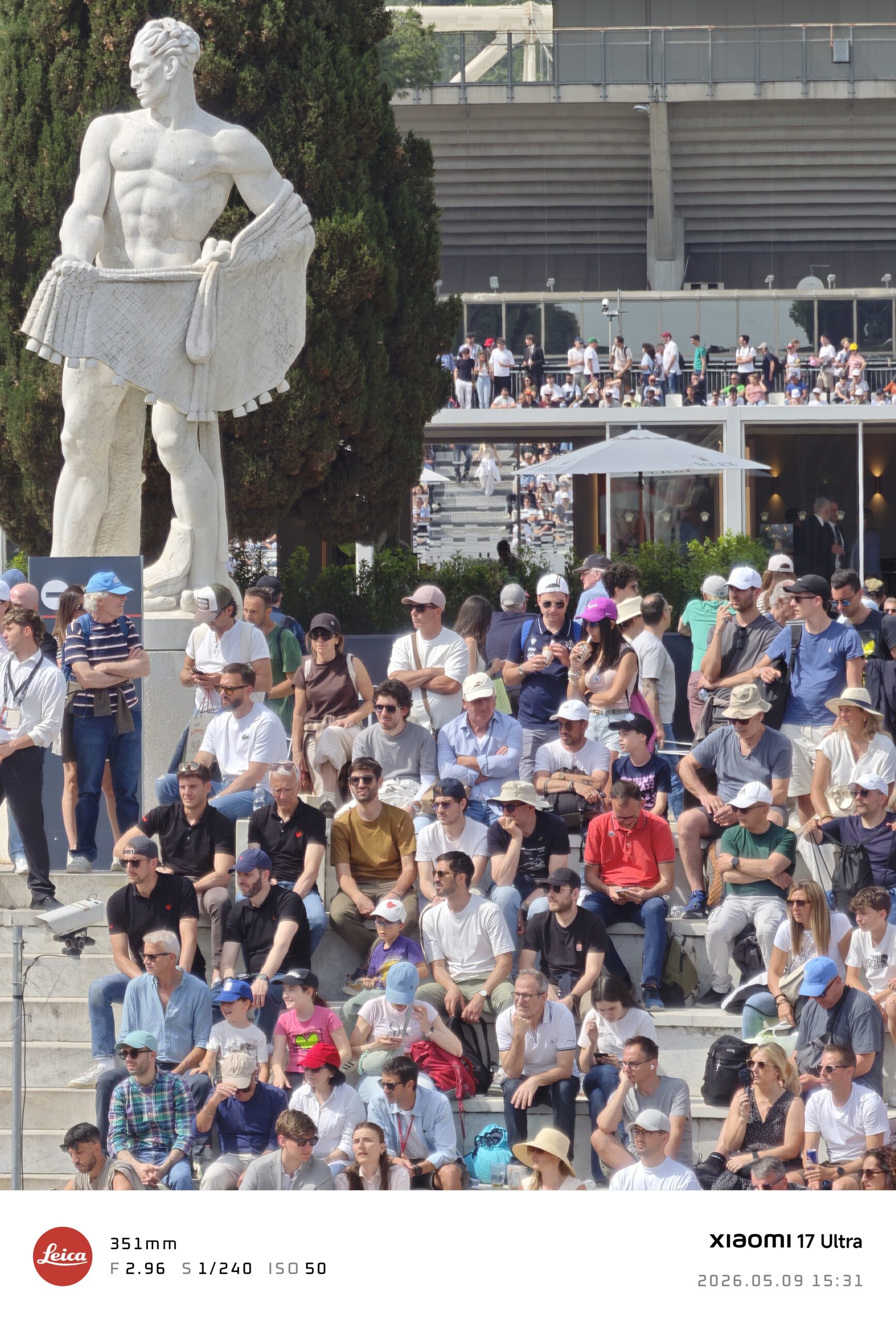
– You played at the Nicola Pietrangeli Stadium, surrounded by 18 Carrara marble statues representing Olympic athletes. How did you feel?
– I felt like a warrior. It gave me a lot of energy.