


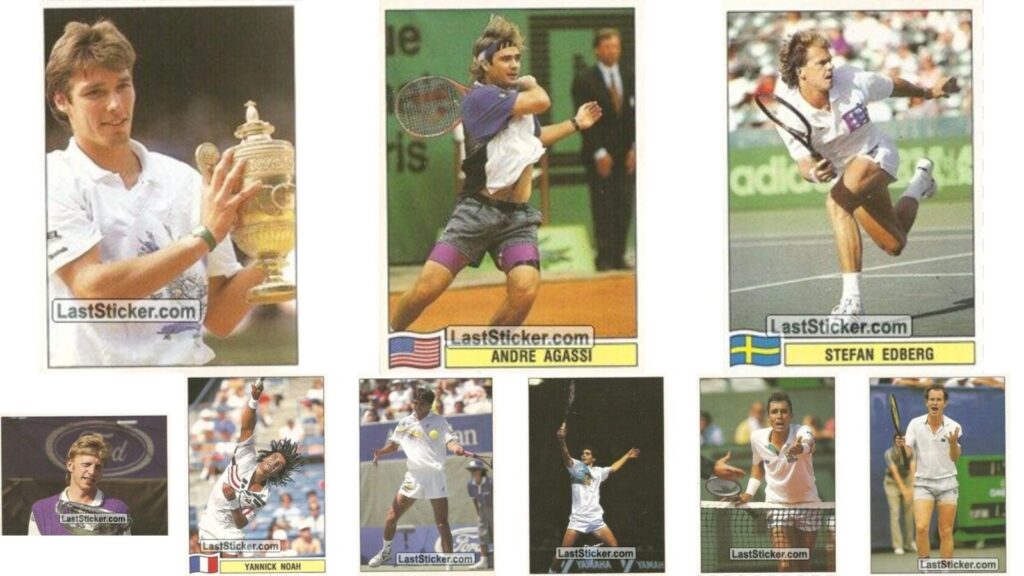
A winter in North America is never easy, but for two brothers who had just moved from Kiryat Motzkin, Israel, to Canada in 1994, one tennis sticker album brought a much-needed ray of warmth. The collection, meant to promote the sport but a complete commercial failure, resurfaced recently when I visited my parents’ attic. It brought back a flood of memories and sent me on a quest to uncover its story — and, in particular, to find my Boris Becker card.
The deep freeze that swept across North America in January 1994 remains one of the most severe on record. Arctic air currents dipped unusually far south that year, causing temperatures in many East Coast cities to plummet to a bone-chilling -30 degrees Celsius. Transportation ground to a halt and flights were cancelled. The United States experienced the coldest weather measured since 1934.
The following account is a memory that still chills me to the bone, three decades later. It was cold. Truly, truly cold. In fact, to say it was cold is a bit like saying a Ferrari is a fast car. It was awful. Toronto registered -31 degrees Celsius that month, and the air that seared our lungs was accompanied by heavy snowfall. For the first time in 60 years, the airport was shut down.
Just a few months earlier, when my parents announced we would be moving to Canada, the news felt like winning the lottery. In the sweltering heat of Haifa’s summer, the prospect of moving to a new country felt like a dream come true, especially since a neighboring country would be hosting the World Cup that summer. In September 1993, shortly after we arrived, we got the news that Toronto would be returning to the NBA after nearly fifty years. The Toronto Raptors were launched half a year later. We couldn’t have asked for a better welcome.
A Search for a Lost Childhood
It quickly became clear that this wasn’t Kiryat Motzkin anymore. The loneliness of a big, foreign city, along with the difficulties of adjusting, was exhausting. In a place where ice hockey is the national sport and soccer is seen as a game for girls, you always feel like an outsider. Despite our best efforts, the battle was lost: our classmates had no interest in our obscure tennis album; they were obsessed with finding NBA cards. We were left alone, chasing an impossible dream of completing the album.
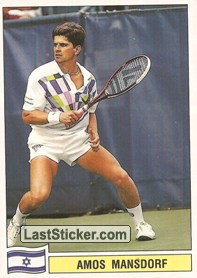
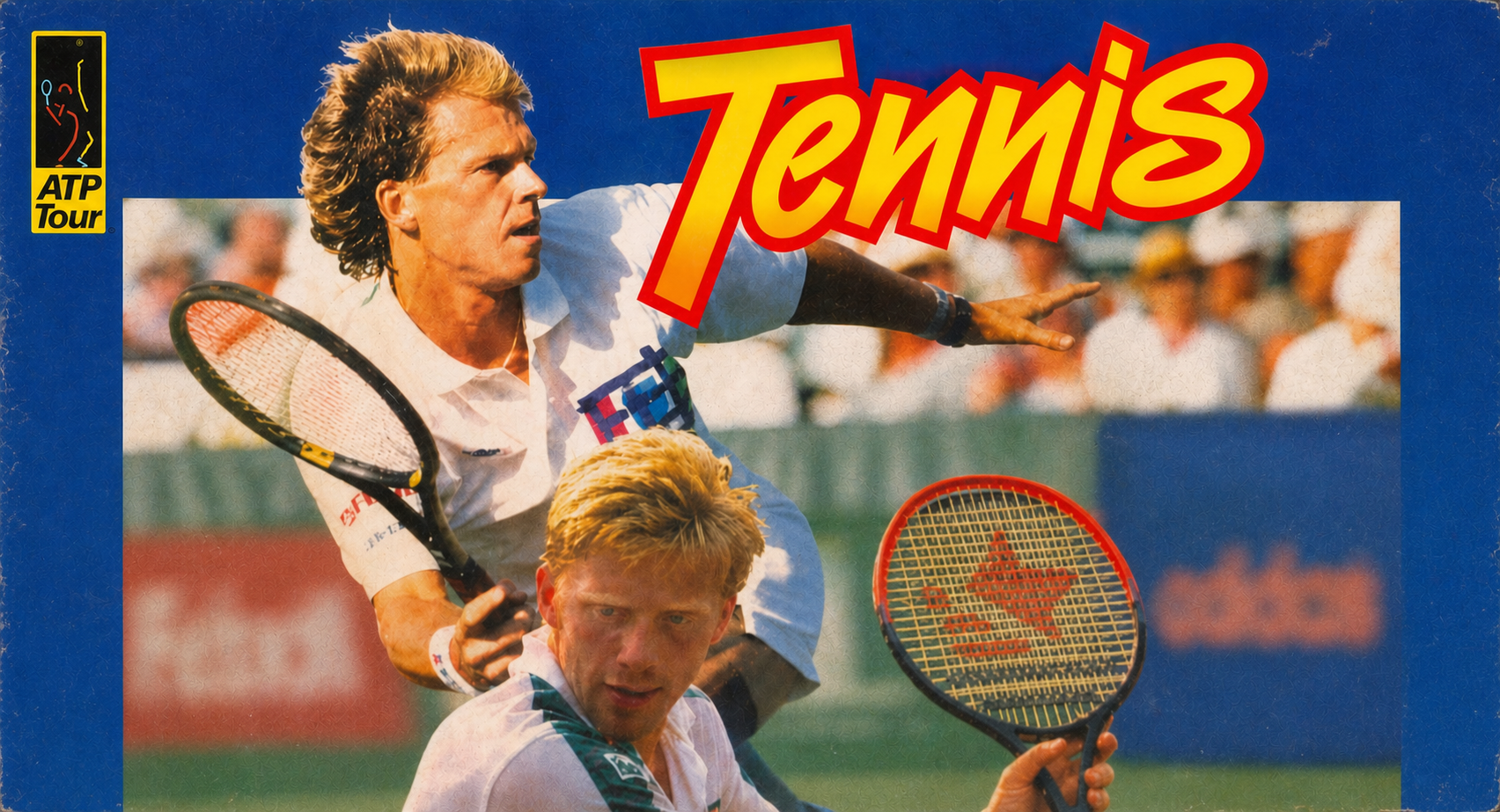
One day, on our way home from school, we found a “Tennis” sticker album at a local store, with Boris Becker and Stefan Edberg on the cover. Finally, a familiar and friendly item. Collecting cards and stickers was a hobby we knew from home, and when we discovered that the 240-sticker album also included images of Israeli players Amos Mansdorf and Gilad Bloom, we became obsessed with the mission.
The Italian sticker giant Panini, now in its seventh decade, produces the official sticker albums for the World Cup, Champions League, and more. In the early nineties, for one brief moment, the company decided to partner with the ATP and bet on a sticker album entirely dedicated to tennis. “The world tour was trying to promote the popularity of the game in several ways, and one of them was to produce something similar to baseball cards”, Amos Mansdorf tells CLAY. “I don’t think it caught on.”
From Commercial Failure to a Billion-Dollar Industry
Gianni Bellini, 61, from Modena, is likely one of the greatest Panini collectors. He specializes in soccer stickers and has a collection of over 4,000 albums and 2.5 million stickers. He remembers the forgotten tennis album well. “It was truly one of the company’s biggest failures,” Bellini recalls to CLAY. “The album was initially distributed in a limited number of countries in Europe as a test run, but it simply didn’t work. People didn’t buy it. I think the trauma surrounding the tennis venture was so great that the company hasn’t produced a tennis hero album since. It’s a shame, because it was a beautiful album”.
According to Bellini, the album has become particularly rare in recent years, and many collectors are looking for it. “The price of a rare Pete Sampras sticker, for example, can reach hundreds of dollars”. Gilad Bloom remembers it with a smile: “It was exciting and cool that they made cards with my picture—a kind of stamp of approval that you’re a legitimate player and part of the tour. It was definitely a boost to the ego”.
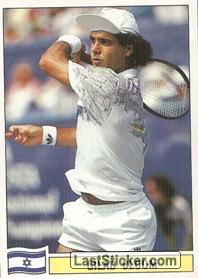
A few months ago, while cleaning out my parents’ house, we found that same old tennis album. As we flipped through it again, we discovered that our collection mission had never been completed. A few stickers were still missing (including Shuzo Matsuoka, Kelly Evernden, Fabrice Santoro, Brad Gilbert, and Gilad Bloom). “The album ended up in Canada by accident, after it failed so badly in Europe”, says tennis journalist Christopher Clarey, who spent decades covering the sport for the New York Times.
Today, however, the tennis card market seems to be at a high point. Ed McGrogan from the Tennis Channel says that the tennis card market “is having a bit of a moment”. J.T. Buzanga, the collections manager at the International Tennis Hall of Fame, notes that the museum holds historic cards dating back to the late 19th century. While the exact value of historic cards is unknown, modern cards of famous tennis players are selling for astronomical amounts. A rare Serena Williams card recently sold at auction for over $260,000, and a card of Carlos Alcaraz, who has taken the tennis world by storm, sold for $222,000.
These figures, along with the astronomical sale of a rare Michael Jordan and Kobe Bryant card for $12.9 million, prove that a simple childhood hobby of collecting colored cardboard has become a multi-billion-dollar industry with a speculative market and sophisticated players. Some of the missing stickers in our album have been found on eBay and other collection sites, but still, if anyone out there has that Boris Becker from Wimbledon sticker—please get in touch. The search continues. For the sticker, and for a piece of my childhood.
Do you love CLAY? Support us on Ko-fi and follow us on Instagram, X (Twitter) and Facebook.