

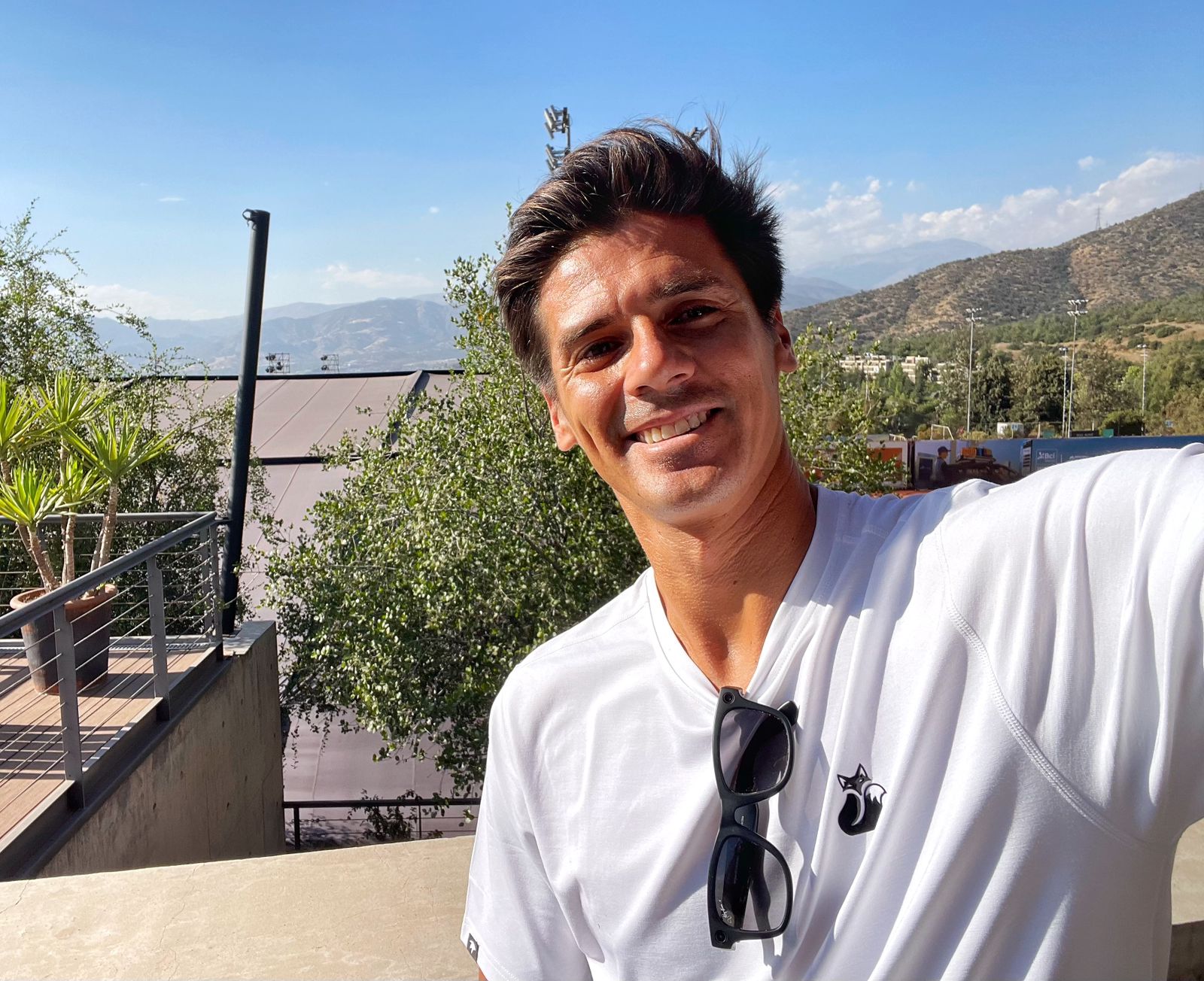

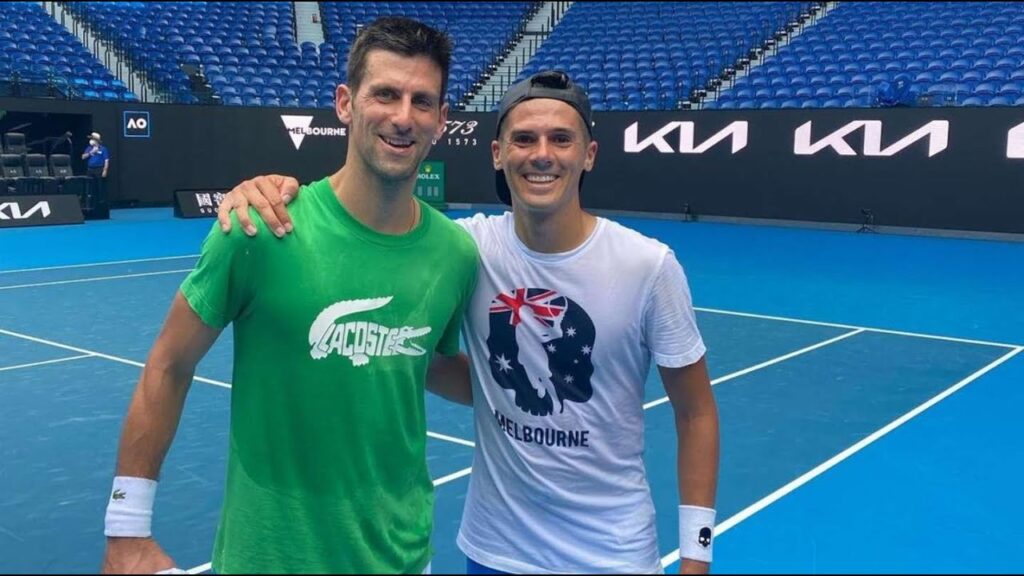
SANTIAGO, Chile – Leading a players’ union in tennis while continuing to collect records to cement himself as the greatest of all time. Novak Djokovic’s work with the PTPA during the very years he was smashing the records of Roger Federer and Rafael Nadal impresses Federico Coria.
“Whenever you talk to a tennis player, they’ll speak very highly of Novak, because almost everyone in tennis knows or has seen up close that he has always fought for the rights of his colleagues and for more people to make a living from tennis,” Coria said in an interview with CLAY during the Chile Open, also published by RG Media.
The Argentine, a former world No. 49 and someone who has a very good relationship with the Serbian, gave details about the work Djokovic did within the Professional Tennis Players Association (PTPA) and about his departure from the union the 24-time Grand Slam champion created and promoted.
“I couldn’t understand it: Djokovic was putting energy and commitment into the issue so that all of us players could have better conditions. The guy was constantly sending WhatsApp messages in group chats to call meetings and generate more interest, while at the same time competing to be the greatest tennis player of all time,” he told CLAY.
Coria, 34, currently recovering from an elbow injury, also joined the debate about possible changes to the South American clay swing. He also gave his opinion on Stefanos Tsitsipas’ decision not to play in South America because he has not been offered enough money: “Let him keep the money — we’ll keep the love here.”
Interview with Federico Coria
— There has been a lot of debate about whether the South American swing should move to hard courts. What is your position in that debate? Do you have a proposal?
— If you’re going to switch to hard courts, then you should move the European and North American tournaments to October. In February you keep the Middle East swing — Dubai, Doha and the new Masters 1000 — and maintain the South American swing. There can’t be three swings!
— You were one of those publicly asking the ATP president to come and see the South American tournaments in person. Do you think Andrea Gaudenzi’s visit will have positive effects for the events in Buenos Aires, Rio de Janeiro and Santiago?
— Honestly, I hope he took with him the impact of what the crowds in South America are like, the children, and how important it is to have tournaments in the region so tennis can keep growing. South America is extremely important for the sport. It’s not all about immediate business; you have to have a vision for the future, and the region is hugely important for world tennis.
— Stefanos Tsitsipas admitted he hasn’t come to South America because he hasn’t received financial offers that convinced him. He said guarantees drive players’ decisions… What do you think about that?
— If I have to give my opinion, I’d say I don’t like that stance. Some hater might say, “You were never offered money to play anyway,” but I’d tell Stefanos that maybe here he could discover a world where he finds something you can’t buy, something beyond money — receiving the affection of people from another part of the world, far away from where he lives. I think Tsitsipas, before making that statement, could have come to Argentina, Brazil or Chile and maybe had a beautiful experience: playing in a full stadium, with fans giving him affection and support. South Americans are like that — very passionate and they live tennis intensely. Yesterday I watched Cris Garín against Juanma Cerúndolo and it’s experienced in a different way. So if he doesn’t come, he’ll miss out. Let him keep the money — we’ll keep the love.
— Novak Djokovic lacked support in the PTPA and ended up stepping away from something he built himself. Do you think the new generations are not concerned about that work? Are they not interested in fighting for better conditions for their colleagues?
— His departure from the PTPA came at a time when I had been out for many months with injuries and a bad ranking, so I forgot to ask exactly what happened. Clearly there were things he didn’t like, or he felt he didn’t receive support, or he simply got tired. But I saw it myself — nobody told me — he always put a lot of effort into that issue. I couldn’t understand how he could dedicate so much energy to that cause so that all of us players could have better conditions, while also competing to be the greatest tennis player of all time.
— Very committed?
— Whenever you talk to a tennis player, they’ll speak very highly of Novak, because almost everyone in tennis knows or has had some experience of him fighting for players’ rights and for more people to make a living from this beautiful sport.
— The big stars — not Sinner, not Alcaraz, not Swiatek, not Sabalenka — does not get enthusiastic about union matters. Could that also explain Djokovic’s fatigue?
— Politically, we’d have to see what was missing for the PTPA to grow. I also feel the ATP has been doing things well, but probably also pushed a bit by the pressure Djokovic generated. Maybe Djokovic saw that things on the tour were improving and said: “Okay, that’s enough for me.” You’d have to ask the people involved to know what’s really happening.
— What has improved?
— Prize money keeps going up and more players can start making a living from tennis, and others are no longer losing as much money. So you can see a small improvement over the past few years.
— Do you think the dominance of Sinner and Alcaraz could create the opposite effect people expect? That fans might get bored of them winning all the time?
— No, because people want rivalries. Tennis has always worked that way: Sampras–Agassi, Federer–Nadal. Then the third villain arrived, Djokovic. Federer and Nadal fans were fierce rivals, and suddenly they joined forces and everything turned against Djokovic. Now it will be Alcaraz–Sinner, and hopefully a third one will appear… well, the third in the current story is still Djokovic. And the day Djokovic is no longer there, hopefully someone else will appear. But those rivalries are necessary. People miss them when they’re gone.
Ver esta publicación en Instagram
— And who would you like to see as that third figure?
— From what I saw last year, Fonseca looked like a future Top 5 player. Watching him play Rublev in Australia (2025) you thought: “Where did this alien come from?” I had the same feeling when I first saw Alcaraz. This year he started a bit stuck, but he’s at a stage where he’s maturing and learning to deal with the pressure of a country as big as Brazil. But I think he has many qualities to get into that fight, and it would be great to have South American tennis in that position.
— Can you name a player you think is completely underrated — someone you think is very good but doesn’t attract much attention?
— Alejandro Tabilo can do great things. He still needs to keep going, in my opinion, keep hitting the ball aggressively. Because when he does, he’s a great player… and he has the extra advantage of playing well on every surface. He’s already beaten Djokovic twice and that… you might beat him once by luck, if someone wants to call it luck, but twice? He can become a much better player than he already is.
— Why is golf attracting so many tennis players? Did it captivate you too?
— I have golfer’s elbow and I’ve never picked up a golf club. But yes, it’s true that tennis players are desperate to play golf at tournaments. Now we’re at Indian Wells, which is a very golf-friendly tournament because there are incredible courses and everyone goes crazy to play. I never caught that bug. If I were healthy, maybe I’d play some padel. Golf, no.
— Which tennis player would be the best to go partying with?
— Oh… I retired from partying years ago. But judging by the profile, a night out with Kyrgios must be very fun.
— And before you retired from nightlife, did you have any memorable story?
— No, because I wasn’t in the world of the stars. I was in the world of Futures, trying to survive… there wasn’t even money to go out in those days!
If you enjoyed this interview with Federico Coria, don’t miss many other interviews with the protagonists of the tennis tour. Click here and read much more for free.