


How much more money do you need when you’re a multimillionaire? How much sense does it make to keep accumulating wealth? These questions apply to Greece’s Stefanos Tsitsipas, but also to a few other players. And to the ATP.
The US and Israel’s bombings in Iran and Iranian attacks on various countries have demonstrated, once again, that professional tennis lives in a bubble of unreality, often insensitive and elitist.
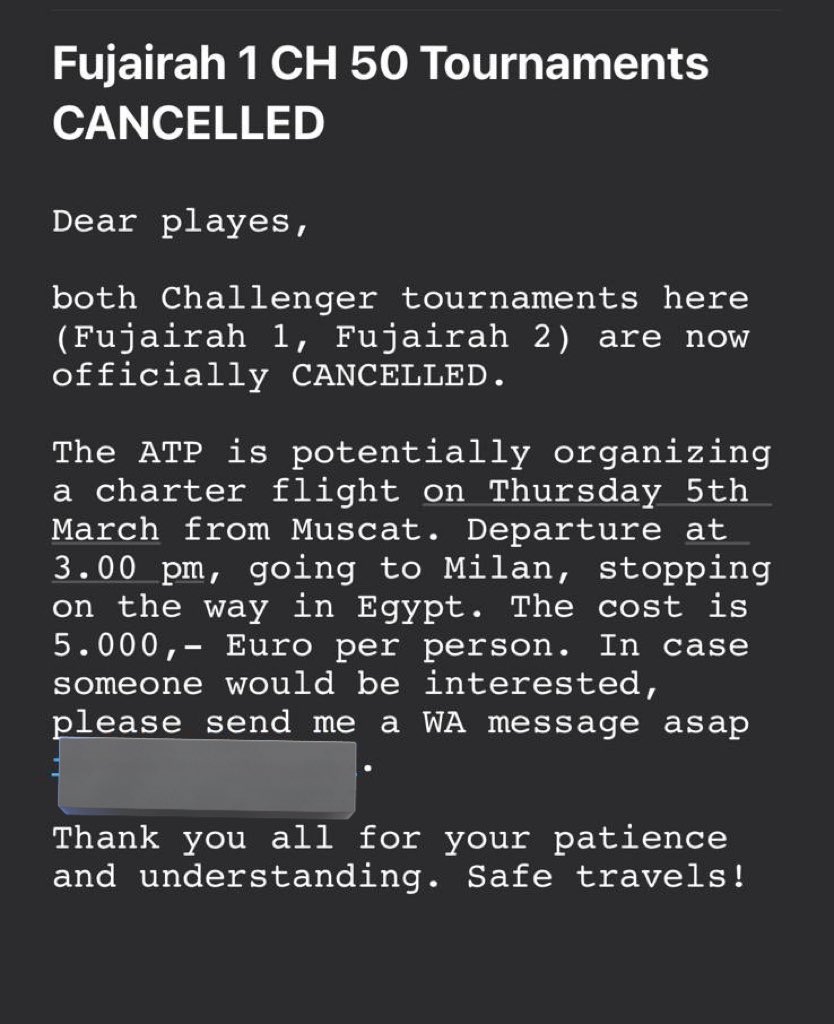
How else can we explain the ATP’s initial proposal to the participants in the Fujairah Challenger? We will take you out of the United Arab Emirates, a country under Iranian attack, if each of you pays us €5,000 for the flight.
The proposal was an insult rooted in a profound insensitivity (ignorance?) to the lives of those who are not part of the tennis elite. The Fujairah I and Fujairah II challengers, which were cancelled, each distributed a total of $50,000 in prize money. Not even the prize for the champion would have been enough to cover those €5,000. And none of those players, when they do their accounts at the end of the year, have €5,000 to spare.
The PTPA (Professional Tennis Players Association) sprang into action, offering to reimburse half of those tickets (€5,000 for a one-way flight to Milan with a stopover in Egypt) and demanding that the ATP cover the rest.
Finally, the ATP announced that it would remove its players from the conflict zone free of charge. Belarusian Ilya Ivashka, ranked 701 in the ATP world rankings, called it a ‘class act’, but what shows little class is the lack of judgement, sensitivity and connection to the real world of those who asked the players for €5,000 to leave a war zone.
Sensitivity and connection to the real world do not seem to be the speciality of players such as Daniil Medvedev and Andrei Rublev either. Both successful and multimillionaires, no one heard them express concern about the situation of their colleagues in Fujairah, just over an hour away from Dubai, where they were stranded.
Both travelled by land to Oman, passing very close to Fujairah, on a journey that was far from easy, before taking a private jet out of the area, something that Finnish player Harri Heliovaara found much more difficult to achieve: he travelled with his partner and children to the border with Oman, was unable to cross, had to return after hours of negotiations and finally managed to get a flight from Dubai.
All this was happening at a time when the ATP was proposing to charge €5,000 to those who count every dollar every day to continue living the dream of being tennis players.
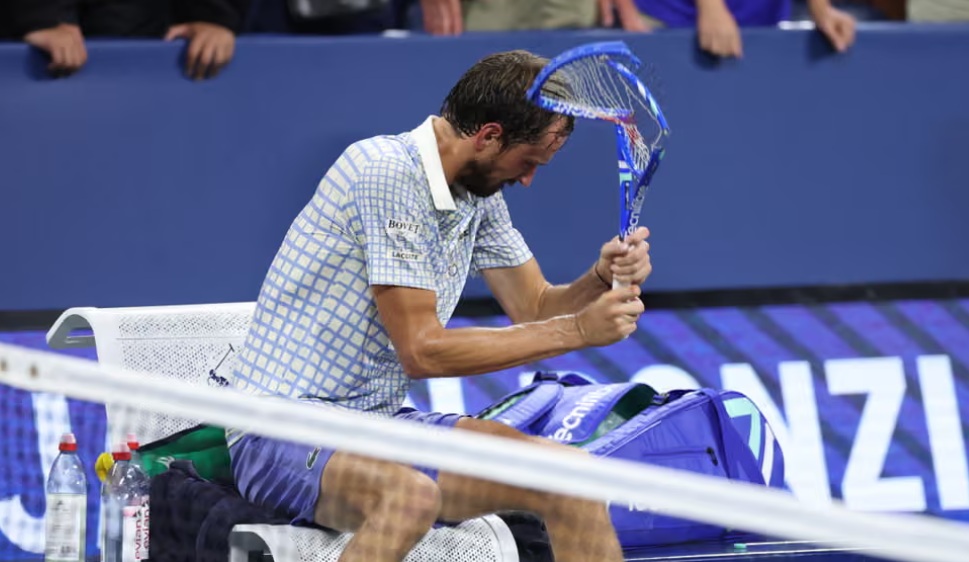
What if Medvedev, Rublev and the ATP joined forces with other players – and their teams – in mind, instead of betting on ‘every man for himself’?
What a great gesture that would have been. How humane it would have been.
But professional tennis is becoming less and less humane. As Andre Agassi recently said, some players are ‘treated almost like corporations today’. And corporations have no soul.
Soul, that which Tsitsipas always showed or pretended to show (did he sell?). When he appeared on the tour, the Greek was a refreshing presence. Not only because of his tennis, which at its best is a feast for the eyes, but also because of his taste for photography, philosophy and reflection, sometimes with hints of self-flagellation, without end. Here was someone different, someone who saw beyond victories and defeats, trophies and cheques.

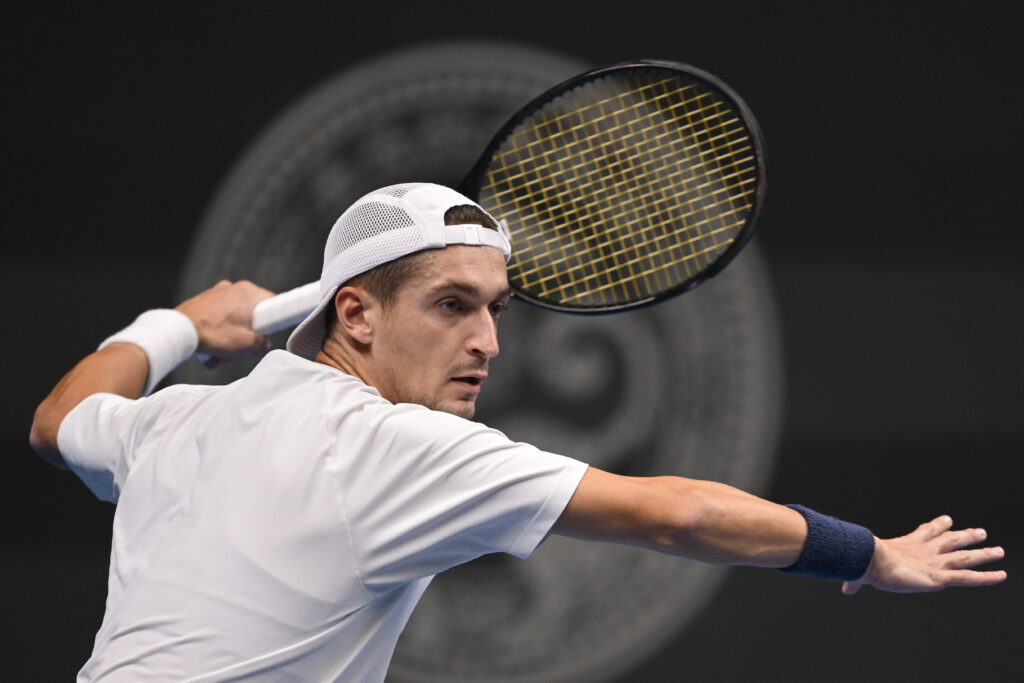
Or maybe not, maybe it was all an illusion. That a multimillionaire like Tsitsipas, who can live the rest of his life without working and guarantee the same for his children, grandchildren and great-grandchildren, talks about money when deciding whether or not to play in South America is the opposite of what he claimed to be, or what he sold himself as being.
Does a couple of hundred thousand extra dollars really justify always playing in the same places and not discovering the world that Tsitsipas says he wants to embrace and discover? Doesn’t the Greek live professional tennis as a privilege, as the fact that he has reached the place that thousands and thousands aspire to only to fail?
When you are privileged, audacity is always possible, and at a very low cost. If Tsitsipas has not yet set foot in Rio de Janeiro, Buenos Aires and Santiago de Chile, it is because he does not want to, because he had plenty of good offers, as confirmed by CLAY. Was it less money than what the Arab sheikhs were offering him? Surely. Money makes the world go round, but does it also make Tsitsipas go round? Wasn’t he ‘different’?
On 21 February, the Greek posted a tweet: ‘Remembering something embarrassing you did 10 years ago… just before falling asleep.’
It shouldn’t take ten years for Tsitsipas to wake up.