



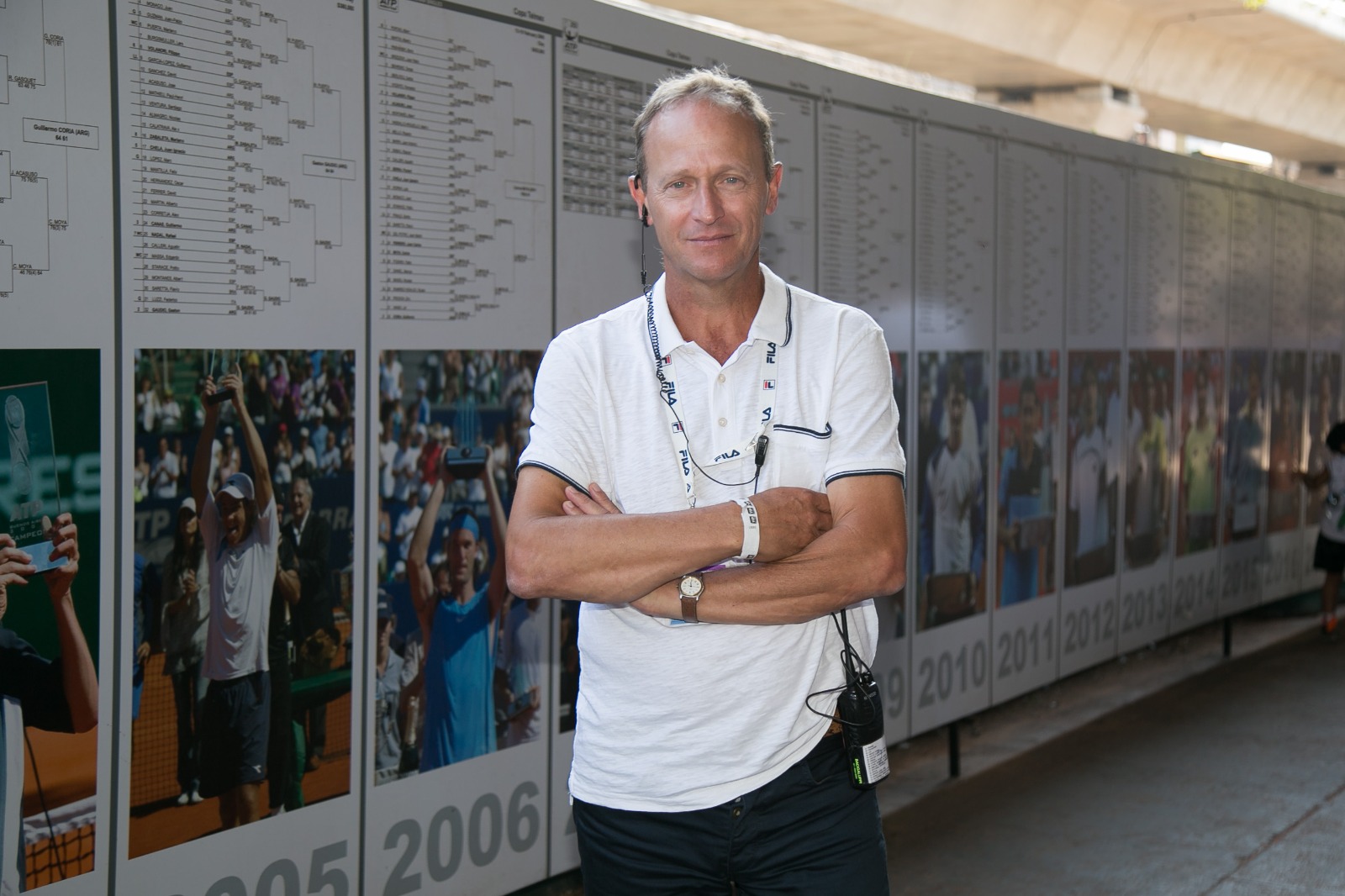
BUENOS AIRES – When Andrea Gaudenzi sits down in the official box at the Buenos Aires Lawn Tennis Club this Saturday, someone may ask him: is it fair to ask Joao Fonseca to be the saviour of South American tennis? Because South American professional tennis is under threat, there is no doubt about that.
There are tournaments that could disappear, and there are people, like Mats Wilander, who believe that Fonseca could prevent that.
Again: is it fair? Gaudenzi, an Italian, former player and CEO of the ATP, has a lot to say on the subject in what will be his first appearance in South America after six years and one month at the helm of men’s tennis.
The advance of Saudi Arabia, with growing power within the ATP, is as beneficial to the Desert Kingdom as it is damaging to the passionate yet fragile ecosystem of three consecutive tournaments in Buenos Aires, Rio de Janeiro and Santiago de Chile.
By 2028, several ATP 250 tournaments will have to cease to exist. And at least one of them will be South American.

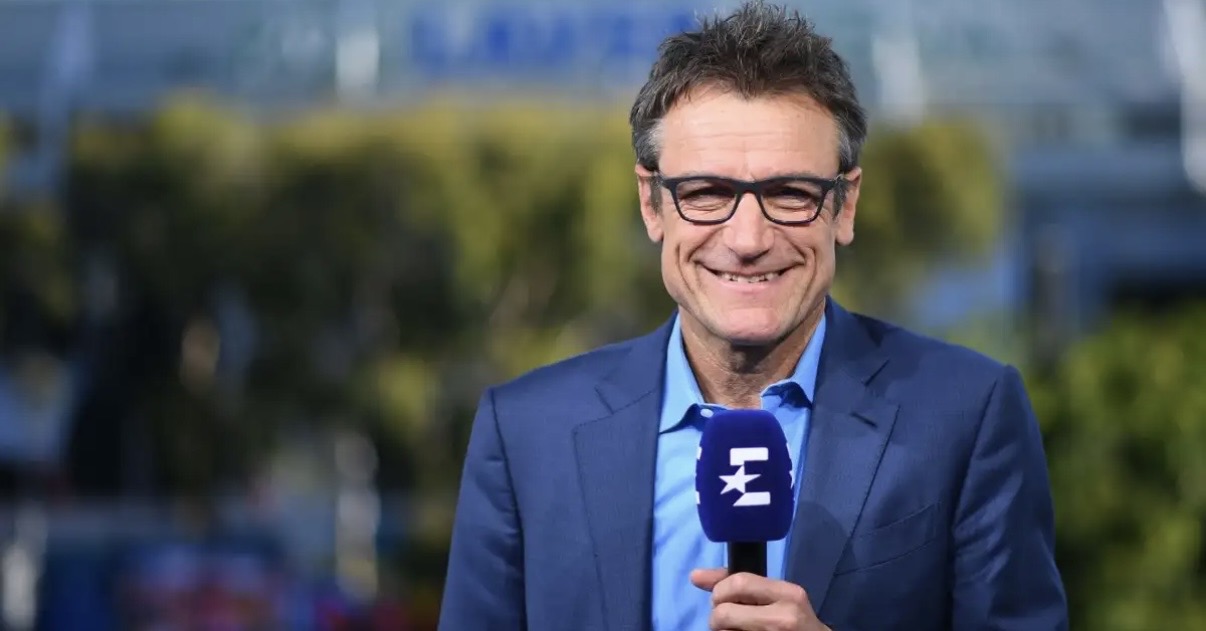
Fonseca is only 19 years old and describes himself as ‘a newcomer to the circuit,’ but Wilander, a highly intelligent player in his day and now a sharp television analyst, believes that the Brazilian could prevent the impending dismantling.
‘Latin America didn’t lose talent, it lost structure. Fewer tournaments, less investment, less continuity…,’ the former Swedish tennis player said during a recent interview with CLAY.
‘João Fonseca could be a turning point: technically, he has it all. The big question mark is his physique. But for the region to truly make a comeback, one star is not enough: systems are needed.’
Wilander’s assertion that Latin America ‘lost structure’ is debatable: the region has always been marginalised in terms of tournaments, always hosting relatively minor events during relatively unimportant weeks of the season. There was never any attempt to link up with the major flows of world tennis; no one thought of (or if they did, they did not follow through) connecting the South American clay-court tour with the European season that culminates at Roland Garros. Quite the contrary, it was squeezed into three weeks (originally four) between the hard courts of Australia, the hard courts of the United States and the competition of the petrodollars of the Persian Gulf emirates.
The result? No ‘top tens’ in Buenos Aires, Rio, let alone Santiago. The stars play in the Persian Gulf, in the United States, in Europe. In terms of rankings and figures, South American tournaments are condemned to a profile not so far removed from that of a challenger.
Butch Buchholtz’s idea of creating a ‘Super 9’ (now called Master 1000) in Nordelta, a wealthy suburb north of Buenos Aires, was real 25 years ago, but time passed and nothing came of it. Nor did the ambitions of Rio de Janeiro and Brazil, a country where tennis moves much more money than in Argentina, but is at the same time less widespread socially and less popular. In Argentina, tennis spread strongly among the middle class. In Brazil, it has yet to reach the same level, and the somewhat unfair elitist aura still persists.

Luiz Carvalho, director of the Rio Open, and Catalina Fillol, director of Santiago, are very keen on the possibility of their tournaments being played on hard courts. They believe that this would attract the stars who currently play in other competitions. Martín Jaite, director of Buenos Aires, and Tennium, the company that owns the Argentina Open, refuse to abandon clay courts, as they do not believe it is a good idea.
“There is a lot of potential for more. What could happen in Rio if three top 10 players played, or four top 10 players? I imagine there could be two courts, one for 10,000 spectators and another for 5,000, and there would be an audience for that. There is an obstinacy on the part of the players not to lose tournaments on clay, which prevents a tournament from developing and becoming a better product for them,” Carvalho said during an interview with CLAY in 2025.

‘The tournament could become a business for them, so they can earn more money, so their prizes increase, so their comfort increases. So we are a little limited in this regard. We want to invest and the Tour does not allow us to move on to the next stage (…). We feel a little sorry and treated a little unfairly with all this.’
Carvalho will have time to discuss the issue with Gaudenzi, whose absence in Latin America he lamented in that interview: ‘Andrea is a super visionary guy, and I’m sure if he saw this here, he would probably have a different opinion about the Latin American market.’
This means, then, that Gaudenzi’s opinion of the Latin American market is not good, or at least not the best. Will a couple of days in Buenos Aires and a couple of days in Rio de Janeiro be enough to change it?
There is a positive side to Fonseca’s premature defeat in Buenos Aires, and that is that Gaudenzi will see a tournament without the added bonus of the Brazilian’s aura. And in Rio, a tournament with a larger surface area and more sponsors than the Argentine one, he will arrive at the height of excitement, with the entire draw still to be played and the start of one of the biggest parties on the planet: the Rio carnival.
Chile will not be part of the trip to South America. ‘Unless something changes, there are no plans to go to Santiago,’ an ATP spokesperson told CLAY.
Amidst the heat of the Jockey Club de Gávea, the hype surrounding Fonseca and a carnival that no European has ever experienced or will ever experience in their homeland, perhaps Gaudenzi will take note of something: petrodollars spring from the sand and the desert, but not tennis players. This is in stark contrast to what happens in tennis-marginalised South America, a land of tennis number ones, a land where players and passion for the sport never run out.