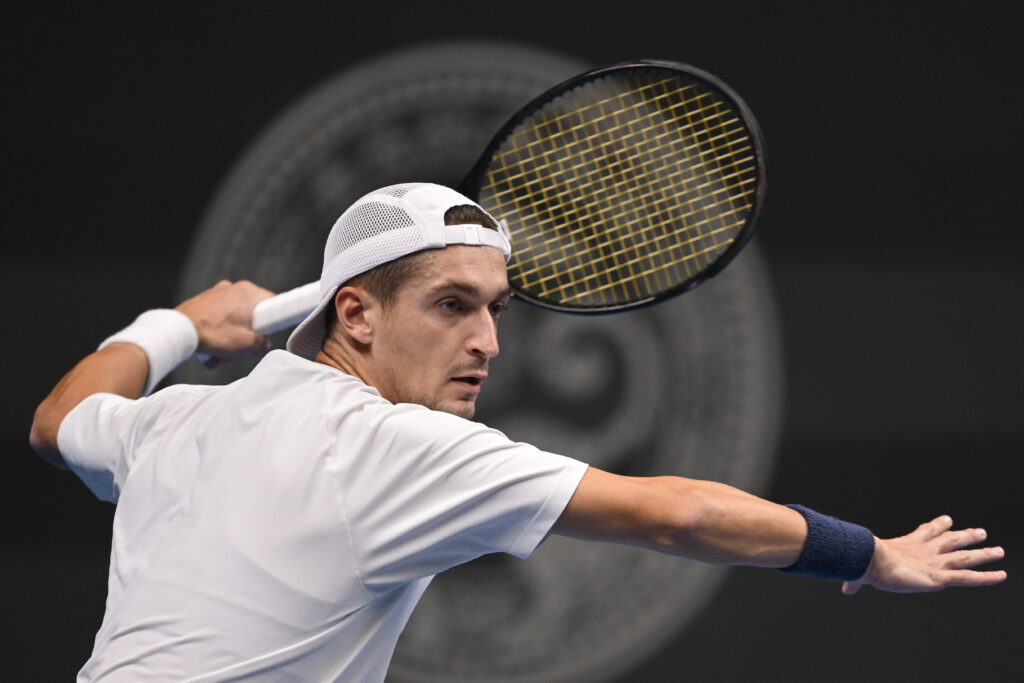


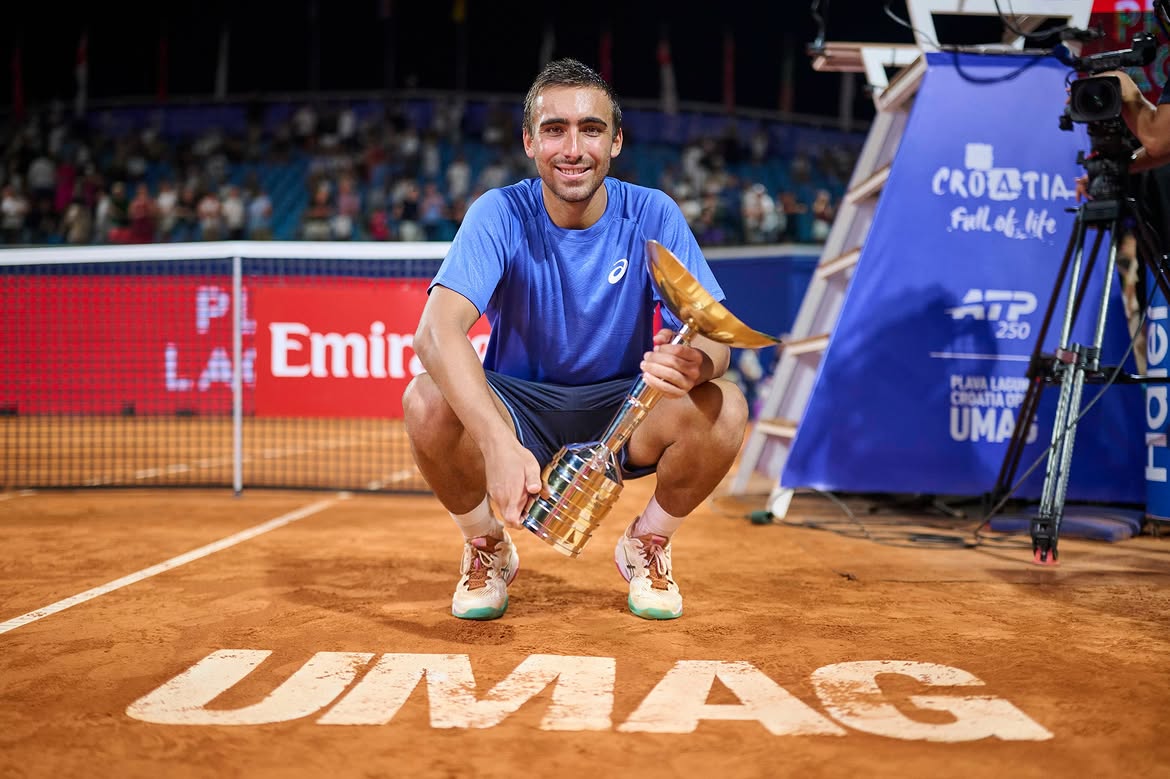

MADRID — Daniel Mérida’s path was never laid with a red carpet. Opportunities were always scarce, the wallet was pushed to the limit on every trip, and his name was never on the wildcard lists for the big tournaments. While others traveled with multidisciplinary teams, he learned to be his own travel agent: early morning flights, endless layovers, and bus connections to make the numbers work at the end of the month.
“When you win these titles, obviously you see everything in a better light; you know the journey was worth it,” Mérida told CLAY in an interview after claiming his first ATP 250 title in Umag on Sunday.
On the verge of turning 22 in September, the native of Madrid has spent just a few months on the main tour, and his rise has been meteoric. After surprising everyone by reaching the final in Bucharest from qualifying, he made it through the main draw qualifiers at both Roland Garros and Wimbledon. Today, he sits at No. 59 in the world rankings, the highest position of his career. Back in February, he was floating around No. 183. He, however, never doubted.
– What does it feel like to win an ATP title?
– I’m super happy, it’s something incredible. This is a different level. I had won ITF and Challenger tournaments, but this is a different kind of event, a different kind of title—honestly, it’s incredible. I’m super happy with the level I put out this week and super happy to get my first ATP title. It’s something very few people in tennis achieve, and for me, it’s extreme joy. It also motivates me to keep competing and go after more titles.
– What went through your mind when you won match point?
– I was very tense; it was mostly a feeling of release, like ‘I’ve finally finished.’ I felt that release and also joy, because there’s so much work behind getting here. I think in the coming days and weeks, once I process it all, I’ll appreciate it a bit more. Up until now, I haven’t had time to look at it from another perspective, but honestly, I’m super happy. It’s an incredible feeling.
– Many players talk about appreciating the work behind the scenes. Can you explain to people who don’t follow the tour closely what it really takes to be a professional tennis player?
– Tennis is a very tough sport because you have to travel a lot from a young age. I traveled alone for a long time. I was playing Futures tournaments—the lowest level of tennis—for two years, and I did it all on my own. Sometimes my girlfriend, Luana, would come; sometimes, when he could make it, my dad would join me. But I couldn’t afford a coach, and in the end, it’s really hard to be alone, traveling solo, and losing every week. But when you win these titles, obviously you see everything in a better light; you know it was worth it. The road is incredibly tough, and I’ve worked very hard to get here.
– It’s also a sport where you have to get used to losing. A lot.
– Yeah, in the end, the good and bad thing about tennis is that there are tournaments every week. Tomorrow I’m off to the next tournament and it’s a whole new story. On one hand, it’s good to play every week because you get the chance to make amends. But it also has a downside: when you win, you don’t have much time to enjoy it.
– Some fans have labeled you “the people’s tennis player” because of your humility and how hard your path has been. Are you comfortable with that tag?
– At the end of the day, there are plenty of people on Twitter who speak well of you and others who speak badly. Sometimes it’s better not to pay attention to that, but yeah, I’ve always had to work hard; I’ve had to earn things for myself. As I said before, I spent a year and a half or two years traveling alone, booking my own flights, my hotels, looking for the cheapest options just to survive the weeks. I’ve had to work very hard to get to this point.
– How do you celebrate your first ATP title?
– Tomorrow I’ll take a day off with my girlfriend, we’ll go out for lunch, try not to think too much about tennis—even if that’s hard—and after that, back to training and preparing for the next tournament. That’s tennis.
– Does this title change your perspective for the season?
– It doesn’t change it much, especially mentally, because I felt I had the level to win a title like this, I felt capable of playing at this level. Obviously, it’s a big jump in the rankings, it brings confidence, and above all, the knowledge that I can win ATP titles, but that’s the only thing that changes. I’m going to keep working, keep improving, and try to lift many more trophies.
– You started the year around No. 163 in the rankings. Now you’re on the verge of the Top 50. Did you imagine a journey like this?
– When I started the year, I think I was ranked 160 or 170 in the world, but I knew I had the level for much more. I trusted in myself. I worked very hard during the offseason to reach these tournaments and compete at the highest level. But yeah, the jump I’ve made since January still surprises me.
– What have you learned over these past six months?
– Above all, what I take away is that I’m learning to compete in matches at 100% for many consecutive days, which is what allows you to win these kinds of titles—competing at your best level day after day. That’s something I’ve been doing very well for many weeks this year, and it’s reflected in this title and in my ranking.
– And what are your expectations for the hard-court swing?
– I’ll try to go out and win because I believe I have the level to do it. There will be very tough matches, but I’m going to give 100% in every match, believing in myself. And above all, staying humble, keeping working, and trusting the process.
– Rafa Jódar also won his first ATP title this year. Does that serve as mutual motivation?
– Honestly, he’s a fantastic player. He’s having an incredible season, and it helps having another Spaniard up there. Plus, I’ve known him since we were kids in Madrid, so having him around means a lot. For me, it’s really motivating when he achieves great things, when he plays the matches he plays, and competes at such a high level. It pushes me to achieve things at that level too.