


PARIS – Jannik Sinner leaves ‘fried’ and cramping from the only Grand Slam he has yet to win, Casper Ruud turns into a ‘zombie’, and Novak Djokovic seeks unorthodox solutions that are difficult to implement.
Paris is no party; Roland Garros is a struggle.
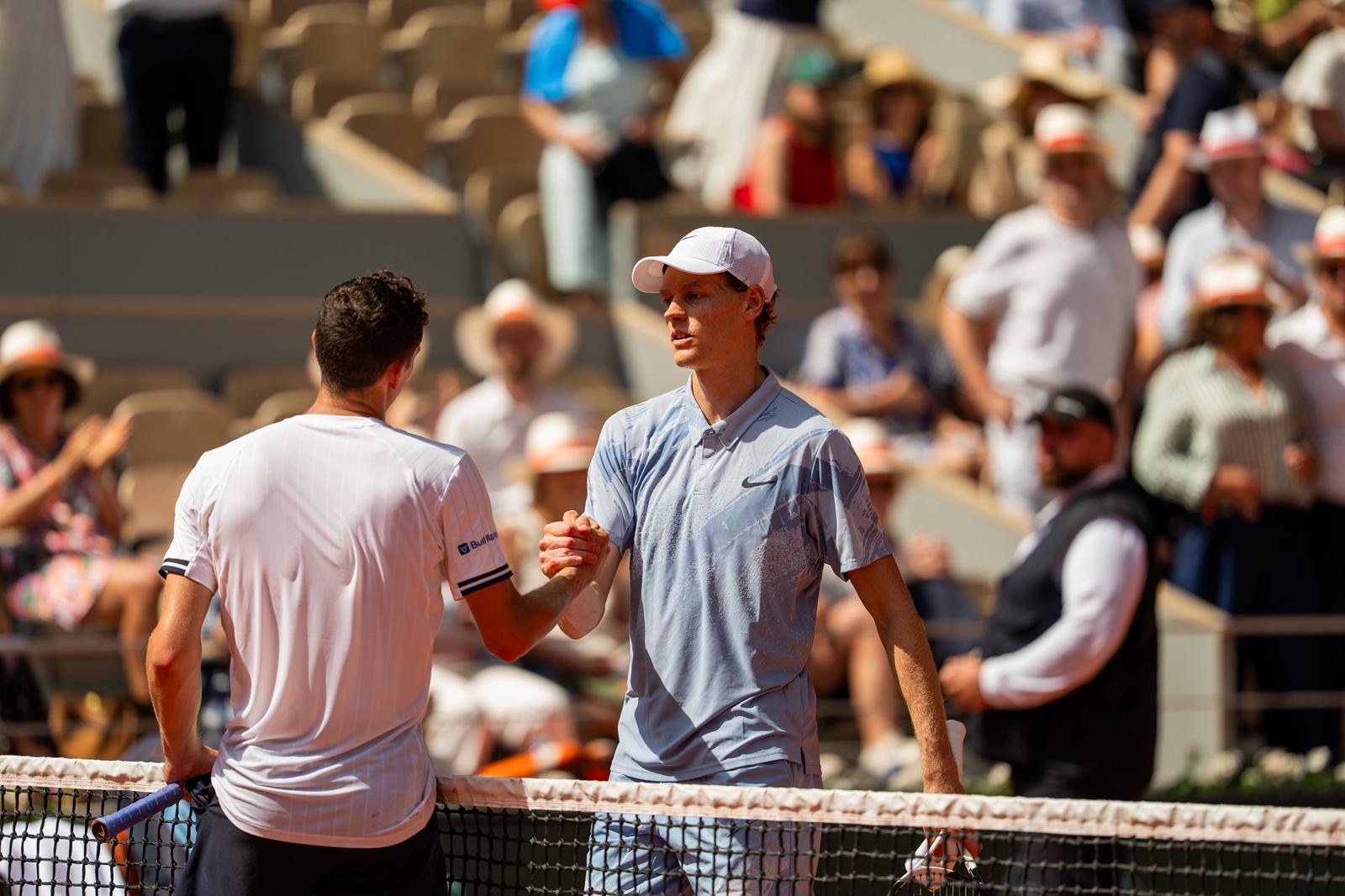
The heatwave is so intense that the Italian crumbled 3-6, 26, 7-5, 6-1 and 6-1 against Argentina’s Juan Manuel Cerúndolo, unable to capitalise on a 5-1 lead in the third set.
‘It’s been a long time since I’ve felt like this,’ admitted the Italian.
Dizzy and suffering from cramps, the world number one lost despite the favourable treatment he received from the chair umpire, who did not run the clock against him and gave him time to tend to his problems. Sinner had victory in the third set in his grasp before the collapse began.
‘It’s tough for him,’ said Cerúndolo, ranked 56th in the world. ‘I hadn’t managed to win more than three games in a set, so I was a bit lucky. He deserved to win this match, and then we know what happened. But I feel bad for him and I hope he recovers.’
Sinner took the setback in his stride. “I wasn’t feeling too good on court, but that happens. But I congratulated him; I don’t want to take anything away from his victory.”
What happened to the Italian? ‘I started feeling very dizzy, with no energy. I let the fourth set go, betting on the fifth; the first game was very important, I couldn’t win it and it all went downhill from there.’
Was the heat the reason for his collapse? Only partly, the Italian implied.
‘Midway through the third set I started to feel unwell; I couldn’t find the energy. It was hot, but it wasn’t crazy. I didn’t sleep very well, and this morning when I woke up I wasn’t feeling great, but that always happens at Grand Slams—a couple of days when you feel like that. It was hot, but it wasn’t as if I was dying from the heat.’
The truth is that Roland Garros wasn’t like that. The heat was an occasional visitor, not a constant, stifling presence as at the Australian Open or the US Open.
On Wednesday evening, Novak Djokovic outlined a few ideas: starting to play when the afternoon is well advanced, for example, and having most matches played at night. Like in Umag, like in Rio de Janeiro.
Djokovic’s proposal is unfeasible, but it reflects the level of confusion prevailing at Roland Garros, ravaged by a heatwave of very few precedents.
Meteo-France, the French meteorological agency, issued a weather warning for the night between Thursday and Friday. If being a spectator these days in the Bois de Boulogne is certainly risky, being a player goes beyond what is advisable.
“These days have been really tough for us,” acknowledged Djokovic after a week of temperatures well above 30 degrees at all times, 13 degrees above the usual average for this time of year. There is hardly any breeze and the humidity is low. Playing tennis is anything but a pleasure.
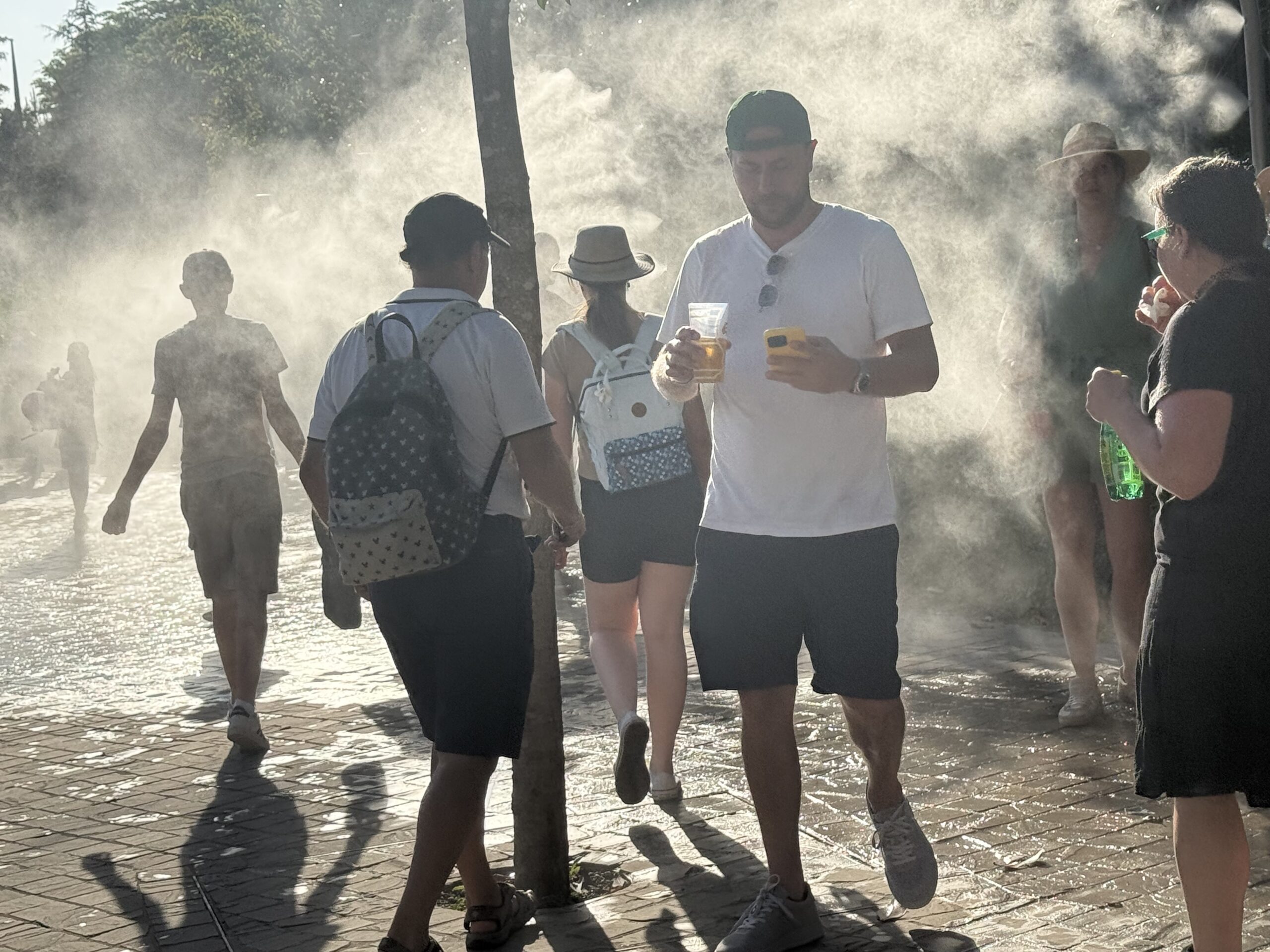
The water misting showers are the spectators’ favourite spot across the 14 hectares of the French Open grounds, and the scenes are reminiscent of Melbourne and New York, two Grand Slam venues accustomed to extreme heat – unlike Paris.
“I wasn’t prepared for something like this,” said Gabriel Diallo after retiring from his match against James Duckworth on Sunday.
“Suddenly I started moving almost like a zombie,” confessed Ruud. “It was a sort of heatstroke; at times I felt very dizzy.”
After winning a gruelling four-set match on Wednesday, Djokovic complained that there is no “heat rule” at Roland Garros as there is in Australia, but a journalist corrected him. Yes, there is one that would allow the roof of the main stadiums to be closed on certain occasions.
‘But that’s not fair either,’ the Serb analysed. ‘Why would you close the centre court and then make everyone else play in such heat? I wouldn’t agree with that, although, of course, it would be great if I were playing indoors.’
It was then that the most successful player in tennis history put forward a proposal: why not do as they do at the Croatian tournament in Umag, which is played on the beach in the European heat of July and only schedules matches in the late afternoon? The ATP 500 in Rio de Janeiro does the same during the sweltering Brazilian February.
‘At the Grand Slams it shouldn’t be a problem in general, because we have plenty of courts, we have lighting, you have large courts, you can play the matches, you can reschedule them on other courts and still have the crowd, the stadium and everything else,’ enthused the Serb.
Until he reflected on the problem of starting to play many hours later than usual in a tournament that schedules its first matches for 11 o’clock in the morning. Starting the schedule in the late afternoon would guarantee tennis deep into the early hours every day.
‘Is it ideal for matches to go on past midnight? No, it isn’t,’ admitted Djokovic. ‘But if there are days when the heat and conditions are extreme, then perhaps it’s something to consider.’