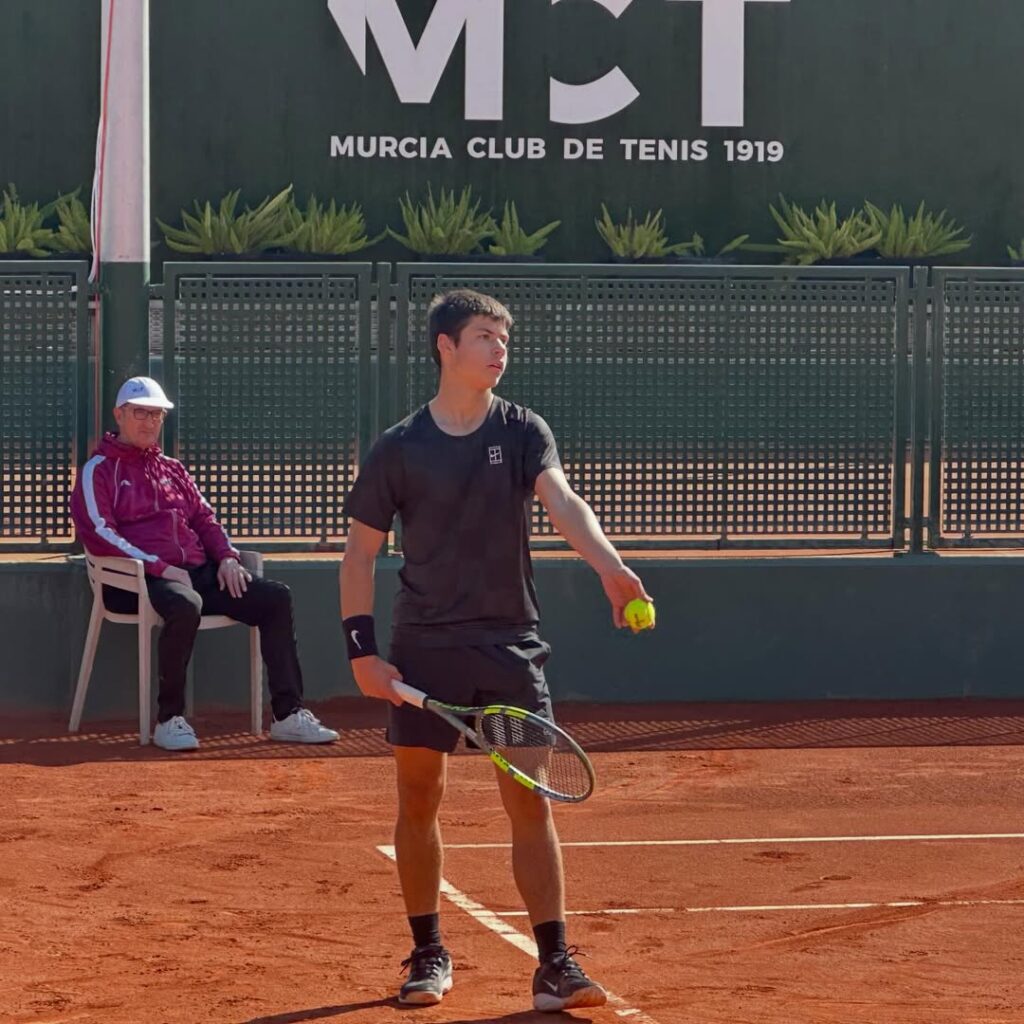


Juan Carlos Ferrero has an open, deep wound that will take time to heal. The split with Carlos Alcaraz is painful — because of their shared history, because of the future that once seemed assured, and because of the reasons that caused everything to explode a week ago, when the world’s best player announced the end of his relationship with the coach who had guided him from his early days to the summit of tennis.
“I’m hurt,” Ferrero said in an interview with Marca, recorded at his academy in Villena, the facilities where Alcaraz was shaped during his junior years. “I gave everything. I poured my soul into this project,” the coach said.
The bombshell triggered aftershocks in recent days, with many figures from the tennis world offering their opinions and versions of what happened. The two main protagonists, however, had remained silent until now. Ferrero broke his silence to give his side of the story — and, in the process, to fire pointed remarks.
The former world No. 1 wanted to make several things clear: that the financial gap in the contract renewal was not decisive; that the decision to end the partnership was not made by Carlitos himself, but by his entourage; and that there was no real willingness from the other side to bridge positions — something already suggested by a source very close to the negotiations in a conversation with CLAY. He also said he needs time to grieve and did not rule out the possibility of coaching Jannik Sinner in the future, the great — and for now only — generational rival of his former pupil.

“Everything seemed set to continue smoothly. It’s true that when a year ends, certain contractual matters have to be reviewed. And as with any new contract, looking ahead to the following year, there were certain things we didn’t agree on. As in any negotiation, one side pulls one way and the other pulls the opposite way. Carlos’s camp looks out for what’s best for him, and I look out for what’s best for me. There were certain issues on which we couldn’t reach an agreement,” Ferrero said at the start of the interview, just before delivering his first pointed remark. “It’s possible that some of those issues could have been resolved if we had sat down to talk, but in the end we didn’t, and we decided not to continue. That’s really what happened. There are points I won’t go into in detail, but on which we disagreed, and in the end we went our separate ways.”
Ver esta publicación en Instagram
“There’s been talk that I was asking for more, and it’s true that they always showed me consideration by giving me a very high percentage for those early years when I was so closely involved with him. And I’m grateful for that. In the end, I tried to make it clear that money wasn’t one of the problems, nor the reason why I was part of this project,” continued the 2003 Roland Garros champion.
So what then? Was Alcaraz’s decision to stop training in Villena, at Ferrero’s academy, and instead train in Murcia, at home — while also promoting his own academy — a key factor?
“I’d like to think not. Obviously, Carlos is just starting out in this world and they want to build a strong academy, which is logical. We never saw this as a rivalry (…) I don’t accept some of the things that have been said — that I prioritised him coming to Villena and that he had to adapt to me. That’s not true. Over the past two years, we gradually came to understand that Carlos, given the demands of the tour, wanted to spend more time at home. And the ones who had to adapt were us.”
So was it simply the natural wear and tear of so many years together, of so many seasons in a world as intense and demanding as elite tennis?
“When you spend that much time together, there’s always some wear and tear. I think travelling so much, spending so much time away from home — those things take a toll. But within the team, we supported each other a lot, and one of the reasons for bringing in Samuel (López) was to prevent that relationship from eroding,” Ferrero said in Marca. “What both sides can be at peace with is that we gave absolutely everything we had. I gave everything. I poured my soul into this project. I think I invested an enormous amount of time, effort and work, and it was important to find the team and the people who allowed me to do that. In the end, I’m extremely grateful for an experience like this.”
The distance with Carlos Alcaraz Sr.
As soon as the split became public, reports surfaced of various disagreements between Ferrero and Carlos Alcaraz Sr., moments of tension that gradually wore down the team and ultimately pushed the relationship between coach and father to a point of no return. In that regard, Ferrero wanted to clarify that his relationship with Carlitos has been — and remains — very good. And although he never mentions Alcaraz Sr. by name in the interview, the direction of his comments is clear. He said that he did not speak to Carlitos after the split, only asking him whether he was aware of the terms that had been put on the table.
“I spoke to him beforehand to ask whether he was aware of everything, and he said yes. From there, I spoke with the people I needed to speak with. I stepped aside from him because I understood he was fully informed. If no agreement was reached, his people look out for him and I look out for myself. It’s normal that he stands by his side, of course,” Ferrero said.
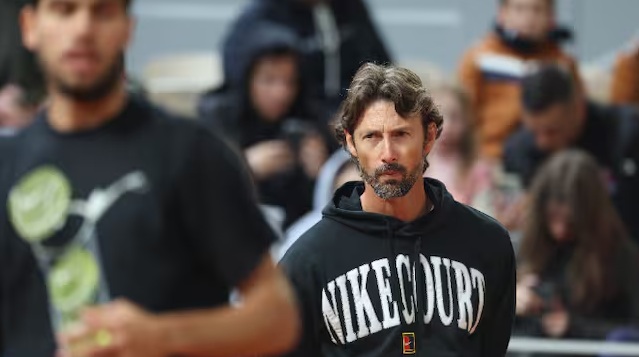
“The relationship between us throughout the year was outstanding. We didn’t have arguments at any point. Samuel’s arrival brought fresh air to the team so the relationship could last in the future. It was a very good year, and when we finished in Turin, it’s true that we all thought we would continue. Then what happened happened, and we went our separate ways, but initially the idea was to carry on, and that’s why I said what I said in the statement,” added the three-time Davis Cup champion with Spain. “I want to end on good terms with them. Disagreeing on certain points doesn’t mean we stop being friends or that we don’t maintain a very good relationship. I wish Carlos all the best, and I believe he has the potential to become the greatest tennis player in history.”
A future with Sinner?
Ferrero confirmed that he has already received some offers to return to the coaching box for the 2026 season, but said he does not feel ready to take on that challenge at the moment. He needs time to process everything, time to heal the wound and to see which project might appeal to him. What he is clear about is that he no longer wants to develop a junior player, as he did with Alcaraz, but rather to work with an already established player.
“We both need time to fully process this breakup. It’s not something easy. Right now, I’m hurting. These relationships are hard to walk away from overnight. There has to be a period of mourning. And, above all, I imagine it will hurt when I see him playing in tournaments — that’s when all the shared experiences come back. I think it will take time,” the coach said. “I need two or three months to be calm and for the pain to pass. After that, if other possibilities arise, we’ll consider them. In the end, it’s been almost eight years without stopping and a lot of time away from home. Being at home now is appreciated.”
And if an offer from Sinner were to arrive? “It’s something I would have to think about. They’re extraordinary players, but as I said before, now is not the time to think about something like that or to say yes or no. Right now, it’s time to get through the difficult phase, because I still think about Carlos every day, and it’s not the moment to think about others,” Ferrero replied.