

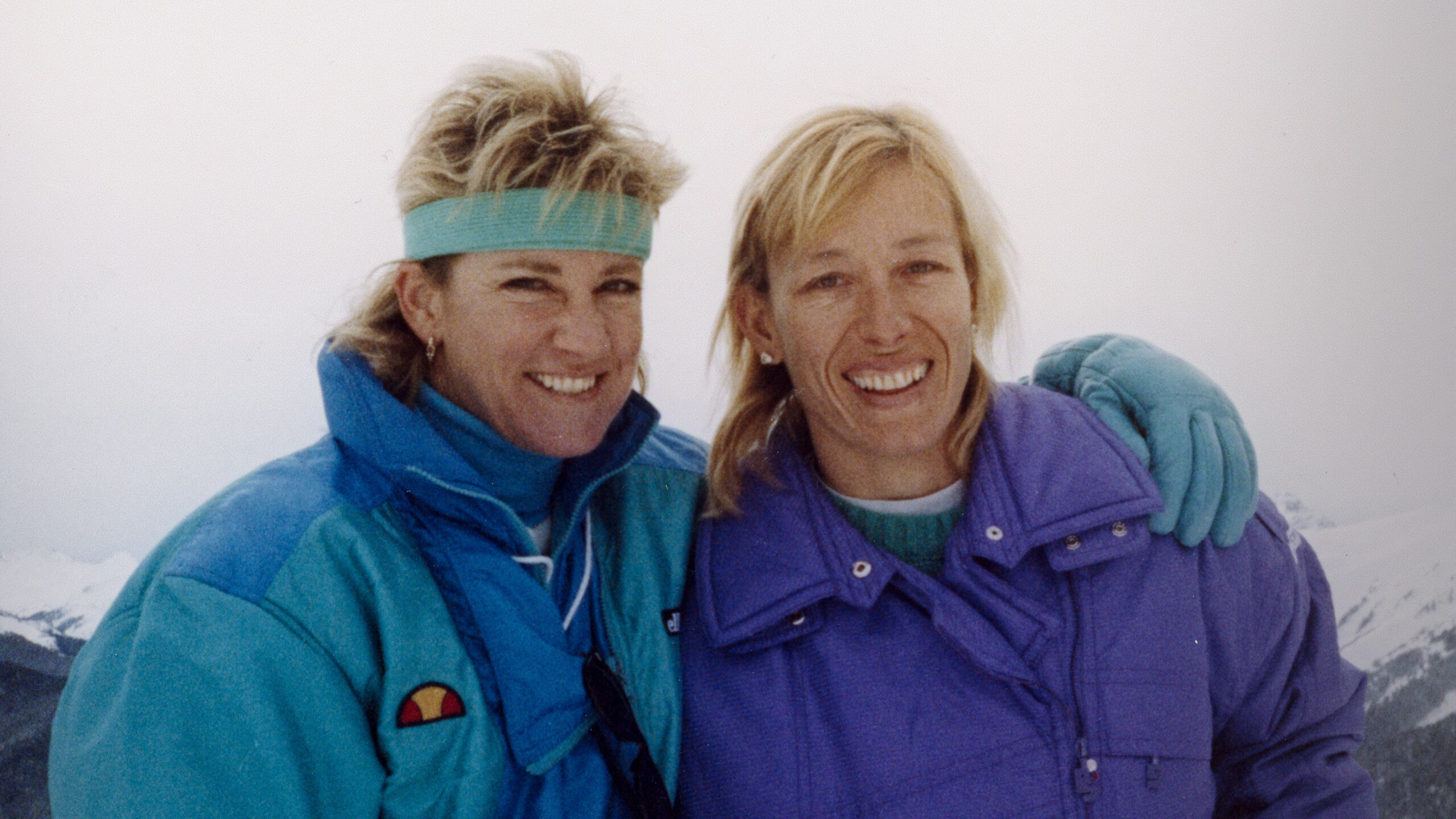

MADRID – Long before the sporting world was divided between the elegance of Roger Federer, the spirit of Rafael Nadal, or the grit of Novak Djokovic, tennis had already experienced its greatest cultural revolution. It happened in the seventies and eighties. Two women, 80 official matches between them, 14 Grand Slam finals, and a psychological tension so extreme that it forced a rewriting of the boundaries between success, ambition, friendship, and mental health.
Chris Evert and Martina Navratilova transformed tennis, taking it to a new level and placing women on equal footing with—or even higher than—men. It is a rivalry that now hits Netflix through ‘Chris & Martina: The Final Set’. The 90-minute documentary reviews the journey of both tennis players from their beginnings to the present day, guided by two common threads: the racket and cancer.
As Billie Jean King beautifully puts it when analyzing the birth of the second generation of professional tennis: “If you could write up who you want for the second generation, Chrissy and Martina are perfect.” It was the ultimate contrast, the ideal cinematic script to hook the masses. On one side, the girl from Florida: right-handed, an immovable baseliner, feminine, charming. On the other, the girl from communist Czechoslovakia: left-handed, obsessed with coming to the net, and far removed from the Western feminine standards of those decades.
In the mid-70s, men’s tennis was witnessing the birth of stars like Bjorn Borg, Jimmy Connors, and Guillermo Vilas. In women’s tennis, the stars of Billie Jean King and Margaret Court—two of the greatest ever—were fading.
“I was couple years younger than Christie. I was like, oh my god. Look at this girl. She came around at the time where tennis really needed some fresh blood and someone that would attract viewers. You look at her. Wow. What a beautiful young woman. So feminine and yet a killer on the court,” former world number one John McEnroe recalls in the documentary.
That killer instinct, camouflaged behind an eternal smile and a good-girl hair ribbon, hid a blind obsession with glory. The Netflix production leaves little to the imagination: Evert and Navratilova started out as close friends on the tour, but their rivalry on the court contaminated the relationship, and they ended up almost hating each other.
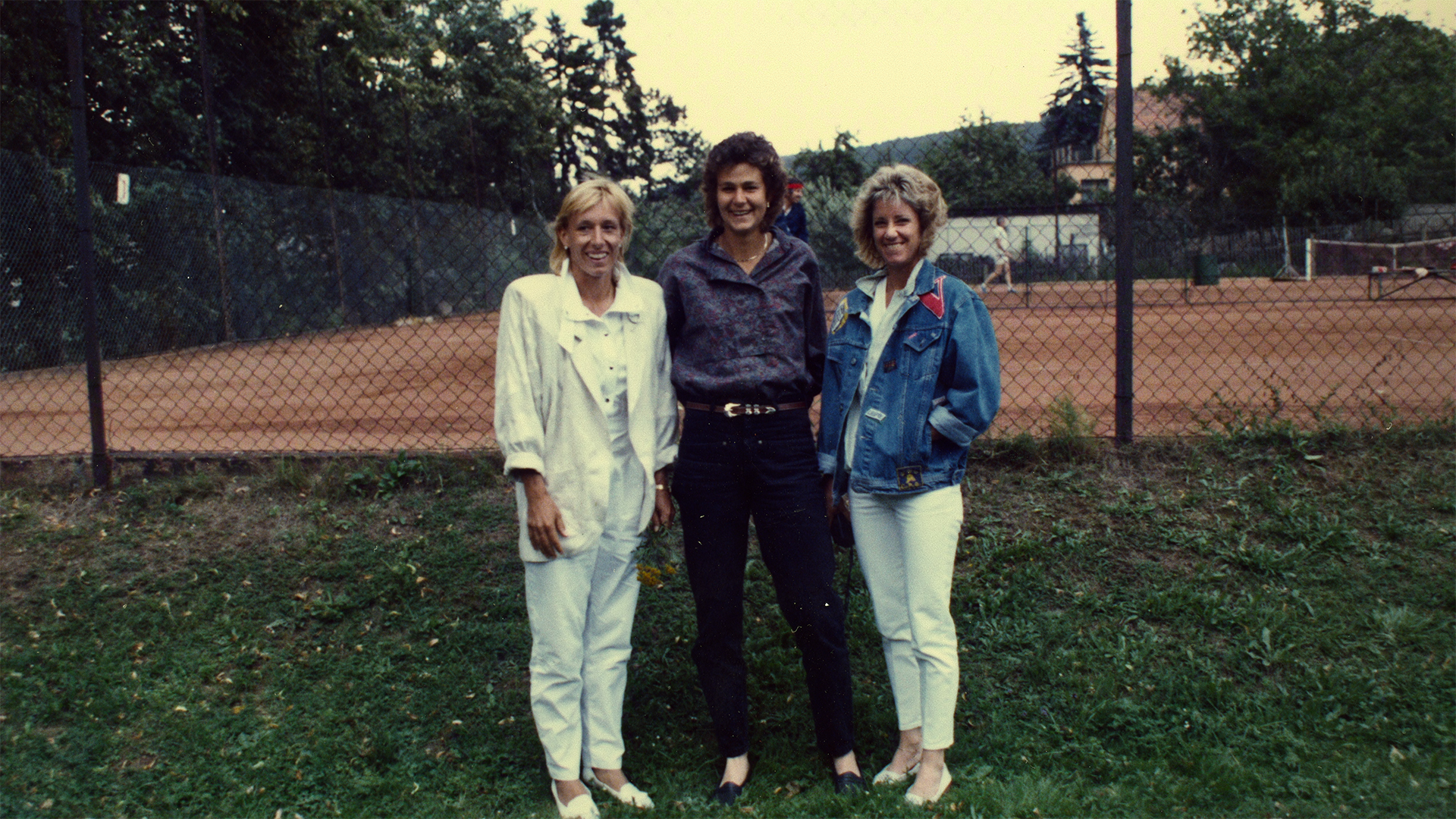
“We would be at the locker room together a lot and stay in the same hotel and so then we started hanging out more. We played back and we played uh scrabble. We just became really close friends,” Navratilova says. On the court, however, the scales were not balanced. Evert won practically every time and even dominated the head-to-head 20-4 at one point (the rivalry would eventually end 43-37 in favor of Navratilova). As Evert herself admits with brutal honesty: “To be honest in the beginning it was fine for me to be friends with her because I was better than her. She was emotional and would be crying on the court and get down on herself and she wasn’t fit. You know she wasn’t in the best shape.”
But the Czechoslovakian began to mature. Her tennis started to flow, and that closeness became a danger to the American number one. In 1976, after winning two major Grand Slam doubles titles together, Evert made a drastic decision that changed their relationship. “In 1976 she was playing better and then it was like she knows me too well. She knows my game too well and I went to her and I said I can’t play doubles with you anymore,” Evert confesses.
For Navratilova, it was a blow. “That hurt. Now this is where Chris and I are pretty different. I can play at somebody and then go to dinner afterwards. Win or lose. But she had to pull away when we got too close because she was only really close friends with players that could never beat her.” Evert does not hide: “We won two major grand slam doubles titles but I said I’ve gotta separate myself because hate to say this but it was more important for me to be number one than to have great friends.”
This obsession with the throne, that bubble, that sacrifice, became painfully clear after Evert’s title at Wimbledon in 1976. She was 21 years old and it was already her fifth Grand Slam, but instead of absolute happiness, she found a void. “I’m on the court and I’m like holding the trophy up and I’m really feeling happy and it’s a great high for me. Then I go back to my hotel room and I just felt like this weight and I lied down on the floor and I couldn’t get up. There’s depression. And that was a self-realization that Chrissy you don’t have any friends. That’s why you’re lying on the floor. Doesn’t matter you want a Wimbledon trophy. You don’t have any friends and you’re not happy.”
Evert adds: “Um you give up things if you wanna be great at something. You give up things. Growing up you know it was all about tennis. Friendship was never encouraged.”
Ver esta publicación en Instagram
The birth of the nemesis and the “brainwashing”
The distance imposed by Evert lit a fuse in Navratilova’s camp. A 6-0, 6-0 double-bagel by the American in the final of the Amelia Island Championship in 1981 became the ultimate turning point. Navratilova put herself in the hands of Nancy Lieberman, a former basketball player who became her coach and trainer, but also her psychologist and partner. At that time, the head-to-head was heavily dominated by Evert at 28-13. But Navratilova would go on to win 18 of their next 20 meetings. Lieberman had awakened the beast.
“Nancy got mad at her. And just yelled at her: ‘You’re better. Every area of your game you’re better than she is. She’s not the athlete you are. She doesn’t move like you do. She doesn’t have the shotmaking you do,’” Evert recounts.
That speech altered the chemistry of the rivalry. Navratilova found her daily obsession in Evert: “Nancy said ‘she has what you want. You need to not be friends with her. You need to kick her ass’. And when I’m doing the weights I’m thinking about Chris. When I’m doing all the drills, I’m thinking about Chris because I got everybody else covered. She was my carrot. She was the one that I needed to beat.”
For Evert, the entry of that coach into the equation was a declaration of psychological war. “Nancy wasn’t very nice about me and to me to Martina and she kinda brainwashed Martina into thinking that I was the enemy.” Navratilova, however, viewed it with the cold logic of the rankings: “But she was Chris was the enemy cuz she was number one. I was number two. And she’s the one that had to beat to get to number one.” Evert adds: “She would say you can’t be friends with Chrissy. You need to hate her.”
Five months after starting with Lieberman, Evert found herself looking across the net at a tennis robot she herself had helped create. “Five months later she had transformed into a completely different player. She was lean. She was streamlined. She was ripped. She was fit. Cardio was great. Shot making was great. But Martina wasn’t talking to me.”
That icy silence in the tournament hallways was the price they paid to push each other to the altars of tennis. Navratilova and Evert played the last of their 80 duels in Chicago in 1988, 15 years after facing each other for the first time.
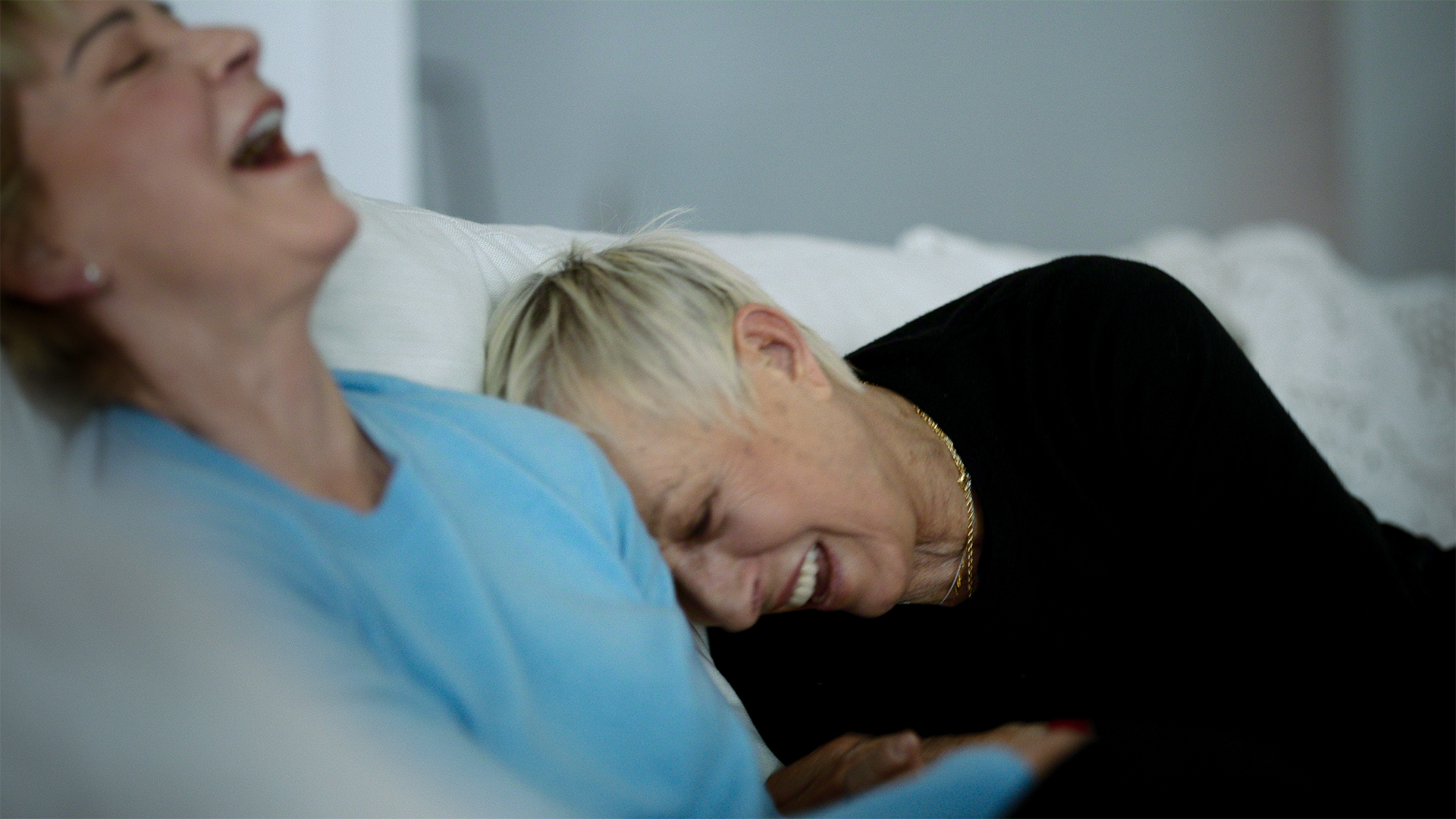
Afterwards, time healed the wounds and brought back together two former players who had been intimate in their youth. Today, they share secrets and visit each other frequently. They are bound by the racket, but also by their battles with cancer—Evert with ovarian cancer, and Navratilova with breast and throat cancer.
Today, far from the courts and the rankings, Evert and Navratilova have discovered that what separated them for so long is also what keeps them together. The rivalry that changed tennis ultimately became a friendship capable of surviving the passage of time, illness, and the ghosts of a life dedicated to what they knew how to do best: winning.