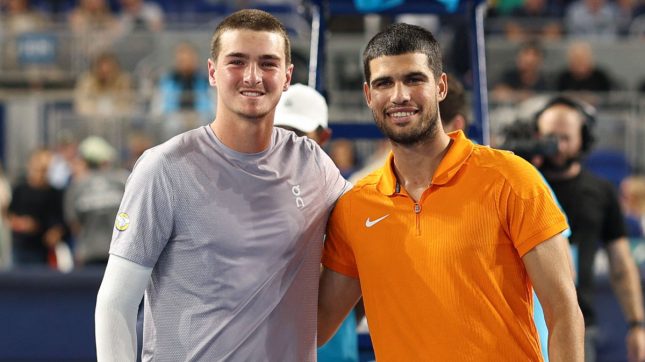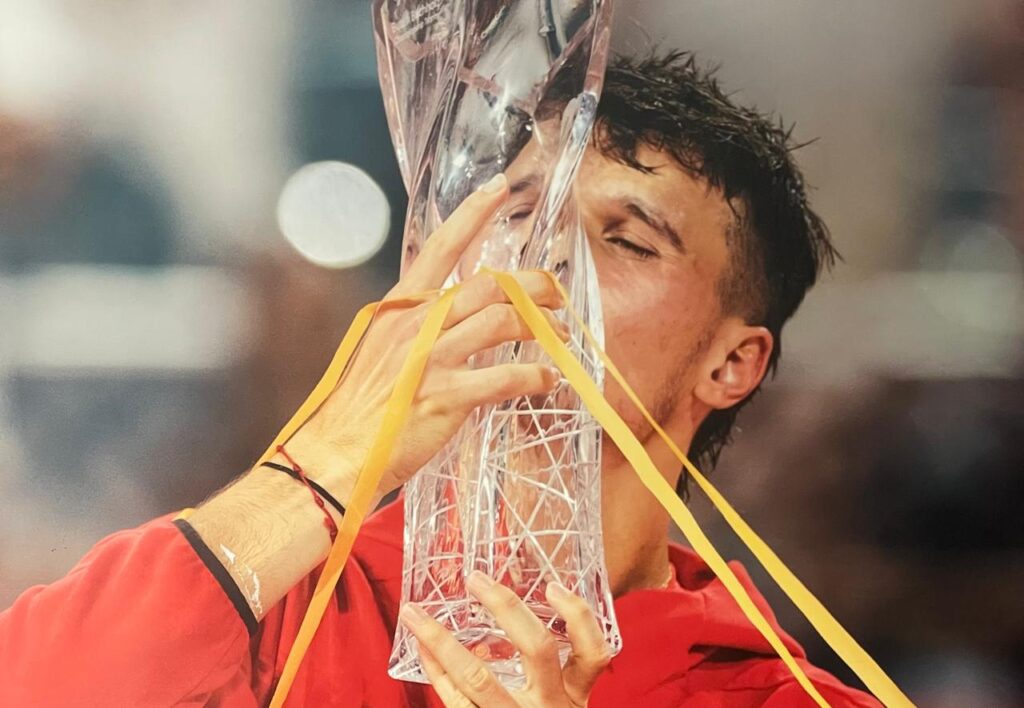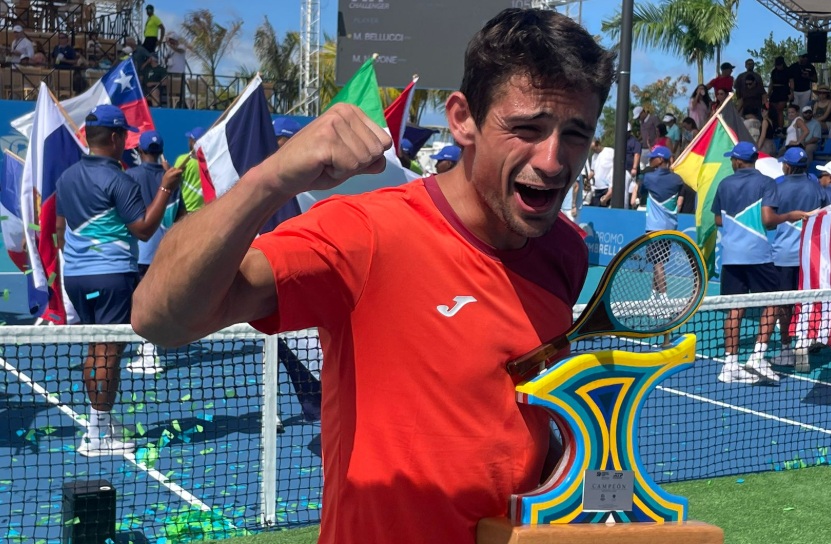




MIAMI – Carrying the burden of being the new Rafael Nadal. Bearing the expectations of being the one meant to restore the smiles that Gustavo Kuerten gave Brazil two decades ago. The stories of Carlos Alcaraz and Joao Fonseca share one thing: very heavy backpacks during their teenage years.
“Since I was 16 I was constantly compared to Rafa, as Rafa’s successor, as the one who had to be. But at the same time Rafa was still playing, still winning the biggest tournaments and staying at the top of the rankings. It’s a completely different situation from what Joao is experiencing,” the world No. 1 began analysing in response to a question from CLAY in Miami.
“I was the successor to someone, and he is the one who has to win after so long without anyone reaching the very top in Brazil,” the Spaniard told Spanish-speaking media.
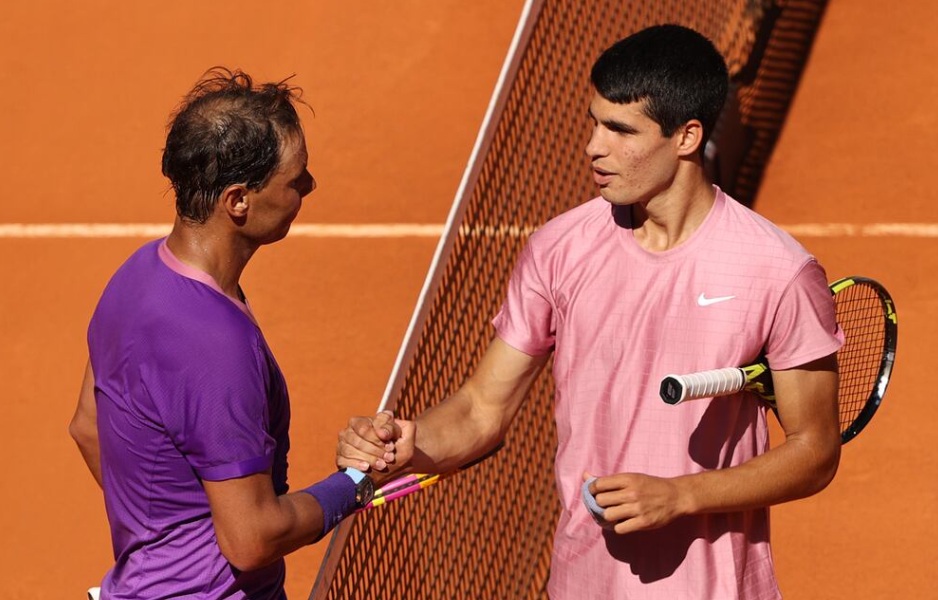
“I lived a different situation, I think, because Brazil hasn’t had a top player for a long time. And that’s what people want to see, that’s why there is so much expectation, and he carries that,” Alcaraz added, after advancing to the third round of the Miami Open with a convincing victory over the Brazilian in their first ever meeting.

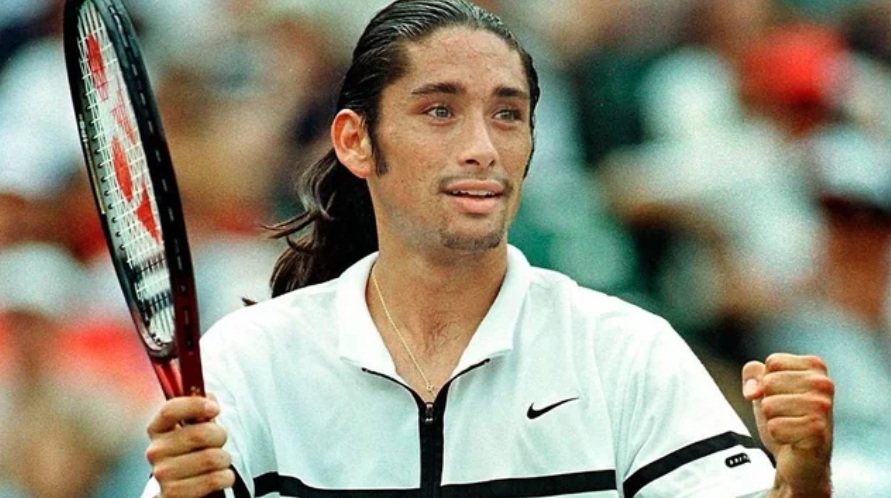
Gustavo Kuerten set the bar extremely high in Brazil: three Roland Garros titles, a world No. 1 ranking and countless moments of joy that spread throughout the largest country in South America between the 1990s and the 2000s. The charisma of “Guga” also left an indelible mark. More than twenty years later, Fonseca’s talent and personality, accompanied by significant titles that justify his projection, have further fuelled that desire to once again see a champion from Brazil.
“I think people are putting him in a situation where it seems he has to win every tournament, that he has to win every match and beat every player. I think that’s a bit wrong. Or at least nowadays we should let him be, or lower those expectations a little,” said the 2026 Australian Open champion.
Before winning seven Grand Slam titles and becoming the youngest player in history to conquer each of the four biggest tournaments at least once, Alcaraz had to endure external pressure and comparisons that were as persistent as they were logical, not only in Spain but also globally.
One of the most successful players of all time, also Spanish, was entering the final years of his career when Alcaraz was already showing his immense potential. Nadal was still winning, but the narrative of the passing of the torch to a compatriot with some similar traits, who had grown up idolising him, was the perfect script.
Alcaraz, who knows how to deal with expectations — even if not as desperate as those in Brazil — offers advice.
“You simply have to enjoy his tennis, enjoy watching him evolve after every match, after every tournament. Because I know he’s a very intelligent kid with a great team. Joao learns from every situation.”