


BUENOS AIRES – There is one word that comes up again and again in every public appearance by Joao Fonseca: pressure. And it makes sense: he was not even 18 years old and already people were talking about him as a future megastar and the possible ‘third man’ to challenge Carlos Alcaraz and Jannik Sinner. A third man, yes, just as Novak Djokovic was in his day against Roger Federer and Rafael Nadal. The question, in any case, is what Fonseca means when he talks about pressure.
Pressure is everywhere and in the most unexpected moments, situations and phrases. That is why Gustavo Kuerten, according to CLAY, frequently insists on a request to the entourage of the rising Brazilian star: ‘Take care of Joao, you are taking care of him, aren’t you?’
The general consensus is that they are taking care of him, yes, but the pressure is everywhere. Even in minor details such as the interview with Fonseca published on Tuesday by La Nación, one of Argentina’s two most important newspapers.
“He no longer sports the long, curly hair he had a year ago, nor the beardless face. Now he has very short hair and a well-groomed moustache. He may be seeking a more adult look,‘ La Nación notes, before pointing out that he retains ’his youthful appearance and freshness.‘

Not for long, Fonseca himself admits in the interview: ’I know I’m still young, but I can’t have a young person’s mentality. I think it’s a bit like that.”
Yes, Fonseca is not being asked to be young, he is being asked to be a champion. This is happening in Brazil, of course, but the same discourse runs through the greats of tennis.
A few days ago, former world number one Mats Wilander linked the future of tennis in Latin America to what Fonseca is capable of achieving in his career.
‘Latin America didn’t lose talent, it lost structure. Fewer tournaments, less investment, less continuity…,’ said the Swede during an interview with CLAY.
‘João Fonseca could be a turning point: technically, he has everything. The big question mark is his physical condition. But for the region to truly make a comeback, one star is not enough: systems are needed.’
Does Andrea Gaudenzi, the Italian CEO of the ATP who this week visited the South American tour for the first time after more than six years in office, think the same? Gaudenzi is visiting Buenos Aires and also plans to attend the Rio Open.
A year ago, Luiz Carvalho, director of the ATP 500 in Rio de Janeiro, made a comment to CLAY that was halfway between analysis and wishful thinking: ‘Andrea is a super visionary guy, and I’m sure that if he saw this here, he would probably have a different opinion about the Latin American market.’
Seeing ‘this’ means seeing the big tournament organised at the Jockey Club in Gavea, but it also means seeing Fonseca, who can no longer afford to lose in his debut as he did a year ago. And that is also pressure, a lot of pressure.
‘I want to be like Alcaraz and Sinner,’ Fonseca himself said during an interview with CLAY in 2024, after failing to get through the qualifying round at Wimbledon.
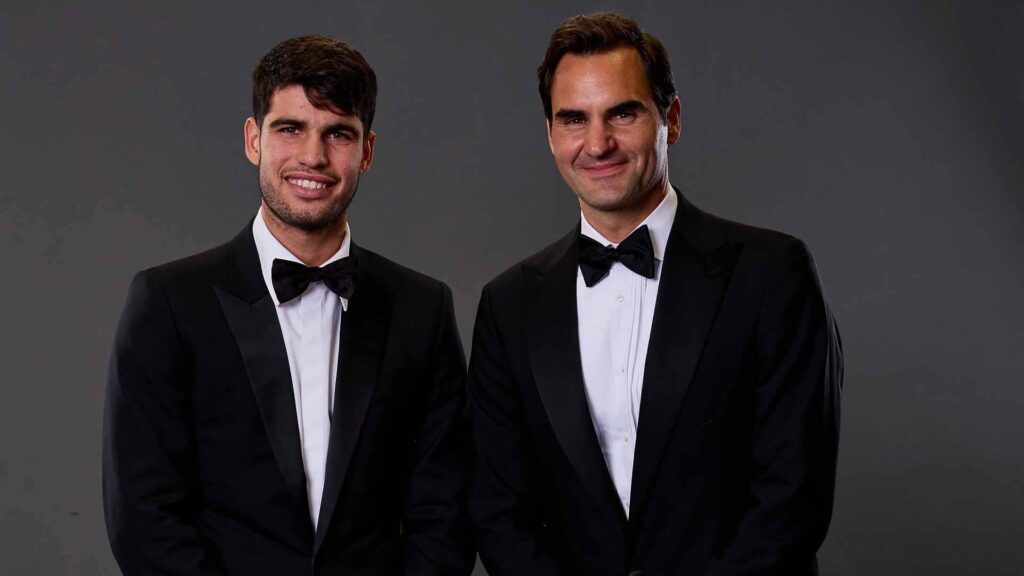
It sounds ambitious, but to Alcaraz it doesn’t sound illogical.
‘Joao is undoubtedly a special player. What he has done this year is impressive and something to admire,’ said the Spaniard in response to a question from CLAY during a media event to promote the exhibition match he played with Fonseca in December.
The world number one left some advice for the Rio native: ‘I see him improving his level. We’ll see if he’s capable of breaking into the top 10, the top 5, and if he can handle that pressure. It’s one thing to reach a high level, but it’s quite another to know how to maintain it. He also has to improve his mobility.’
And, in case there were any doubts, last year he also offered to mentor Fonseca: ‘He already knows that if he has any questions or anything he wants to know and feels he should ask me, I’m open. I’m there for whatever he needs.’
And what can be said about what Roger Federer said when CLAY asked him about Fonseca in Australia?
‘Joao is a bit like me, and also similar to Jannik (Sinner), in the sense that he needs a little more time to know when to lower the intensity and when to unleash his shots. Once he figures that out, the sky’s the limit.’
The sky’s the limit is a lot, but the Swiss insisted: ‘I really believe he is one of the players who can compete for the most important titles.’
And he kept a striking card up his sleeve when asked a direct question: could he coach Fonseca in the future?
‘Never say never! Although I’m very busy, I have four children, so for now there’s no chance. But (Stefan) Edberg said the same thing,’ he said, referring to the Swedish legend who was his coach between 2014 and 2015.
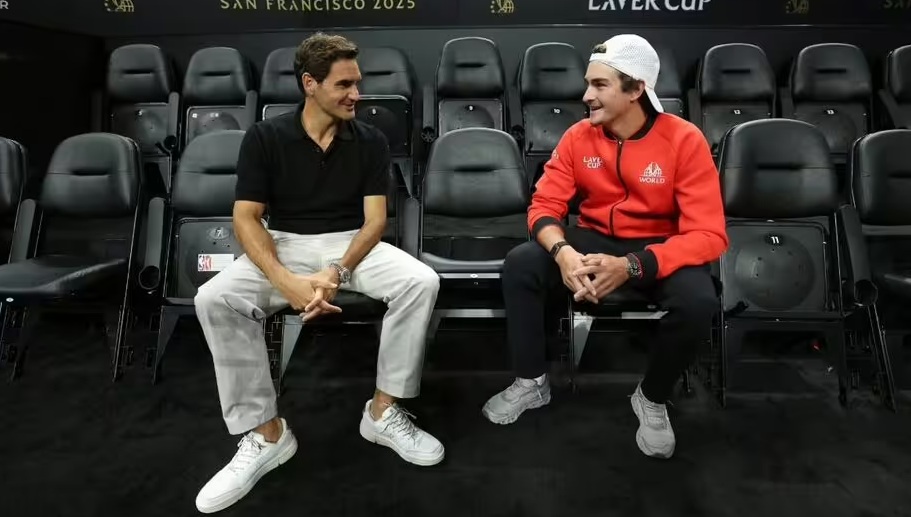
Fonseca explained in his interview with La Nación that the last Laver Cup helped him learn from highly successful former tennis players: ‘It’s good to watch and listen, I always do that. I’m a very observant guy and I watch what everyone does. It helps me in my experiences, for my future. And chatting with legends like Agassi and Rafter was enriching.’
But getting close to Federer was something else.
“It was crazy. It was one of the only times I got nervous, unable to move, you know? My hands were sweaty. When they told me I was going to see him, I was nervous about what was going to happen. He’s a very calm person. Whenever you meet someone like that, you wonder: is he human? Is he calm or not? And I spoke to him very calmly, he asked how the circuit was and other things. We talked for about ten minutes and he was like an inspiration, an idol. It was a great moment.”
A moment, of course, of pressure.