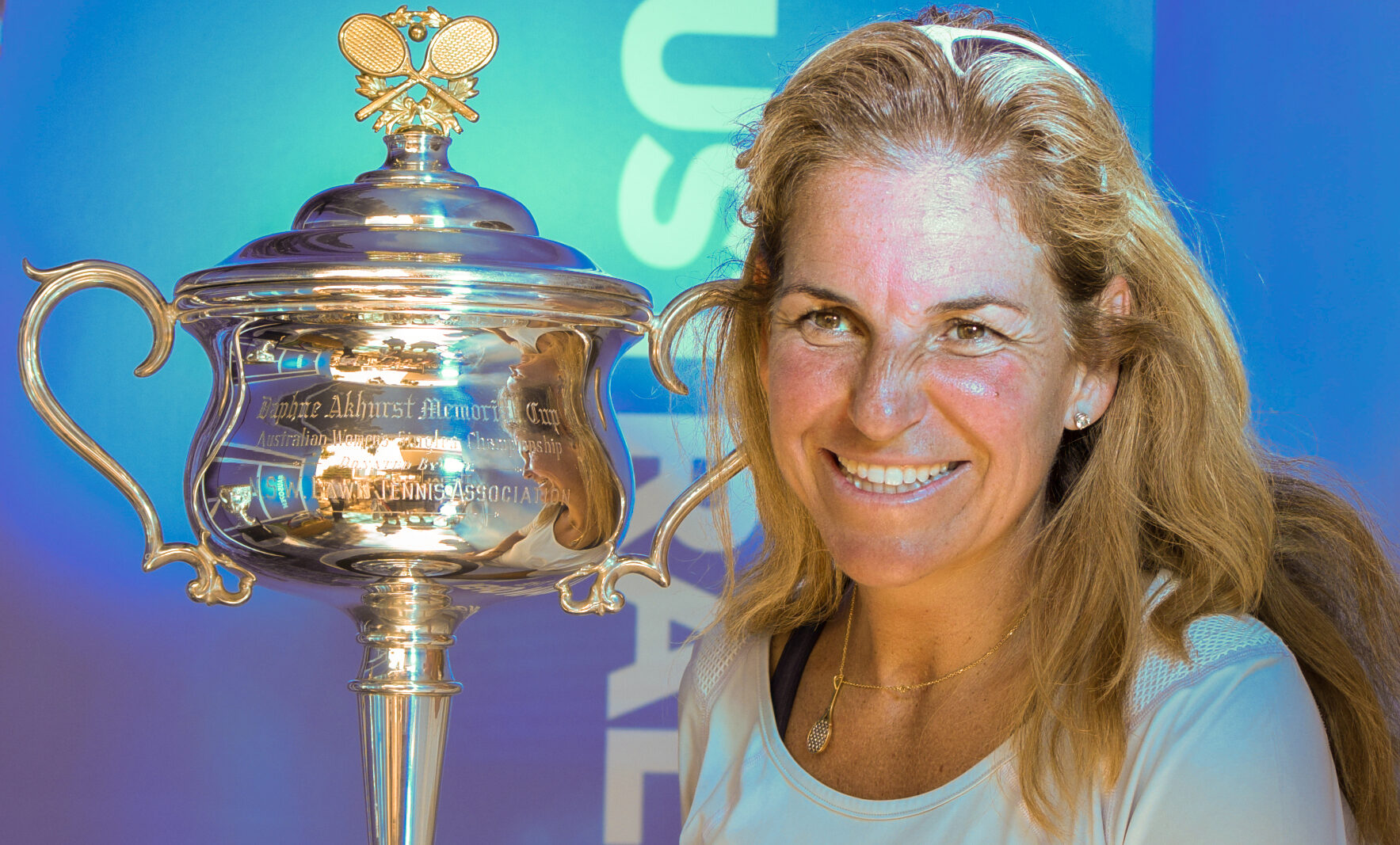

MADRID — Arantxa Sánchez Vicario learned to compete against the best when she was still a teenager. Steffi Graf dominated world tennis, Monica Seles burst onto the scene with staggering force, and Gabriela Sabatini represented a different way of understanding talent. In that arena, the Spaniard carved out her place through sheer persistence, eventually becoming world No. 1 and also dominating in doubles.
“Dethroning Steffi from No. 1 was a luxury,” noted Sánchez Vicario, 54, in an interview with CLAY in which she reviewed the great duels of her career, her legendary rivalry with Graf, the affection of the German crowd, and the titanic difficulty of simultaneously reigning in both singles and doubles.
The four-time Grand Slam champion (Roland Garros 1989, 1994, and 1998, and the 1994 US Open) will participate this weekend in Murcia in a talk organized by the Decyde Foundation entitled “The Impossible Ball.”
– What does Arantxa Sánchez Vicario dedicate her time to now?
– I live in Miami and dedicate myself to my children, mainly. They are my top priority right now—being a mom. I also play tennis and follow players; I keep a very close eye on the tour. But primarily, my children.
– Many years have passed since your golden era; do you think the new generations know who you are and what you did?
– Many don’t know, of course, but it’s normal. Great idols have been idols at a specific moment, and that moment has passed. Who among those new generations would recognize Cassius Clay or Bobby Charlton now, for example? That’s why I say it’s normal they don’t know me. It doesn’t worry me because history is there; that cannot be erased. I would be more worried if the generation that grew up watching me play didn’t recognize me.
– You recently mentioned in an interview that you settled in the United States because there were more opportunities.
– Yes, without a doubt, many more.
– Manolo Orantes told me a few months ago that he felt a bit undervalued in Spain and that, for instance, in the United States, he was recognized as a champion. Do you feel something similar?
– No, I don’t think so. In the United States, there are more job opportunities. It is a fact and a reality. In Spain, people treat you and recognize you, but professionally it is much better in the United States. I don’t know Orantes’ case. Manolo speaks for himself and I speak for myself, because when I came here to the United States, I worked as a television commentator. Life here moves at a different pace, and there is a different sports culture. Everything is done on a grand scale.
– You reached elite sports while still a child; what did you have to sacrifice?
– I turned professional at 14. I lost things, but I gained others. I lost that part of my childhood and adolescence. But I don’t regret it. I would make the exact same decision over and over again.
– You competed in the golden age of women’s tennis, alongside Steffi Graf, Monica Seles, Martina Navratilova, Martina Hingis… who was the rival that brought out the best version of Arantxa?
– Puff… In my era, I coincided with a group of tremendous players—there were about 10 or 15 of us, and I don’t want to name them all because I’m sure I’ll leave someone out—but it is true that the most important finals of my career were against Steffi or Monica. All of them brought out the best in me. I loved playing against the best, I enjoyed playing on the big stages, I enjoyed playing those finals. I always reminded myself that 128 players start a Grand Slam, but only two reach the final. So, playing those finals was marvelous.
– What was the most fulfilling part?
– When I had the crowd on my side, I grew immensely. And I almost always had the crowd on my side. That gave me an extra motivation. Even when I played against Steffi Graf in Germany, I managed to have the crowd on my side. That motivated me and brought out the best in me. And I think they also liked playing against me, because I brought out the best in them. That’s the beauty of sports: you want to play against the best, bring out the best in your rivals, and play an epic final that goes down in history. With all these players, they brought out the best in me and I brought out the best in them. I loved it, and it was a luxury to be able to play those finals with the best. And to become world No. 1, I had to play against all of them. Dethroning Steffi from No. 1 was a luxury. Nowadays, rivalries like that don’t happen as often.
– What was it like playing in Germany against Graf and having the people support you?
– Yes, at certain moments during the matches against Graf there, they cheered for me. I won the Hamburg tournament twice (1993 and 1994) and beat Steffi in both finals, right in her home country, in front of her fans; they were two tremendous finals. The Hamburg crowd cheered for me at times because they are a crowd that understands tennis, and obviously they wanted to see a great match. Moreover, they enjoyed my game. They understand tennis very well there, and Hamburg was the most important tournament in Germany. For me, it was a pleasure and a luxury to know that, even playing against her at home, the crowd helped me. And besides, they knew I spoke German, because when I spoke, I addressed them in press conferences or in on-court speeches, and I did it in German. I remember perfectly that our tournament always coincided with Mother’s Day, and I would dedicate the victory to my mother. That crowd was a luxury—people who appreciate good tennis. They enjoyed the tennis, they enjoyed my game, they enjoyed me and my personality.
steff
– Where did you learn to speak German?
– When I was little, I boarded at a German school. Although I turned professional at 14, the German Tennis Federation gave me a scholarship, and they had a school in Marbella. I trained and studied there, everything in German. So I had to learn German whether I liked it or not, and that helped me a lot later on. That’s where I met Steffi. She was the local star there.
– You had great battles, up to seven Grand Slam finals.
– I remember especially the 1989 Roland Garros final, when I won my first Grand Slam. She came into it having won absolutely everything. In 1988, she won all four majors and also the Olympic gold. She was unbeatable. Furthermore, in the previous year’s Roland Garros final, she had beaten then-world No. 5 Natasha Zvereva 6-0, 6-0 in 37 minutes. Because of that, people thought that in the 1989 final, the exact same thing would happen against a 17-year-old Spanish girl who had never played a final before. People thought it was going to be a very quick final. And in the end, look—all predictions were broken, and I defeated her after a grueling three-hour final. That was the most satisfying part, because you see your progression step by step until you beat the best. You always fight and work to beat the best and the world No. 1. And when it happens, you think, ‘If I beat this absolute champion, I can be No. 1 too.’
– And you weren’t wrong…
– There was still a long way to go, but in the end, we achieved it. I was world No. 1 in singles and doubles at the same time, which is even harder. In today’s tennis, that is practically impossible because none of the singles players play doubles all the time. Being No. 1 in singles and doubles simultaneously has only been achieved by a very few; it’s an elite group (Navratilova, Davenport, McEnroe, Hingis, Clijsters, and Serena Williams).
– I wanted to ask you about your relationship with Gabriela Sabatini, one of your great rivals. What was your relationship like?
– With Gaby, I had and still have a very good relationship. In fact, I coincided with her during Federer’s induction into the Hall of Fame, because I am one of the voters and Gaby came as a guest. We spent two days together there remembering old times and anecdotes, and the truth is she was a great rival, as well as a great teammate, a great friend, and a wonderful person. We have a very good relationship. We don’t see each other often, but whenever we do, there is always a lot of good feeling, respect, and cordiality.