

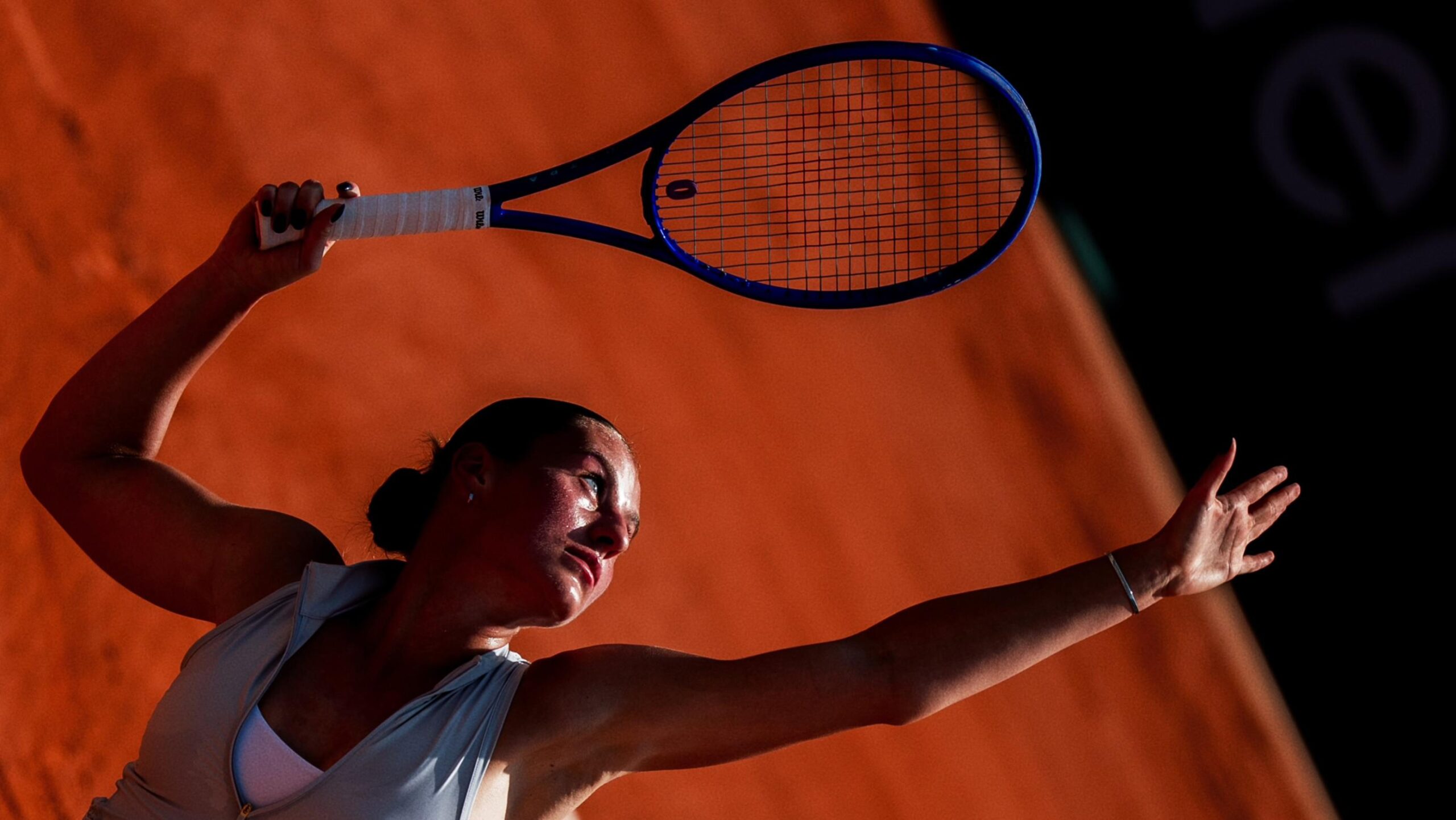

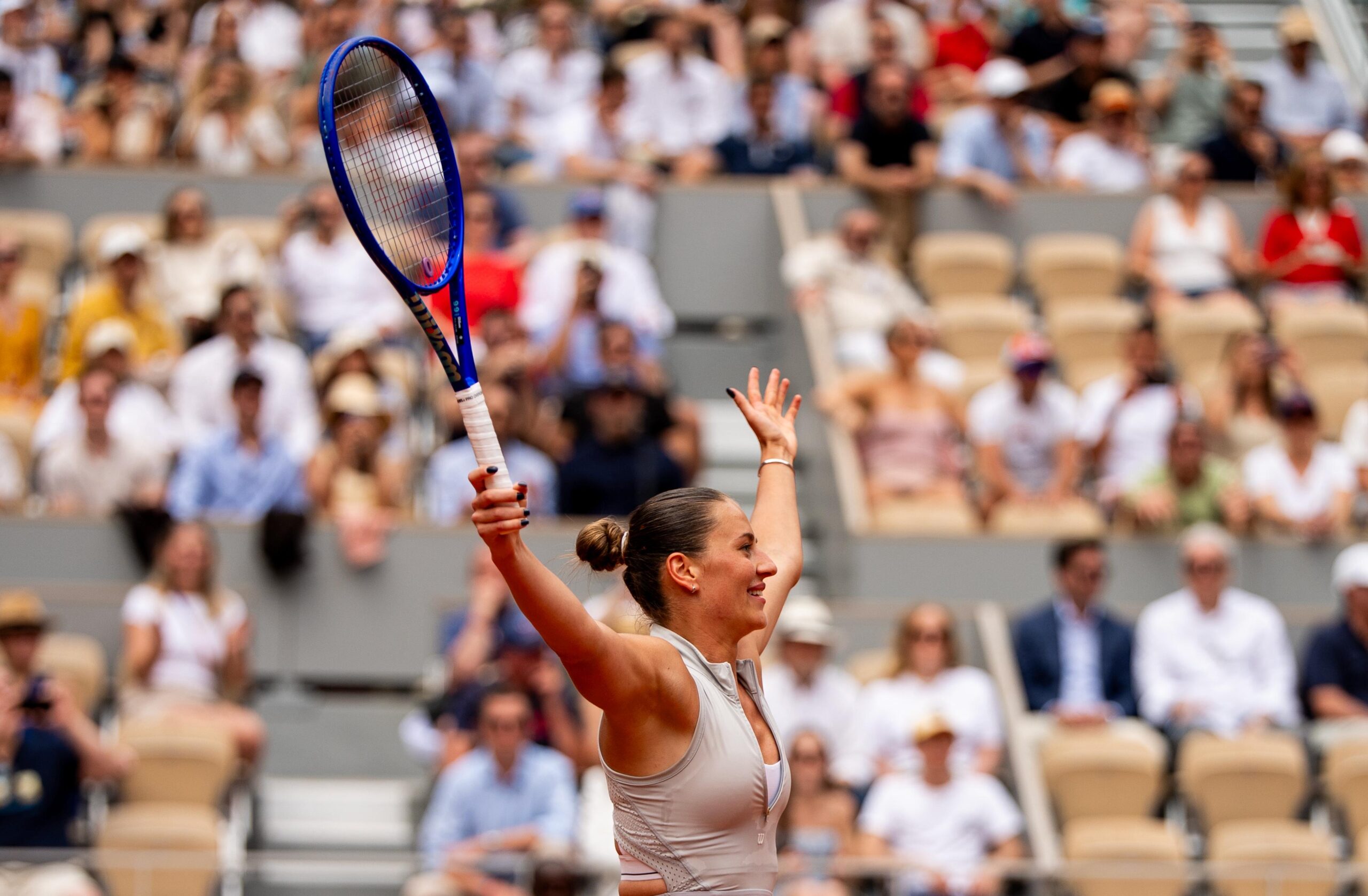
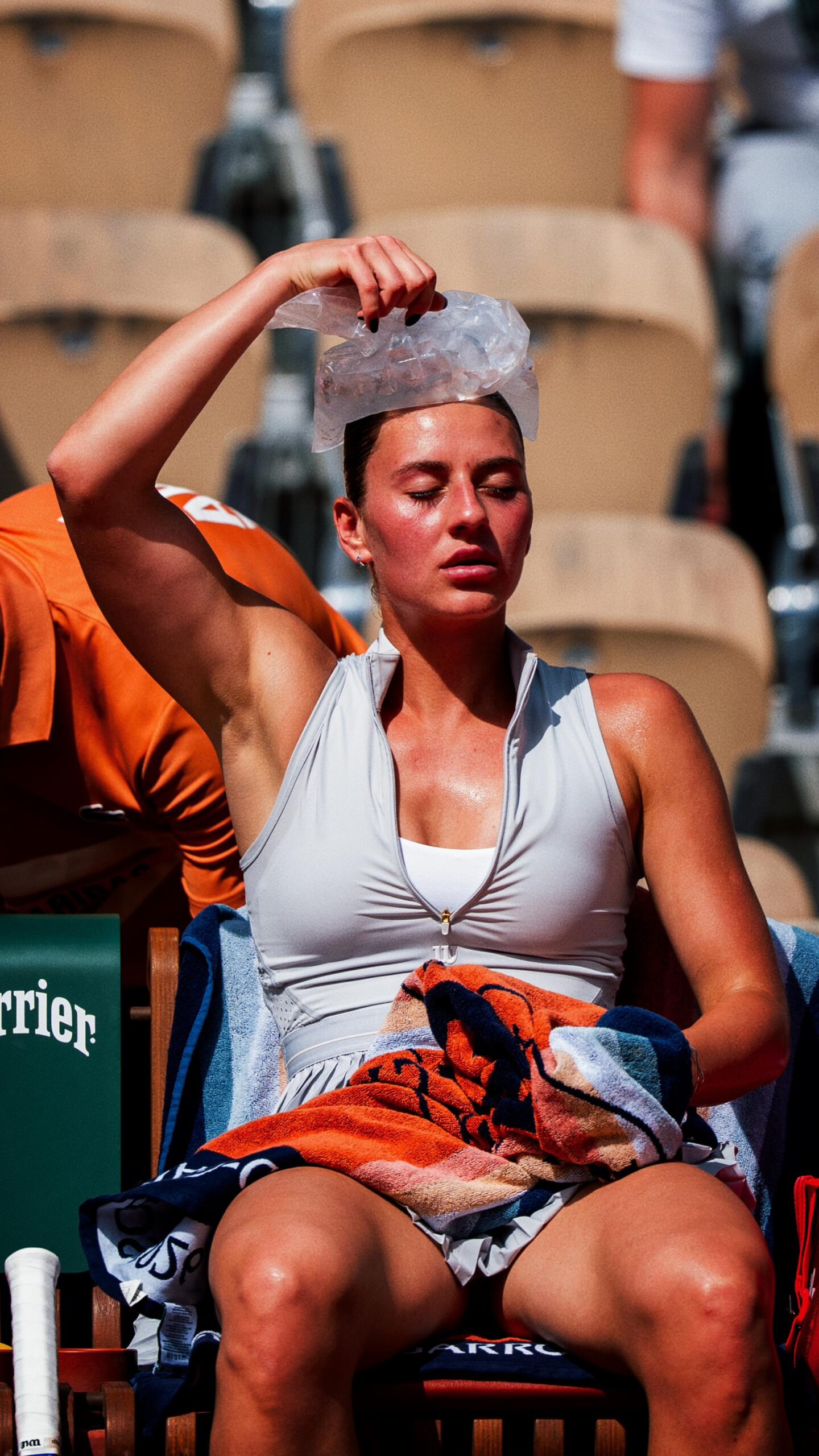
PARIS – Just a few weeks ago, Marta Kostyuk captured the biggest title of her career by winning the WTA 1000 event in Madrid. A minor injury forced the Ukrainian to withdraw from Rome, but she has returned in style at Roland Garros, where she has reached the quarterfinals after a series of impressive victories, including a statement win over former champion Iga Świątek. Away from the court, 23 year old Kostyuk has become one of the most thoughtful voices in tennis.
“It’s a problem of the sport itself”, she says during an interview with CLAY, done before Roland Garros, when addressing the issue of loneliness in tennis.
During the interview, made possible in part thanks to the support of her sponsor Duravit, she reflects on representing Ukraine during wartime, finding balance on tour, the friendships that sustain her, and the values that guide her partnerships beyond tennis.
– You are competing at the highest level while representing Ukraine during an incredibly difficult period. What does that responsibility feel like today?
– I think I felt that responsibility from 2014 when we had this big revolution in Kyiv. I was attending it almost weekly and loved volunteering there and just to be part of the people wanting a change. My family is very nationalistic, I would say, in the best possible way. I felt like I’ve had that responsibility since 2014. Obviously, when it turned into a full-scale war in 2022, it was a bit different because I was older and felt I had more responsibility. Moving forward, with each year, I change, I grow up, things change and the war is still happening. The responsibility didn’t go away. I’m focusing on what messages I want to bring out there, what I want to talk about, and share the pain of people, my pain. People who never experienced war in their home can never fully comprehend what it is. I’m doing my best to bring awareness and explain that what’s going on is not normal and should never happen again.
– Has that responsibility strengthened you mentally on court?
– I definitely changed. Stressful moments and crises in life trigger things inside of you. There is a lot of room to improve as a human being — your reactions, your mood, your stress handling. I took it as an opportunity to learn how to navigate difficult situations and learn more about myself. But great suffering comes with it. My goal is to have as much balance as I can. At one point I was focusing so much on the war that I felt if I wasn’t reading the news or feeling anxious, I was somehow betraying my family or the people who were there. But it interfered with my daily life so much. I had to tell myself: I am here right now. I am not in danger. I can make clear decisions. Last year I decided to stop having news notifications on my phone. That was part of stress management. You cannot expose yourself to that all the time when you are not in it.
– Did it work?
– I think it’s a good challenge for me. I don’t mind having that responsibility. Of course, at times it’s difficult raising your voice while carrying such a huge topic on your back. But it has also taught me a lot about myself. Every stressful situation reveals something about who you are and how you react. I’ve tried to use that as a way to grow.
– What keeps you grounded during long stretches on tour?
– Generally, the tour is pretty lonely. The most lonely I feel is usually during the Asian swing because everyone is so tired. I never go to Asia with my husband or with my dogs, so I’m really alone there. But I think it’s a problem of the sport itself. It’s not personal. It’s just the nature of tennis.
– What about friendships in tennis?
– I don’t like changing friends too often. I really like steady, long and healthy relationships with people. Of course, people evolve and sometimes relationships change, but I value consistency. With Eva Lys, there is a level of honesty that is rare. Me and Eva are very close. I can tell her anything and she can tell me anything. I remember she once told me: ‘I’m jealous that you got that contract because I wanted it too, but I’m happy for you.’ That honesty is very important. A lot of people say bad things about each other behind their backs and then smile in your face. Being open about difficult feelings helps to deal with them better. It allows friendships to survive challenges.
– I’ve heard you put forward a view on what these injuries entail.
– When you get injured, you disappear. You become non-existent. You can really see who your friends are when you’re not there anymore. Who remembers you, who texts you, who wants to stay in touch. Not many people reached out to me when I was injured. That’s fine. It’s just the reality of this life. I’m a very trusting person. Usually I trust too much rather than too little. That means I’m often the one whose heart gets broken in the end. But I’m okay with that. I would rather give people too many opportunities than miss out on a meaningful relationship because I was too cautious.
– With much of the year spent in hotels and airports, the meaning of home has evolved, I imagine.
– My husband was joking recently that the whole planet is our home. You try to create home wherever you are. Maybe it’s a little corner next to your bed, maybe it’s routines and rituals that stay the same. Traveling with her husband and their dogs makes a significant difference. I’m very lucky that I travel with my husband and my dogs because they bring that feeling of being in a safe place. Of course, sometimes we want our own bed, our own kitchen, our own routines. I want to cook my food my way. I want to go for a walk where we always go. But you learn to adapt.
– How’s your life beyond tennis?
– I’m very spontaneous. I can decide to go somewhere or do something at the last minute. My husband is the opposite, so we had to find a balance. I forgive fast. I don’t hold grudges. People tell me I can laugh at myself a lot. I don’t mind making fun of myself and I don’t mind when people make fun of me.
– Any big passion?
– Probably the biggest part of my identity is food. I love food. I love to cook. I love tasting food. It’s one of the biggest joys in my life. My husband always says that before we met, he was simply consuming food. Now he really enjoys the experience of eating and tasting. Food is a huge passion for me.
– To what extent does success change the way people see you? Your profile keeps growing. Do you think your role as a public figure changes with success?
– I hope people understand that I’m still very young and that I’m going to keep changing. In ten or twenty years I will be a different person. I just try to do what I think is right and people can perceive it however they want. If more people listen to me, if more people support me, that’s great. What is most fulfilling for me is being able to share what I believe in and what I value. Even more fulfilling than winning titles or making money. I’m excited to evolve and grow and explore. If that resonates with people, great. If not, that’s okay too.
Do you love CLAY? Support us on Ko-fi and follow us on Instagram, X (Twitter) and Facebook.