


Adrian Mannarino had just lost to Alexander Bublik in the second round of the US Open when he turned his attention to something that had little to do with the result of the match. The Frenchman spoke about the conditions he had encountered at the final Grand Slam of the season and used an unusual word to describe the experience: “zoo.”
People coming in and out of the stands, spectators moving around during points, conversations, noise and a level of tolerance from the tournament organizers that, in his view, is changing the way a tennis match is experienced. “It smells like marijuana on the court, it’s becoming a bit of a zoo,” the 38-year-old veteran said in comments to Eurosport.
Mannarino was not talking about influencers. At least, not directly. His complaint was aimed at a much broader change in spectator behavior and at a transformation that the final Grand Slam of the season has been pushing for some time and has taken another step toward this year. Since 2024, the tournament has relaxed some of its traditional rules governing spectator movement.
“These are really unusual conditions. People come in whenever they want, they move around, they talk… The tournament allows it, I don’t know if it’s the best thing for the players and for the sport in general. I think there are many rules that could be changed in tennis, but this is definitely not the one that should have been changed right now,” Mannarino, the world No. 67, added.
At the center of this new way of following tennis that the US Open is promoting is a group of people who have found themselves at the heart of the criticism: influencers. They are, perhaps, the most visible expression of this change. Not because they are responsible for everything happening in the stands, but because they represent a new way of understanding what it means to attend a major sporting event. The spectator no longer simply wants to watch the match. They also want to film it, photograph it, comment on it, share it and turn their experience into content. And far from resisting that trend, the US Open has spent several years trying to make it an increasingly important part of its product.
The numbers tell the story. In 2025, the USTA, the US governing body that runs the US Open, credentialed 54 content creators for the tournament. This year, that number is approaching 100, almost double. The objective is clear: the US Open should not end when the match does, but continue across social media through hundreds of videos, photographs and experiences shared by people capable of reaching audiences that traditional sports media often struggle to reach.
New York has always allowed for a much more visible mix of sport, entertainment, fashion, celebrities and spectacle than other Grand Slams, and the tournament has decided to embrace that identity. The stands are no longer simply the place from which tennis is watched; they have become part of the experience being sold around the tennis.
This was one of the cringiest things I’ve ever seen live. The US Open used to be an actual tennis tournament https://t.co/1kAYND6VOe pic.twitter.com/c1jbi4lUlQ
— Danny Singer (@michiganboy310) September 2, 2026
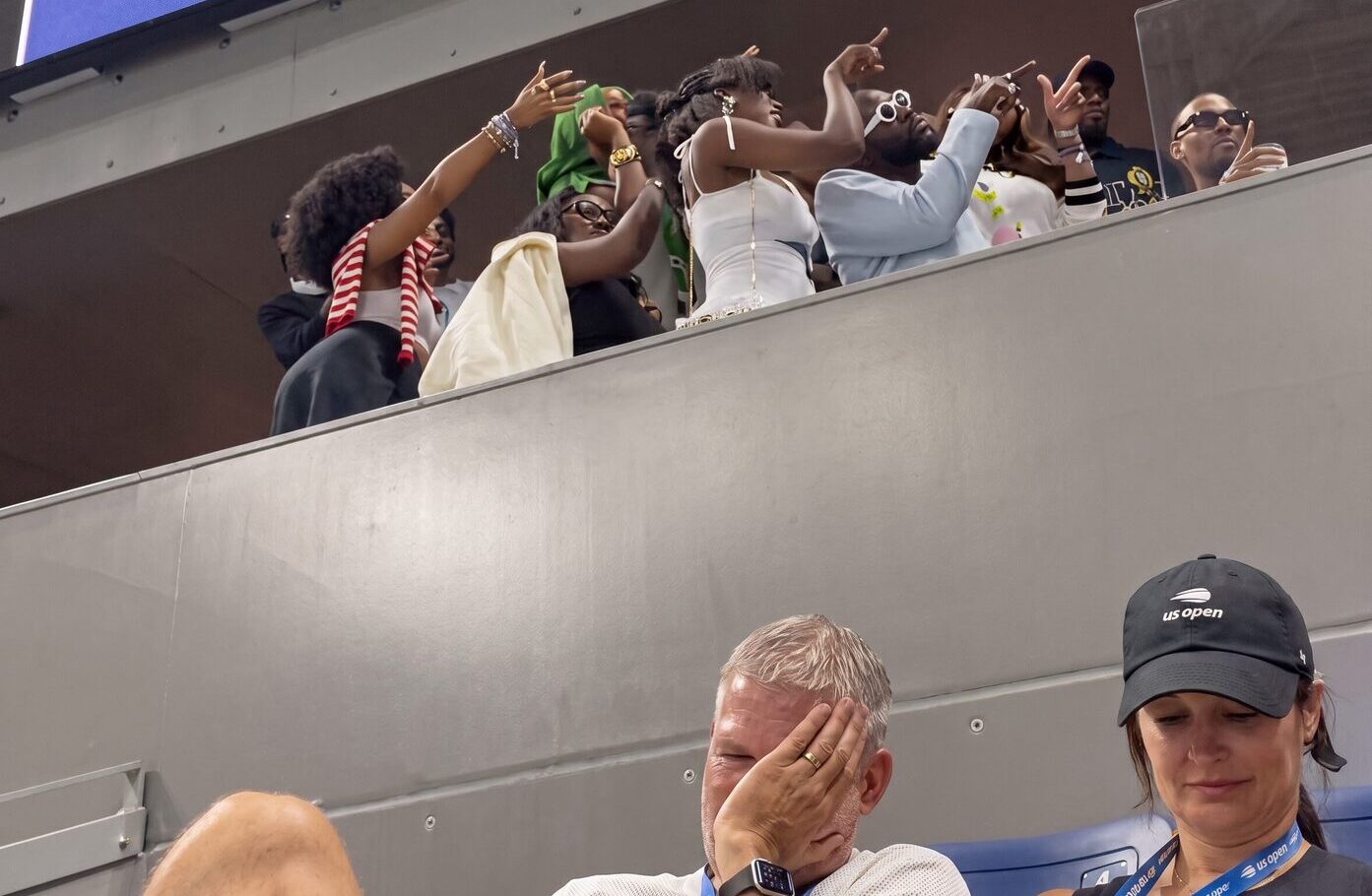
The problem comes when that entire ecosystem starts to affect the product itself. During the match between Naomi Osaka and Anastasia Zakharova, a scene in one of the suites at Arthur Ashe Stadium ended up becoming one of the most talked-about videos of the tournament. In the middle of the match — not during a break or a changeover — several people began filming themselves talking and using a ring light, prompting chair umpire Kader Nouni to intervene. The episode lasted only a few moments, but it was enough to trigger a much broader discussion on social media about what is and is not acceptable in the stands while a tennis match is being played.
The discussion is not simply about whether those people were allowed to use a light or film themselves during the match. The real debate is about how far this new way of consuming tennis can coexist with the rules and unwritten codes that have defined behavior at Grand Slam tournaments for decades.
Jessica Pegula explained that difficult balance particularly well. The American acknowledged that influencers help bring the sport to more people and make it more appealing to new audiences. But she also understands that there are red lines.
“I can appreciate one side of it, but I think we have the other side literally interrupting matches, it gets a little tough,” the world No. 3 said. “People are down there trying to perform, and it’s their career and their job… And it seems a bit disrespectful. I think maybe this year it’s gotten a little too much, I don’t know.”