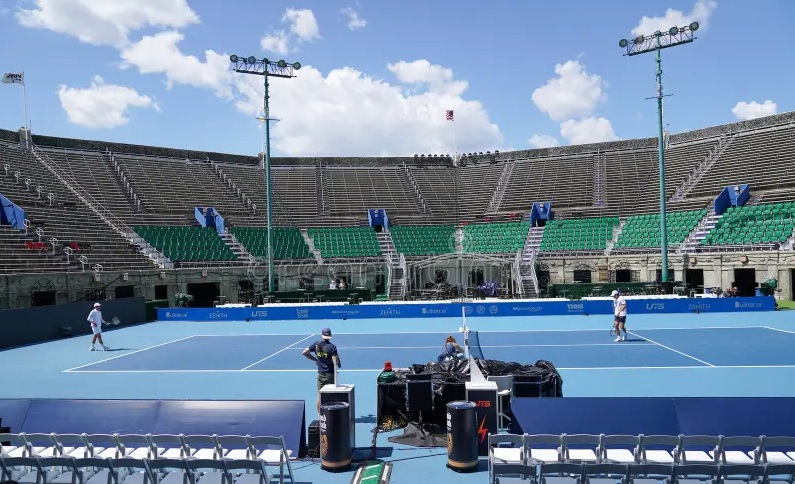





For years, tennis was like a recurring convention. Fans would watch a Grand Slam final on Sunday afternoon and then forget about tennis until the next major. The sport was available during scheduled television slots, which were controlled by broadcast timetables and limited access.
Nowadays, that model seems to be hardly recognizable. Tennis is not something we catch on the weekend anymore; it is something we follow continuously. Whether it’s live score alerts during work hours, late-night replays, or social media debates, the sport is now offered in real time over devices, time zones, and platforms.
What changed? Tennis has been converted from an event that is only seen at a fixed time into a continuous worldwide discussion because of the advances in technology, accessibility, and fans’ ways of connecting with the sport.
When Did Tennis Cease To Be Something We Only Watched On Sundays?
There was a time when tennis was synonymous with major finals shown on free, to, air television. Earlier spotlight was mostly on the four Grand Slam tournaments, namely the Wimbledon Championships, US Open, French Open, and Australian Open. A very casual viewer might not even know the events of the first rounds from the broadcasts. If a match had not been televised, for most fans, it was almost like the match did not even happen.
TV schedules dictated our consumption of tennis. Matches were cut down, rearranged, or shown at a later time. Upsets in the early rounds were unnoticed most of the time. The rest of the tournaments apart from the majors hardly got a mention. That whole system, however, is gone now.
Streaming services, official apps, and worldwide sports coverage provide an opportunity to watch almost every game. Moreover, fans have ceased being dependent on the broadcasters to decide what they should see. They can therefore track qualifying rounds, doubles matches, or even training sessions live.
The sport has changed subtly yet significantly from being an occasional viewing to a continuous engagement.
Are We Still Watching Matches or Following Them All Day?
Contemporary sports fans no longer just listen to a match; they stay connected to the game for the entire day.
Game spots are done in between appointments. Updates on tie breaks are received during the lectures. Messages come before sleeping time. As tournaments run simultaneously in different parts of the world, there is always a game in one of the locations.
Sometimes, one week may start with hard court games, then switch to clay ones, and then, without any break, go to the grass season. The yearly pattern, hard clay grass indoor, closely resembles a story that lasts almost the whole year. Rather than being fans of only random moments, nowadays, followers of the tennis season keep track of the whole journey. This phenomenon is further augmented by the presence of different time zones.
A late-night event in Melbourne will be live-streamed to be watched in the early morning in Europe. The game going on late in New York will be revealed in the middle of the night for others. However, the connection of the fans with the players is so strong that they watch the replays or read the post-match analysis right after they wake up.
We are not just watching tennis, we are living it.
Why Do So Many Fans Watch Tennis With A Phone In Their Hand Now?
The idea of a second screen has been the biggest influencer in the way we watch matches today. We can hardly imagine someone watching tennis without at the same time checking the live stats or discussion threads.
Such apps give point-by-point coverage with real-time data: serve percentages, length of rallies, and break point conversions. In the past, to get tactical insights, one had to listen to the expert commentary, but now those are being instantly provided. Fans discuss the decisions of the coaches, question the referee’s line calls, and analyze shot choices in the midst of matches.
Today, following tennis basically means being online all the time, live scoreboards, forums, social media discussions, and highlight platforms. Plus, as fans interact on multiple sites and public networks, concern for online privacy has also increased. Many people turn to simple security measures and tools such as ExpressVPN when using public Wi-Fi at the airport or while following the match on the move.
It is not a change in streaming quality that has brought about the difference; interaction is the key. Tennis is now participatory. Fans are not merely watching; they are also interpreting, reacting, and leaving their contributions.
How Did Players Suddenly Become More Familiar To Us?
Previously, players were mostly seen during televised matches only. Today, they seem a lot more reachable. One can see fans watching training sessions, locker room moments, travel diaries, and getting to know players beyond the sport through social media. A young talent sharing practice videos can get a worldwide fan base even before reaching a major quarterfinal.
ATP Tour and WTA Tour, among other platforms, help to promote the content of the players’ lives, which leads the tournaments to stories instead of just events.
It is said that the young fans come to know the players even before their first hit of the charts. They get to know the players’ journey, changing coaches, and even their recovery from injuries. Such closeness turns the sport into a human one. The games seem to have great value when the fans get to know the stories behind the games.
What Happened To The Tournaments We Used To Ignore?
Not long ago, small events were mostly ignored. Nowadays, full attention and respect are not only given to ATP 250 tournaments but also to Challenger-level competitions.
Supporters are going after youngsters on the Challenger Tour and thus keeping track of their climbing of the rankings week after week. If a rookie reaches the semifinals of a grand slam, a good number of people in the crowd might have been the player’s fans for quite a while already.
Such a great involvement turns the spotlight away from one, from finals to whole careers. The upsets in the first rounds are therefore significant. The first breakthrough titles at the small events are emotionally charged. The sport is in a way one, with every game adding to a bigger story.
Tennis does not only have to be defined by its biggest arenas; the sport lives through its entire nature.
Why Does A Match In Melbourne Now Feel Local Everywhere?
A night match in Australia has the capability to trend worldwide within mere minutes. Fans from different continents simultaneously respond by posting comments, memes, and tactical analyses.
Podcasts schedule emergency recordings after thriller matches going to five sets. Group chats get active at the time of last-minute time breaks. Shared digital platforms help to experience tournaments that are far away as if they were close and communal.
The seclusion of past times when viewers used to watch alone in their living rooms has been substituted by a collective experience. Physically, you may be alone, but there is no doubt that you are still immersed in the worldwide conversation.
The place is no longer the factor that limits the fandom. A match in Melbourne, Paris or New York is perceived as local because the discussion is happening everywhere simultaneously.
So, What Will The Fan Experience In The Future Be Like?
The subsequent change will probably bring even more personalization. Anticipate alternate camera angles, data overlay which can be customized, and match feeds that are perfectly in tune with the fans’ favorite players.
Fans may be able to use interactive graphics to understand point trajectories live. Spectators might choose a different angle or select the type of commentary that fits their tastes.
What is indisputable is that tennis, through the years, has been gradually transitioning from a type of weekend passive watching to a form of year-round, highly engaging, immersive experience.
The sport has not merely broadened its calendar; it has radically changed how we relate to it. Tennis is no longer just a Sunday thing. It is always there, match after match, notification after notification, in a global digital venue.
Conclusion
Tennis has changed so much that it\’s no longer just a Sunday event in the schedule but a story that is told constantly around the world. Earlier, people only saw matches in Grand Slam finals and got to know the players through highlight reels. However, nowadays it is a year, round, multi, multi-platform experience that fans, commentators, and players shape through data, discussion, and digital connection. Fans don’t just watch games, they follow the players, view seasons, and discuss with other fans in different countries in real time.
Through the use of technology, this sport has become more vibrant, personal, and interactive than ever before. As more and more people gain access and the viewing becomes more personalized, tennis is likely to move even further away from being just a weekend pastime to turning into a proper everyday sport.